Inspiration Ignited
Words by Rosa Sophia
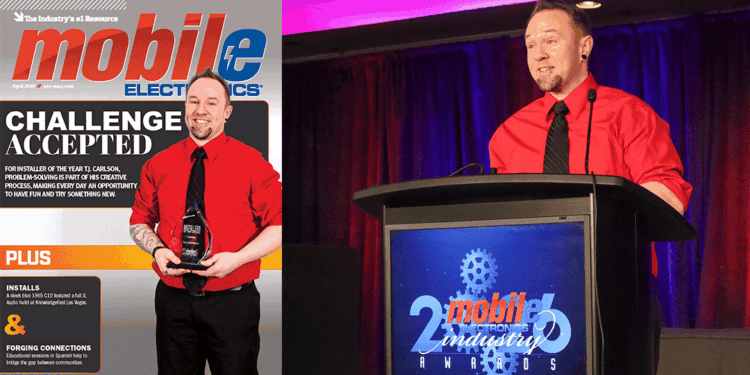
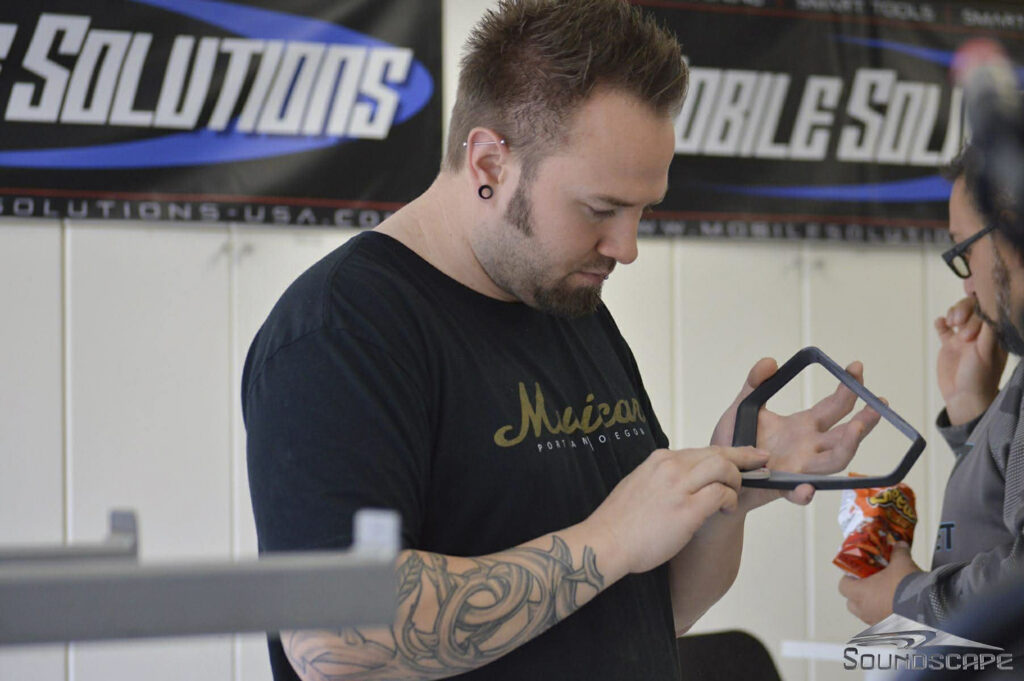
This year’s Installer of the Year, T.J. Carlson, works at Portland, Ore.-based Musicar Northwest and he’s been in the industry for about 20 years. His love of music was sparked early on, he said, and he started playing the drums in seventh grade. “Music has always been important to me. Cars have always been fun and enjoyable [and so is] working with my hands, being creative and expressing myself through what I build.” He loves challenging himself to build something he’s never built before. “I love problem-solving, thinking outside the box and finding new ways of doing things or using tools in a different way to achieve a result.”
This love for what he does, he noted, confirmed the truth of an old adage: “If you love what you do, you’ll never work a day in your life.”

At 15, Carlson built his first enclosure. “I was helping a friend build a sub box. I really enjoyed it—and not just [the act of] making something, but making something that served a purpose and sounded good.”

For the last 10 years, his greatest influence in the industry has been Tom Miller, owner of Musicar Northwest. Carlson said he admires his design style. “Anyone can sit down and watch him work and appreciate the amount of focus and detail he puts into it,” he explained. “Everyone at our shop naturally strives to be at his level. At the same time, he’s constantly learning, evolving and pushing himself to be better.”
This, he said, creates a positive environment for the entire team—an environment in which everyone wants to do better.
“We’re always trying to figure out new or better ways of doing things, not only to increase efficiency, but to expand the scope of what’s possible when it comes to fabrication and production.”
THE GOAL? OEM-PLUS
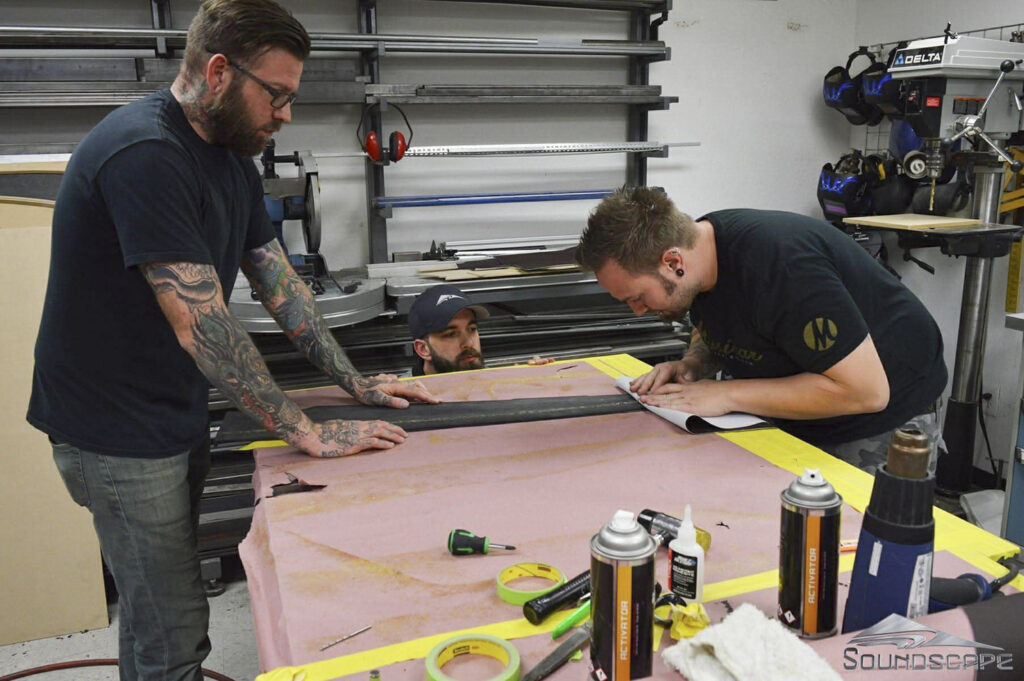
The team of seven works well together, and Carlson said that although he’s lead fabricator, “everyone here does fabrication to some extent—whether it’s designing in Fusion 360 and 3D printing, or making an insert panel to mount a subwoofer or DSP controller.” If needed, he can pivot
and help wherever necessary. “Sometimes I work on radar and laser projects, radio installs or basic speaker installs, or dash or backup cameras. It just depends.” Other times, he’ll work on the same custom project for a month to three months.
“We’re just outside downtown Portland and we get a lot of clients from surrounding areas.” He said people will drive down from Seattle to have the shop handle their car—and they’ll even find them online and ship the car from anywhere in the country. “We do the work and then ship it back.”
At the time of the interview, Carlson was working on several Tesla Model X, brought in by the same client. “We don’t do any audio upgrades for them. We do a radar and laser installation and some acoustic treatment to quiet the ride. We also do convenience features.” He said these features can be anything from building sun visor extensions—since the glass goes up higher in Teslas—or even a slide-out trash can to keep the interior looking nice. They’ll also install hooks on the back of the front seat to hang dry-cleaning or anything else.
“These are simple convenience features that most people would never think of,” he said, adding, “but these customers have the money to spend and they want to customize their cars in a way that makes things easier for them—even designing a new cup holder to fit a specific water bottle.”
On the other hand, a larger custom build can be especially challenging when it comes to the machine work that goes into creating a specific shape, and bringing to fruition the overall feel. “Design is really important to us here at the shop.”
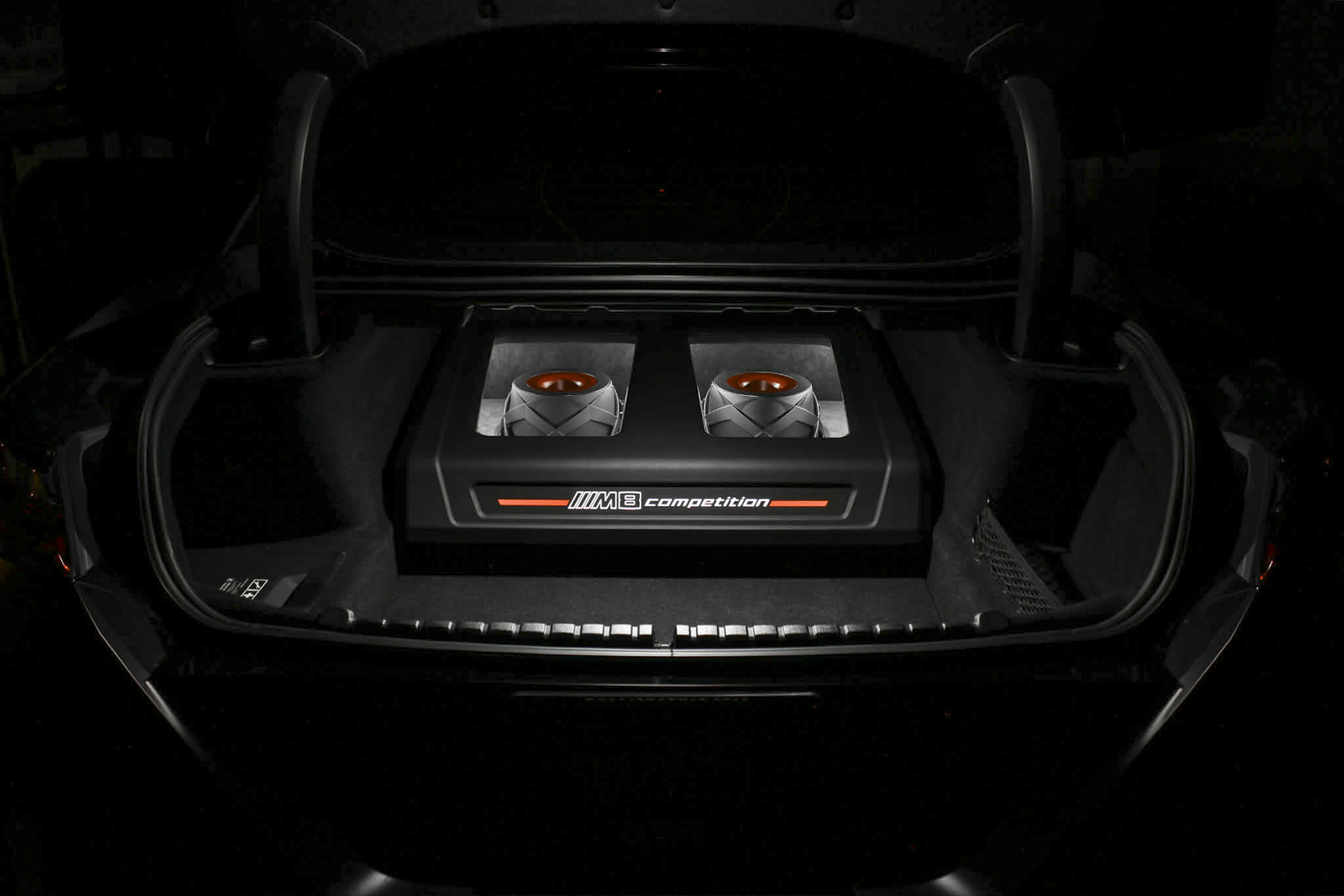
In particular, he said, Miller has encouraged “complementing the interior of the car. What we do, we call it OEM-plus. It will look factory with a little bit of embellishment to add to the effect.”
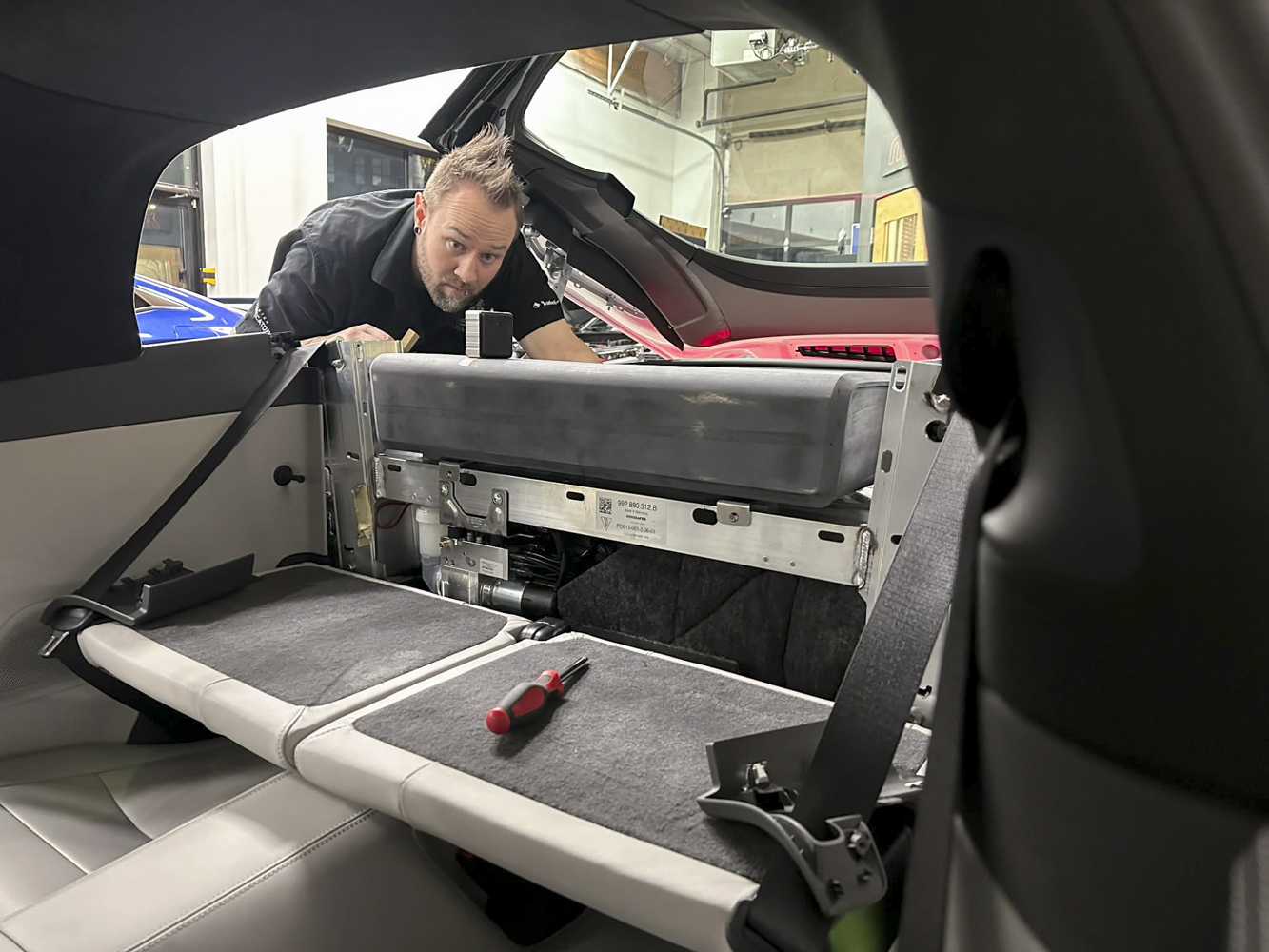
Carlson will stay true to the initial design and decide what fabrication methods need to be implemented. A 2019 F-150 received a full audio upgrade, and he built a down-firing custom enclosure in the back to take the place of the small side of the rear seat. The client, he said, often takes his dog with him wherever he goes, so a dog kennel stays in the back of the vehicle. “I’m building an enclosure that also acts as a platform for the dog kennel.”
THERE’S ALWAYS MORE TO LEARN
While the shop’s space is efficient, it can be limited, and the team hopes to expand eventually. Carlson said they utilize it well, but he’d like to have room for a CNC and some other machinery. “If we were to purchase those things now, it would take up usable space that we can’t sacrifice.”
In the future, he hopes to continue improving his skills with 3D CAD work and Fusion 360. He said he begins with a visual in his head or a sketch, rendering or Fusion file Miller has created. “Then, I have to extrapolate the digital format and unfold pieces within the software to create a flat template that I can route to whatever the finished material will be. Or, I have to figure out how to make the cuts at specific angles that the table saw won’t necessarily do.”
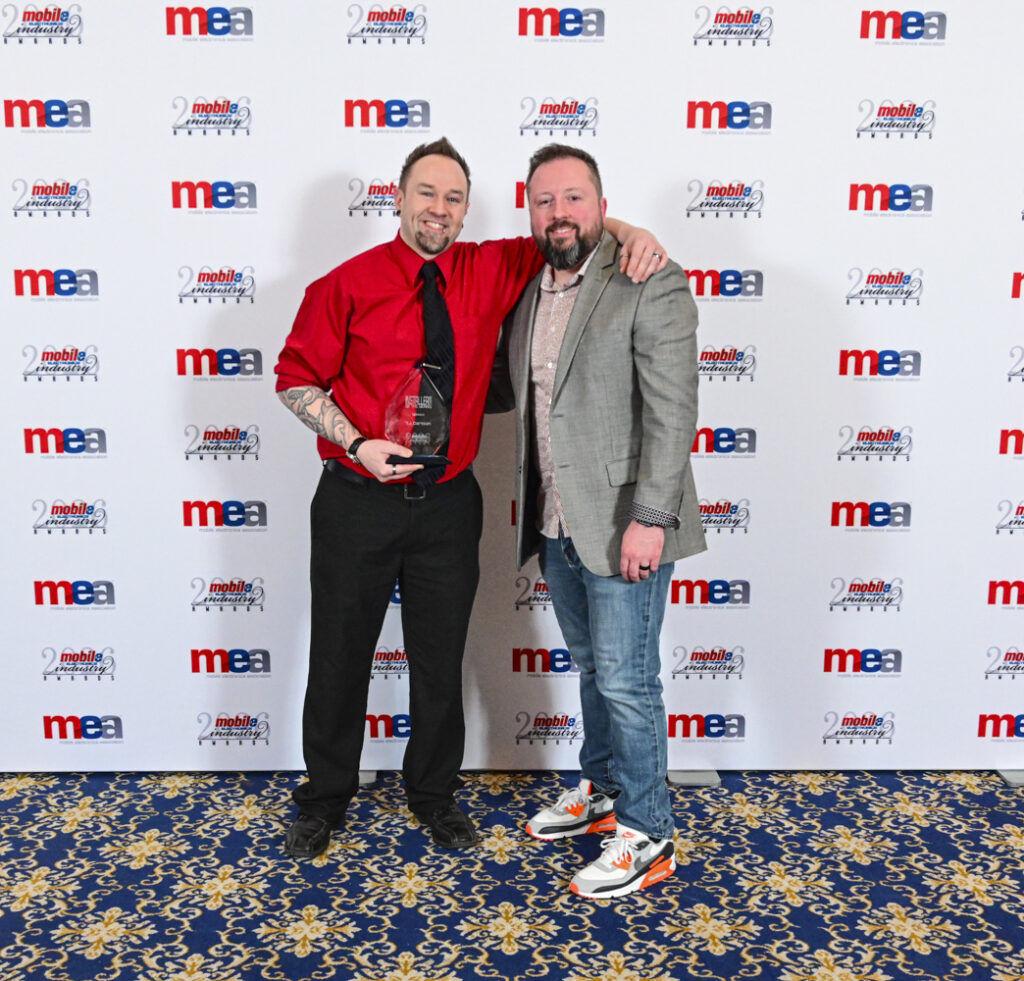
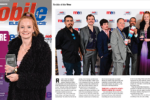
Carlson with 2025 Installer of the Year Nicholas Frazier at this year’s Industry Awards
BUILDING AN UNDERSEAT ENCLOSURE
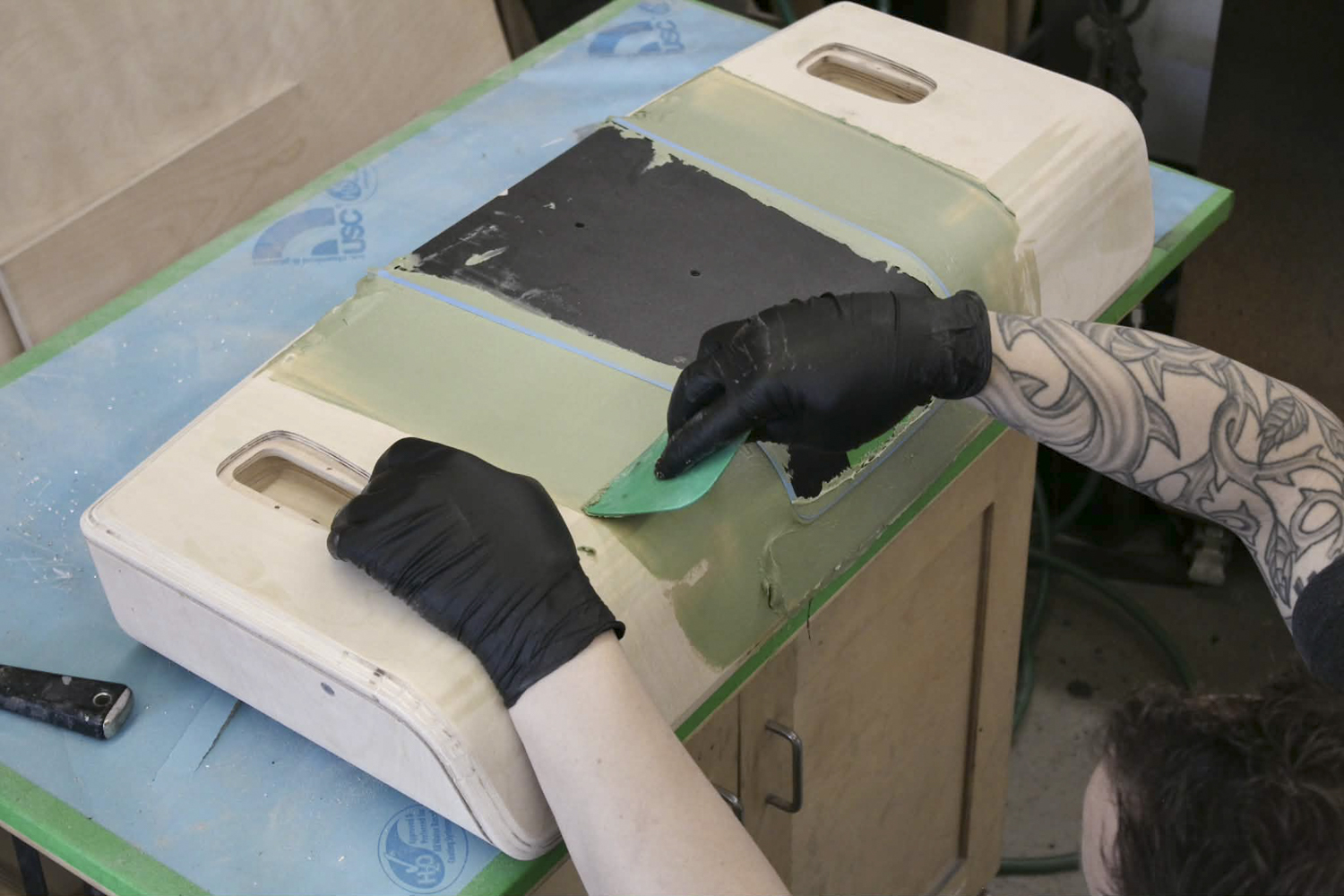
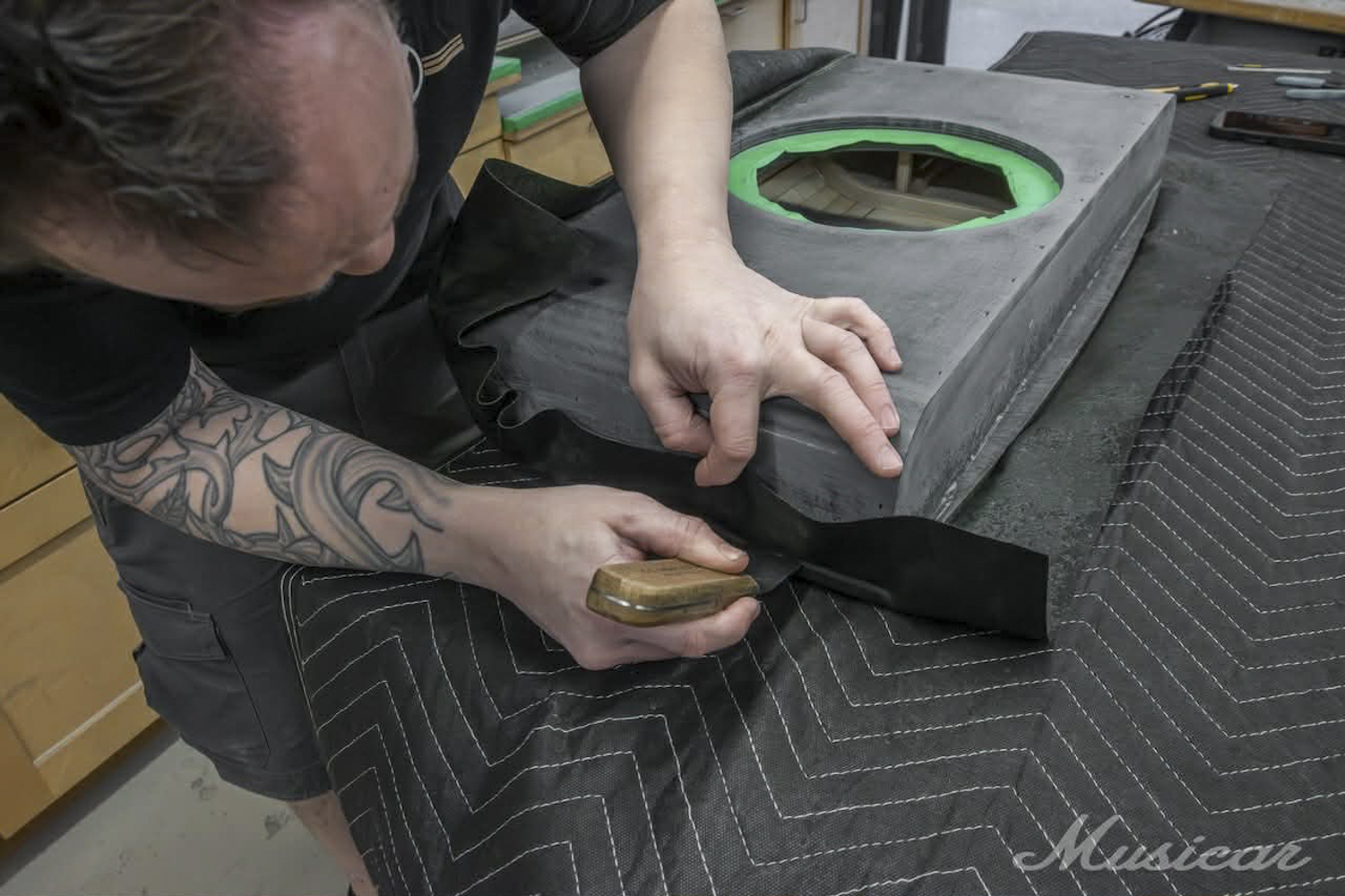
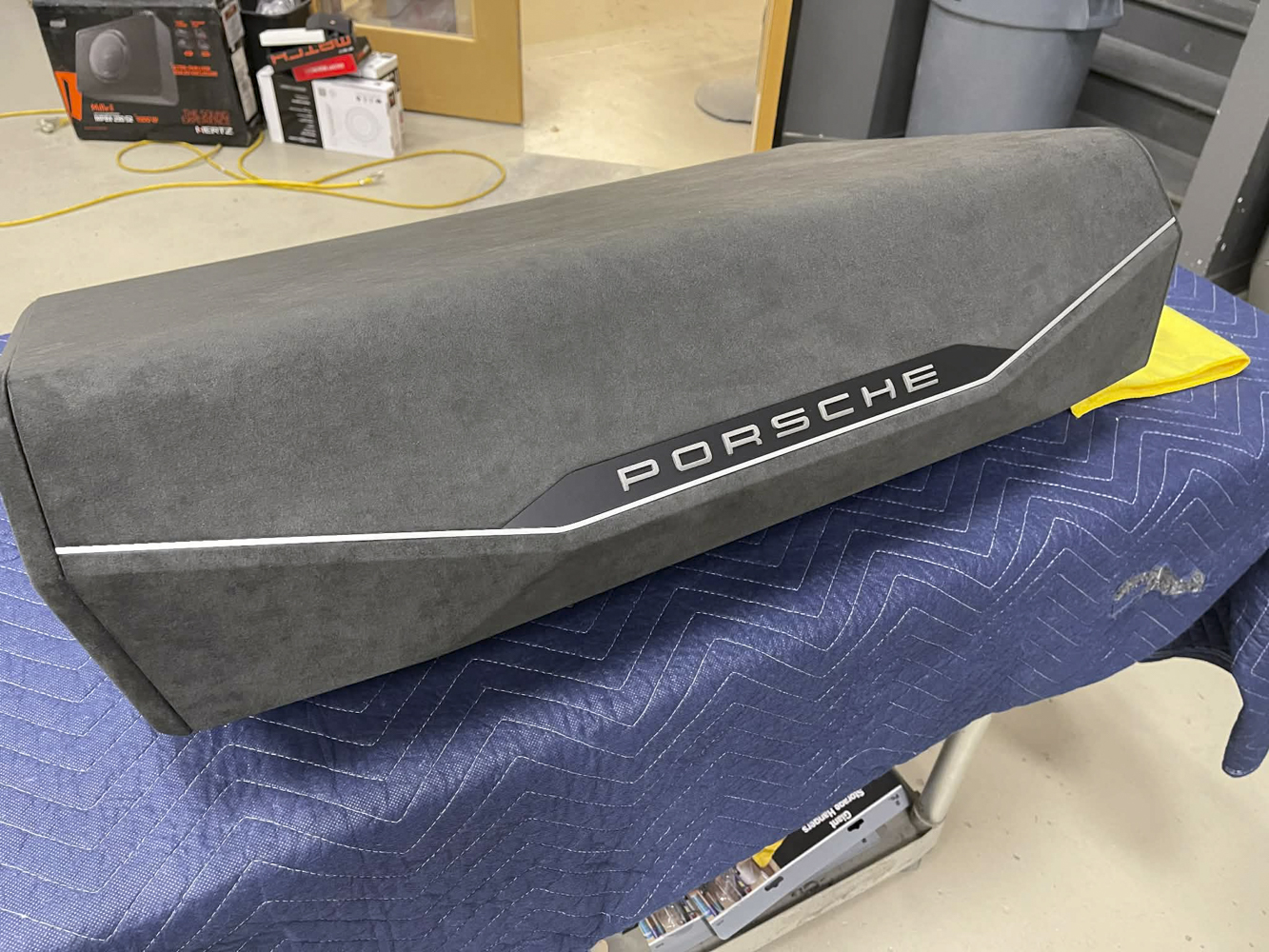
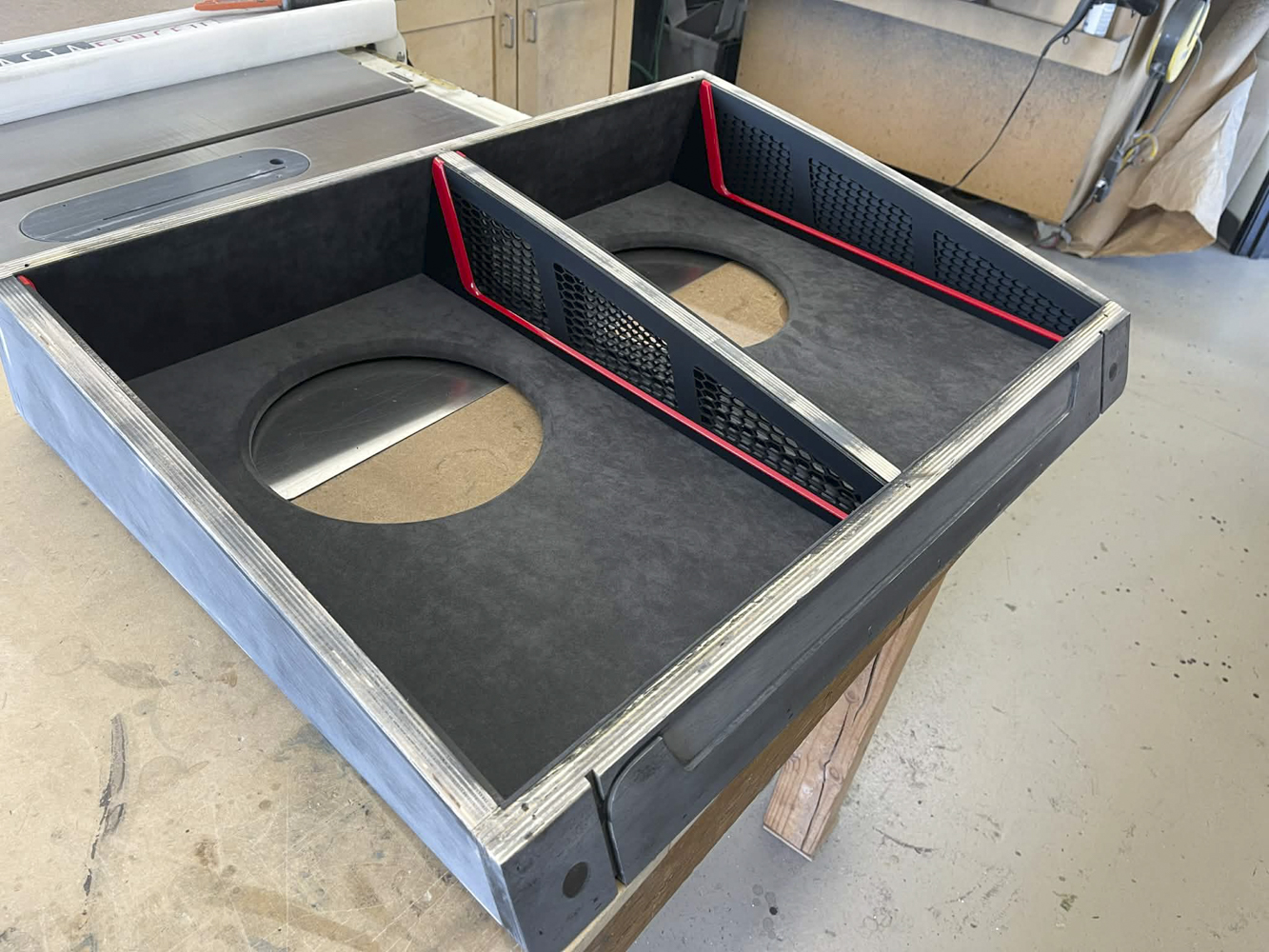
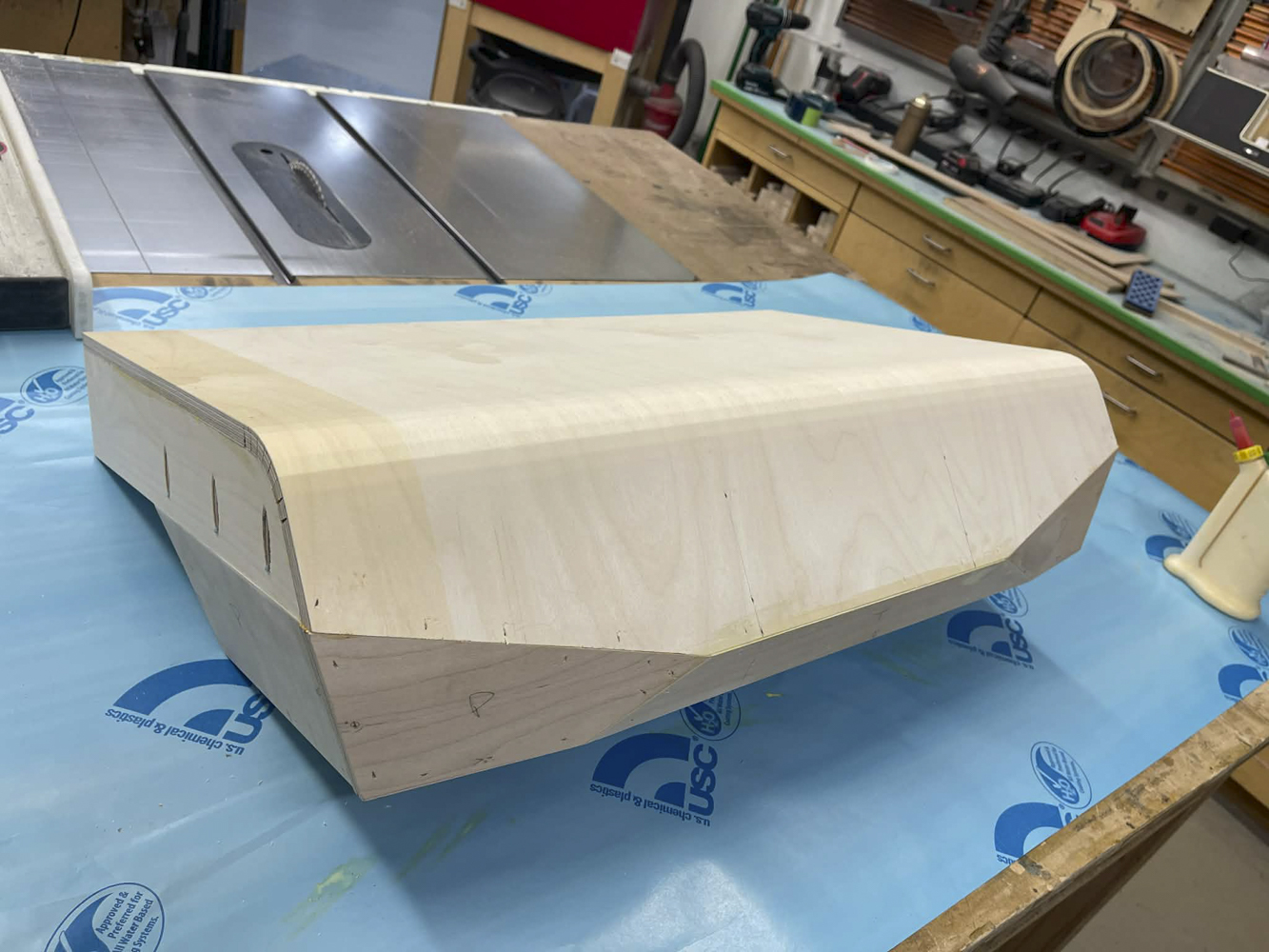
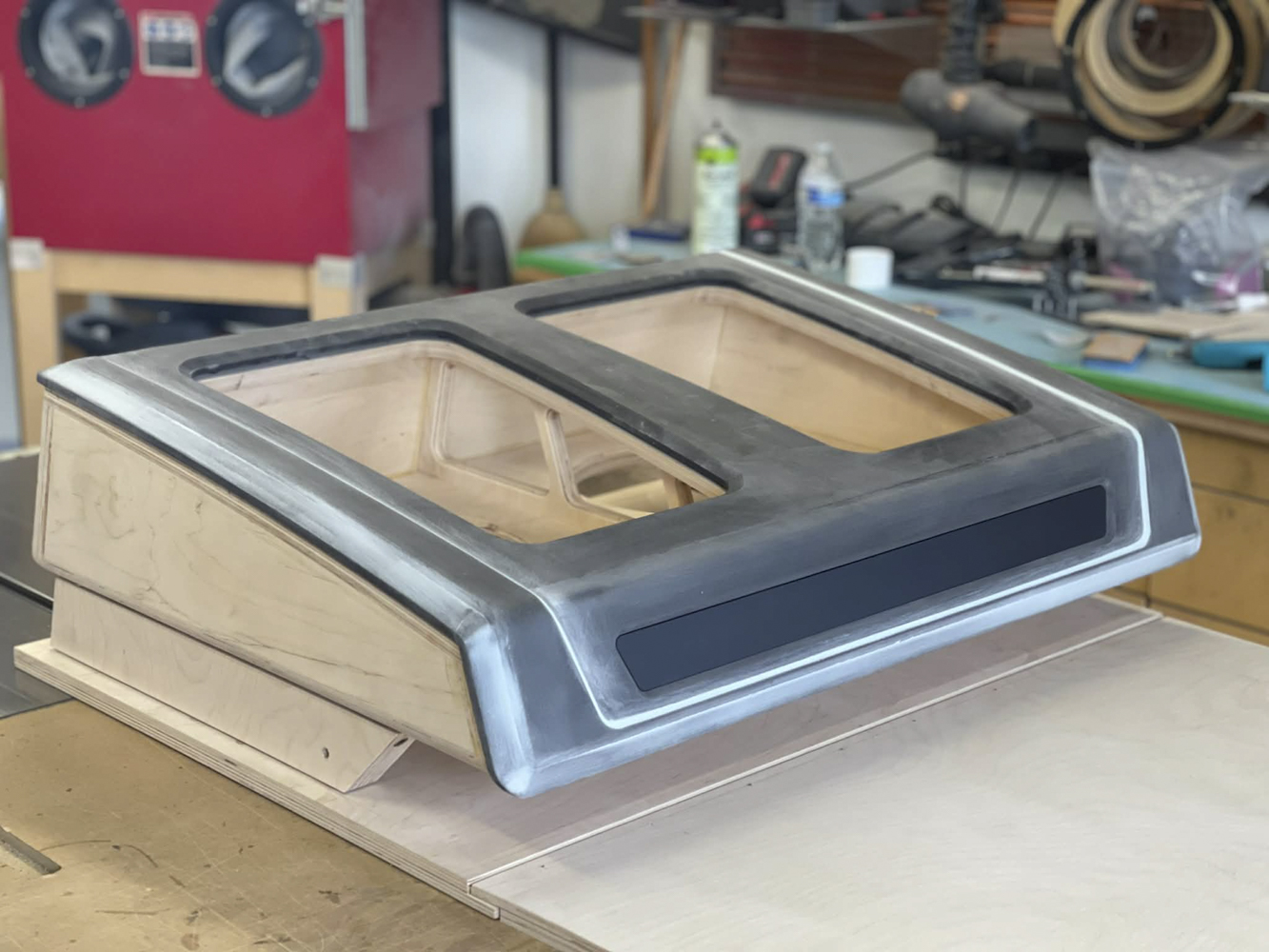
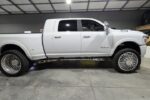
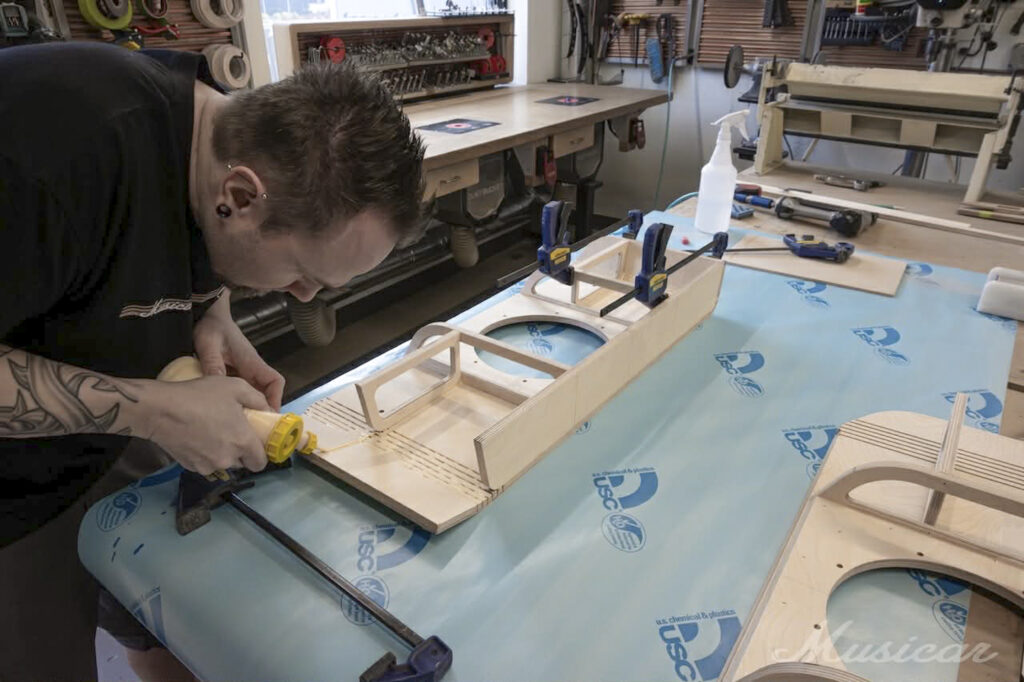
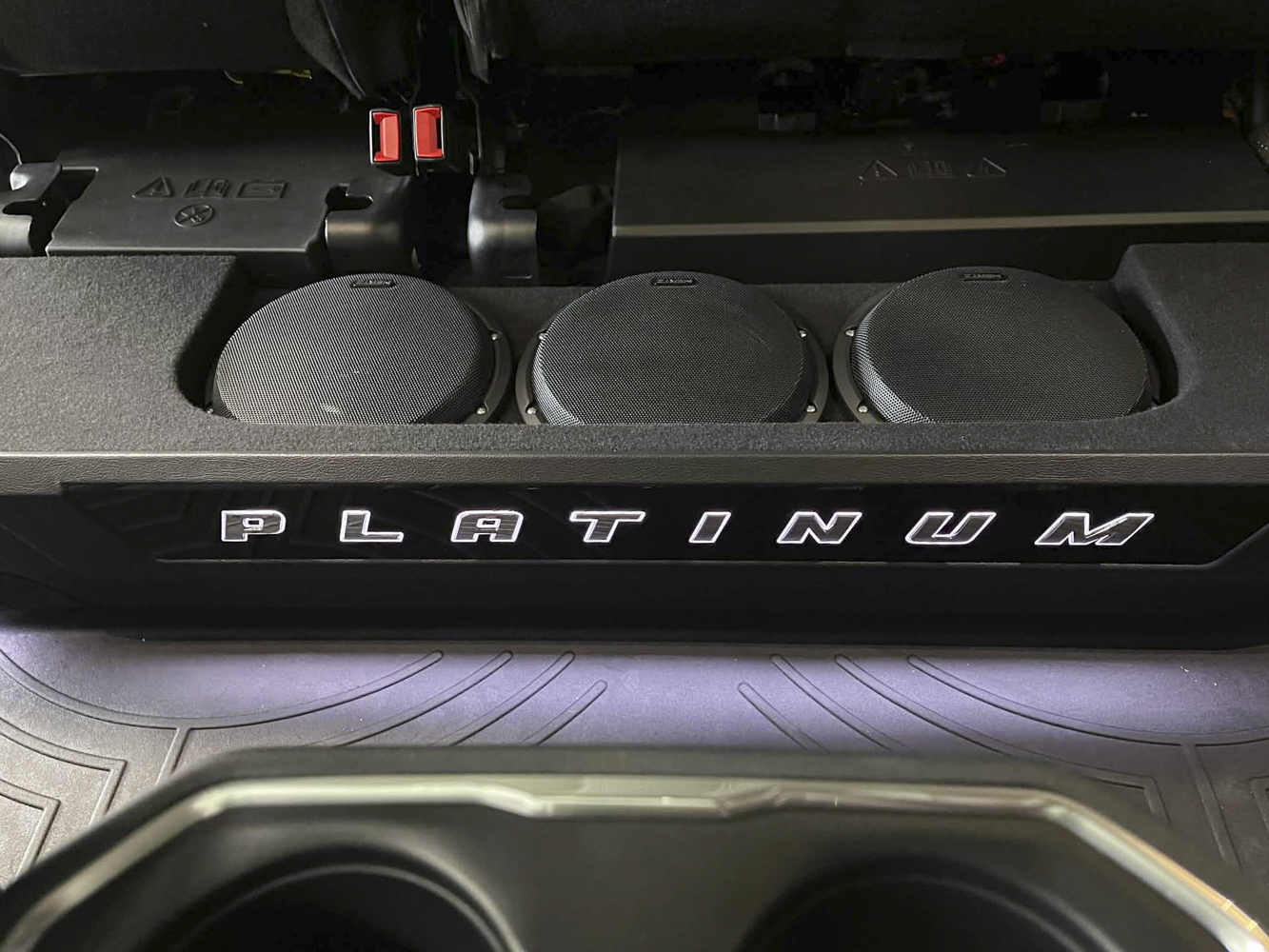
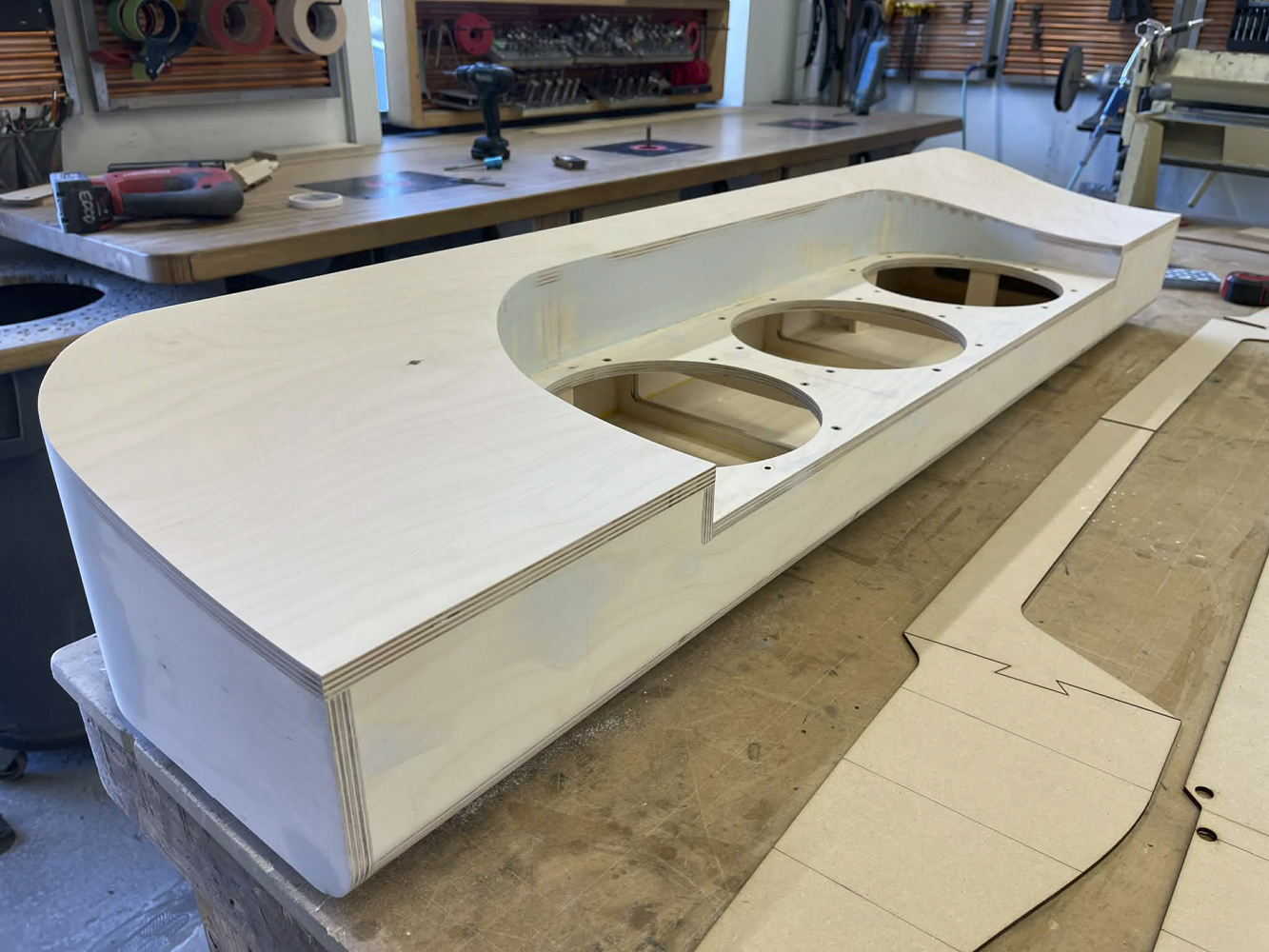
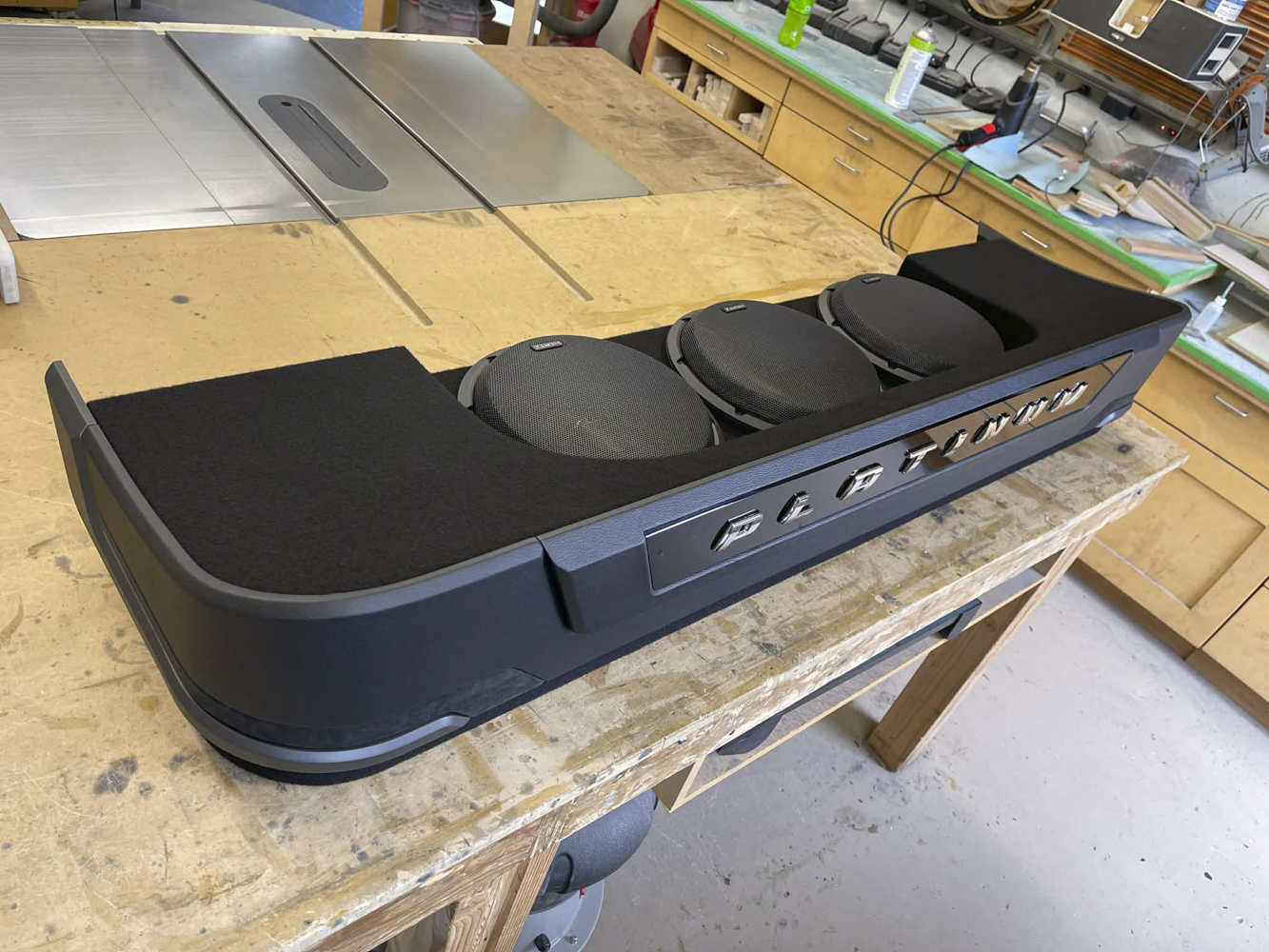
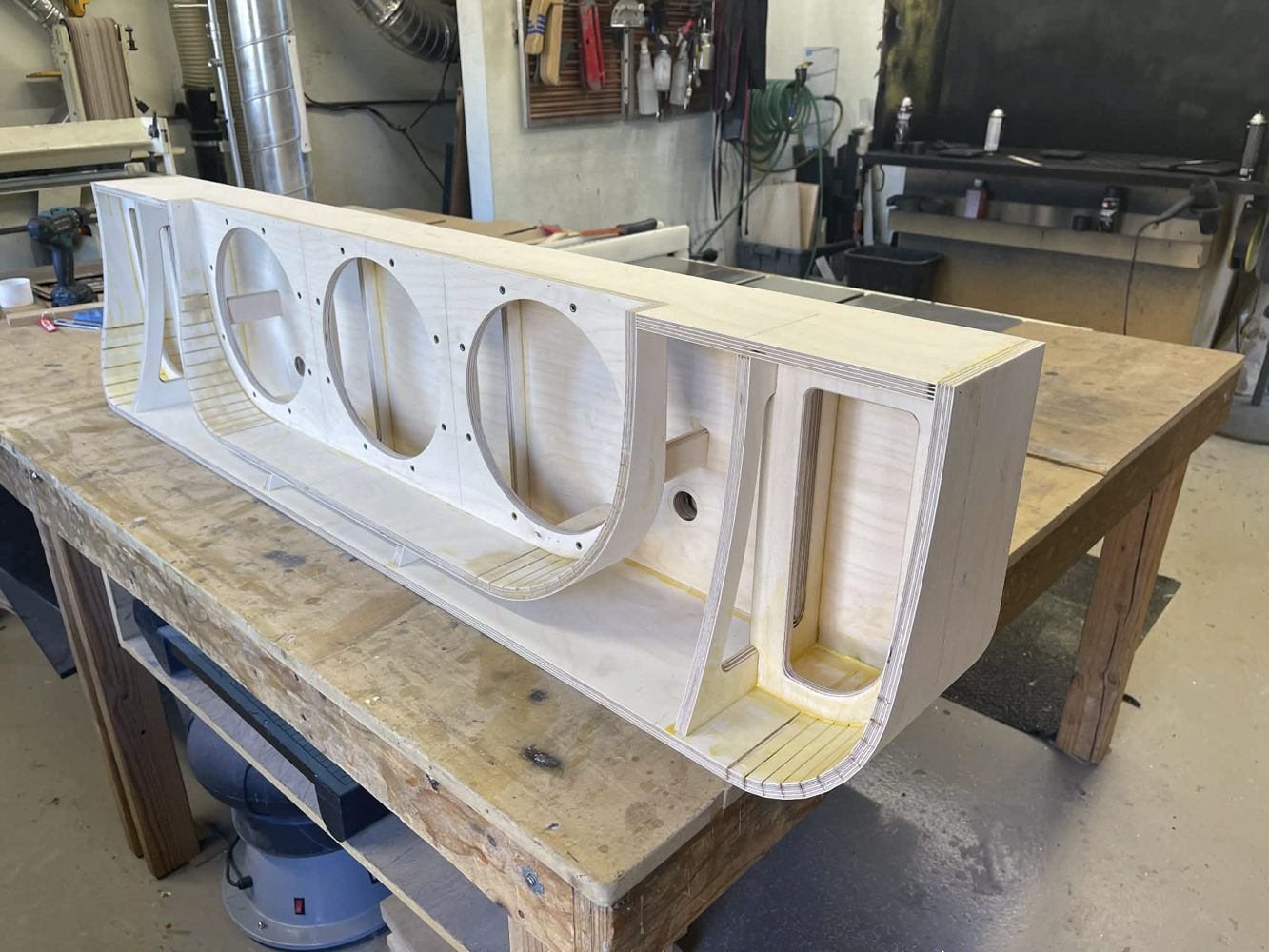
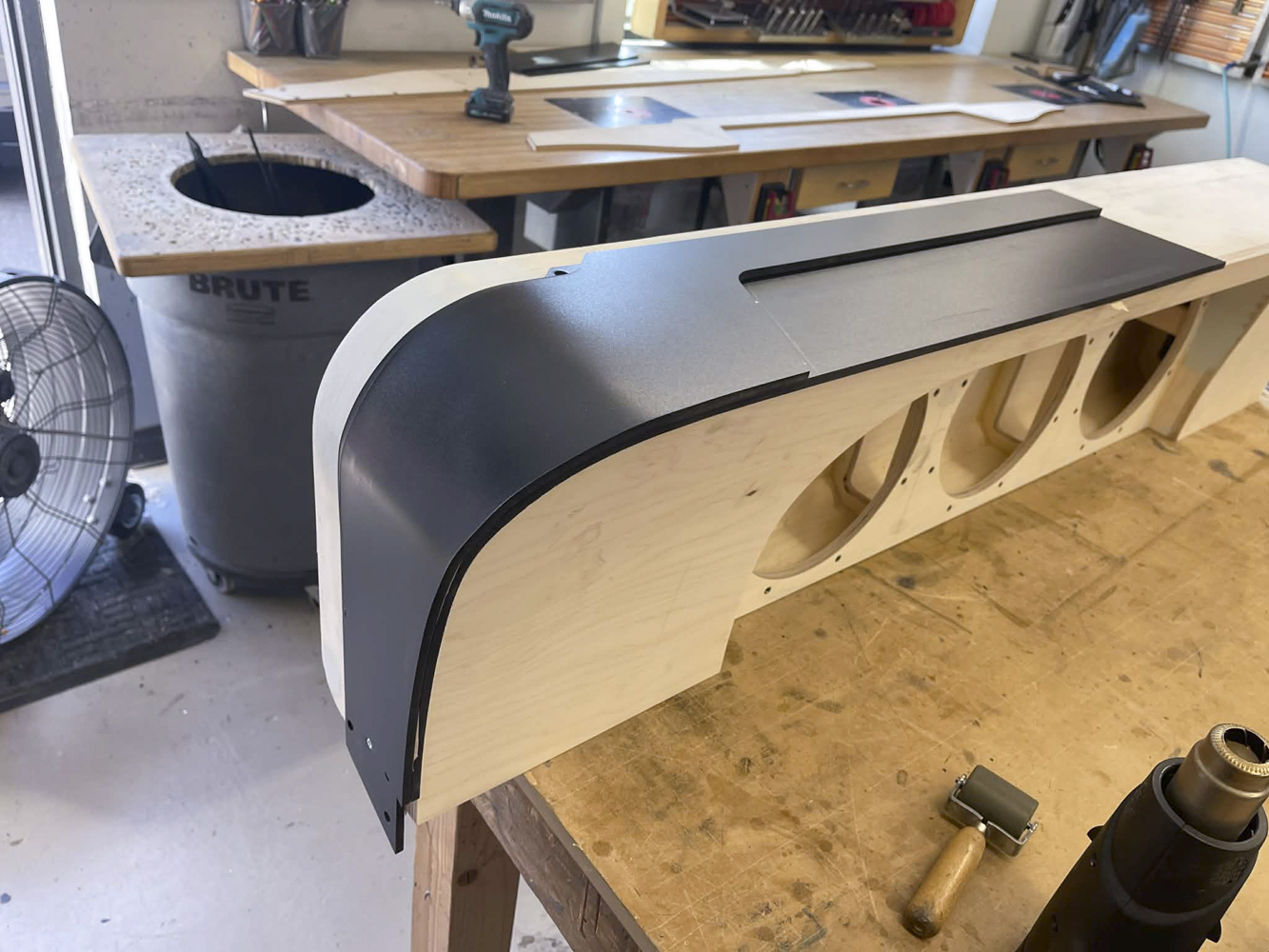
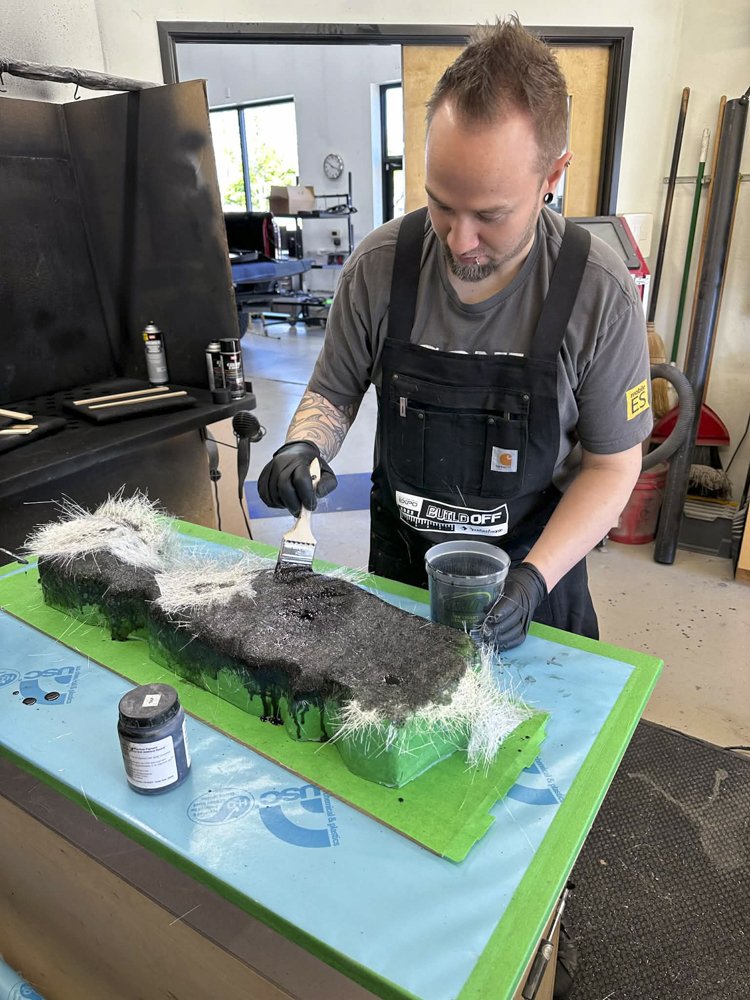
Recently, Carlson completed an under-seat enclosure for three 10s in a Ford F-450 Platinum. Tom Miller, the owner of Musicar Northwest, designed the enclosure, “and then I got to build it. It was challenging because of the pre-planning, everything that went into the enclosure and the kerfing,” a woodworking technique involving shallow cuts to make wood flexible and easier to bend. “I had to really think about what steps I needed to take, and in what order, to match his design with my final product.”
Aspects that made it especially challenging, he said, included heat-forming plastic over the top of it. “The formed enclosure had big, swooping radiuses, and it was such a long piece that normally I would’ve tried to do one piece across the face, and then wrap it around the sides. But we also had 3D-printed parts that needed to be in a specific location. If I started from the middle and worked my way out, they wouldn’t necessarily land where I wanted them to.” Carlson completed the heat-forming in two separate pieces and began with each side, forming it toward the middle.
Space inside the truck was a challenge. “We were trying to maximize airspace inside the enclosure without having to raise the seat up higher than stock,” he explained, “so we kerfed all the corner joints instead of stacking the pieces and machining them, which would eat into the usable airspace on the enclosure. It’s more challenging to do all the kerfing and get it folded correctly and have it line up. This is a standard we hold ourselves to—a way we feel is correct, but not necessarily the easy way.”
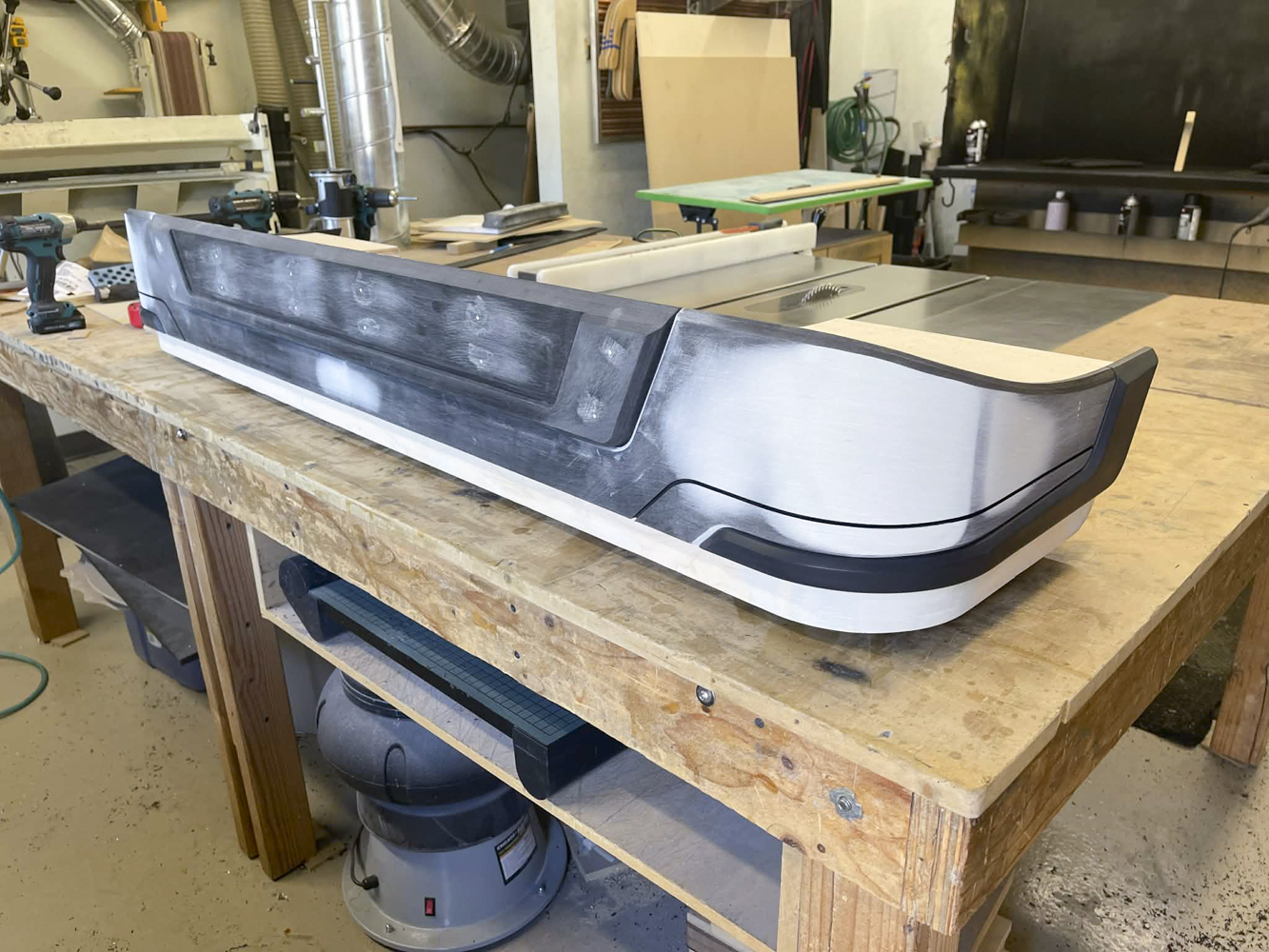
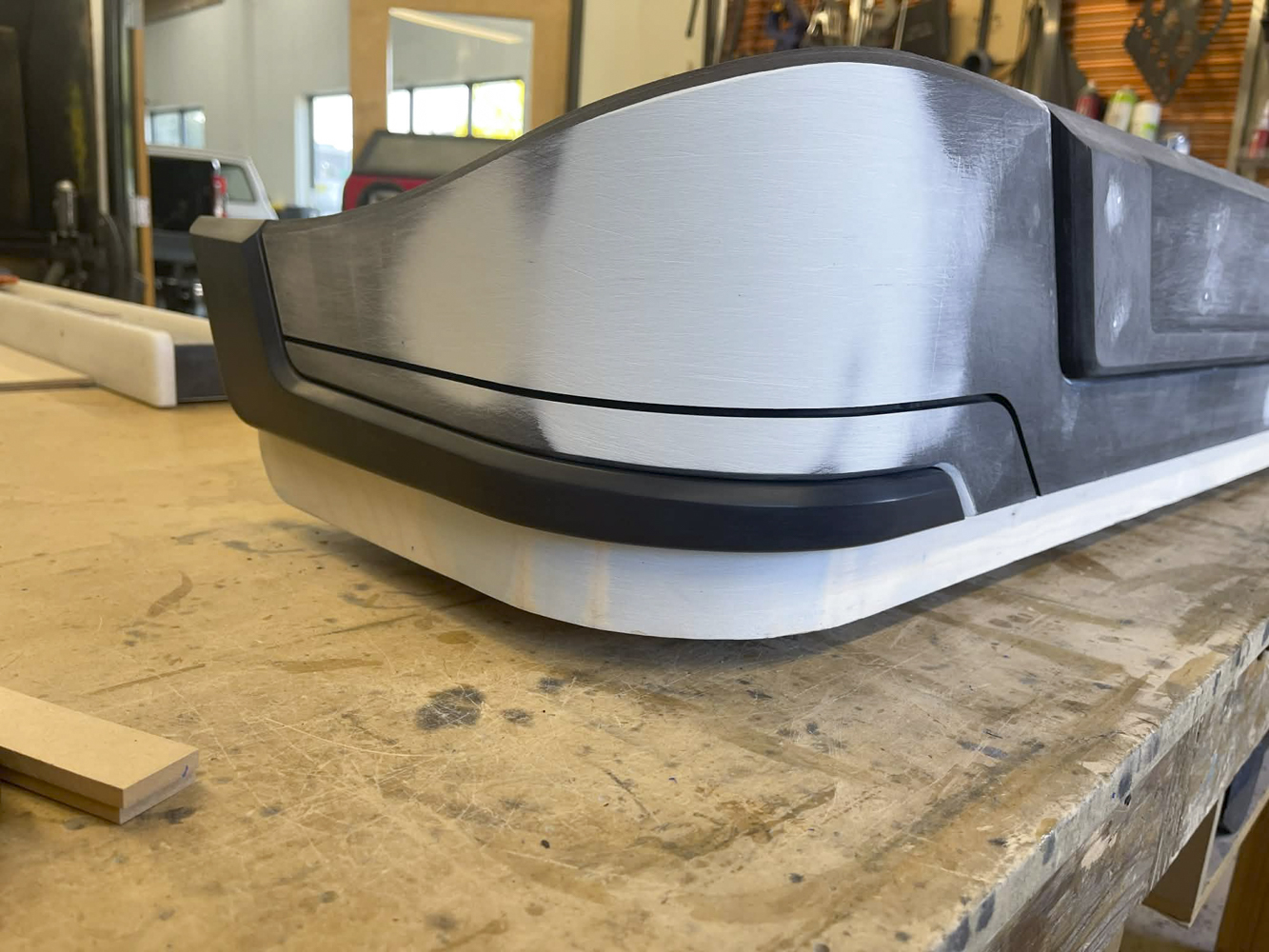
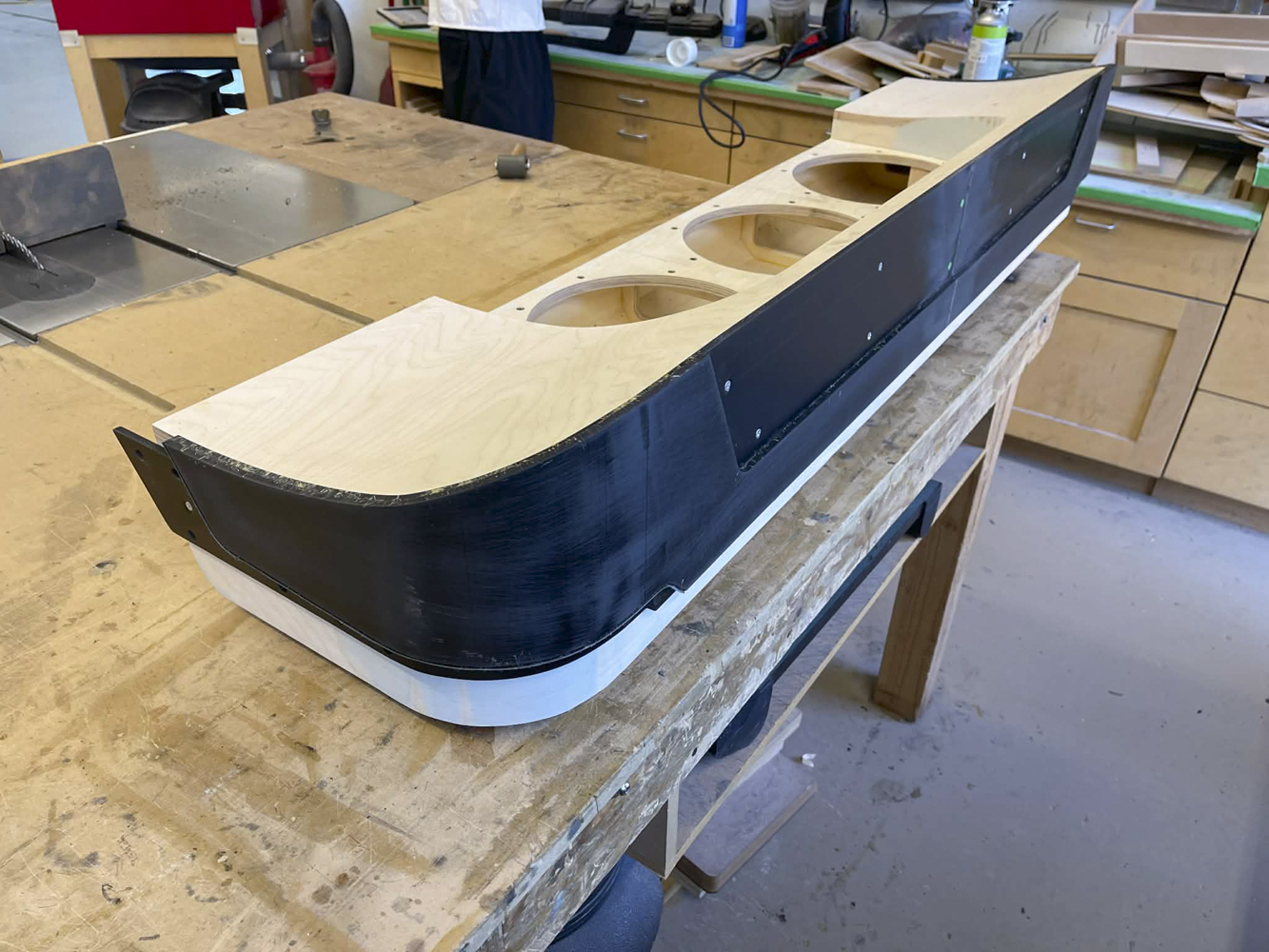
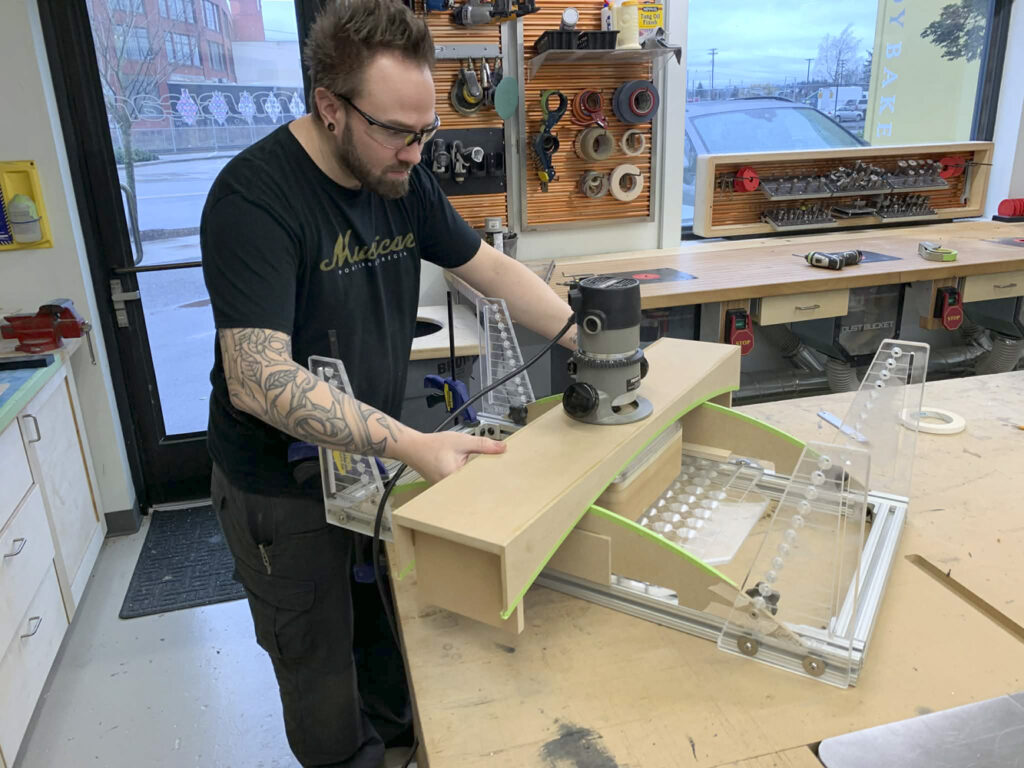
Without a CNC, he’s still building a lot with his hands and standard power tools. Being able to make a design come to life with what he calls “analog techniques” is its own challenge. “I like to think outside the box and try to figure out ways of achieving the desired result in the fastest, simplest way possible—without sacrificing quality.”
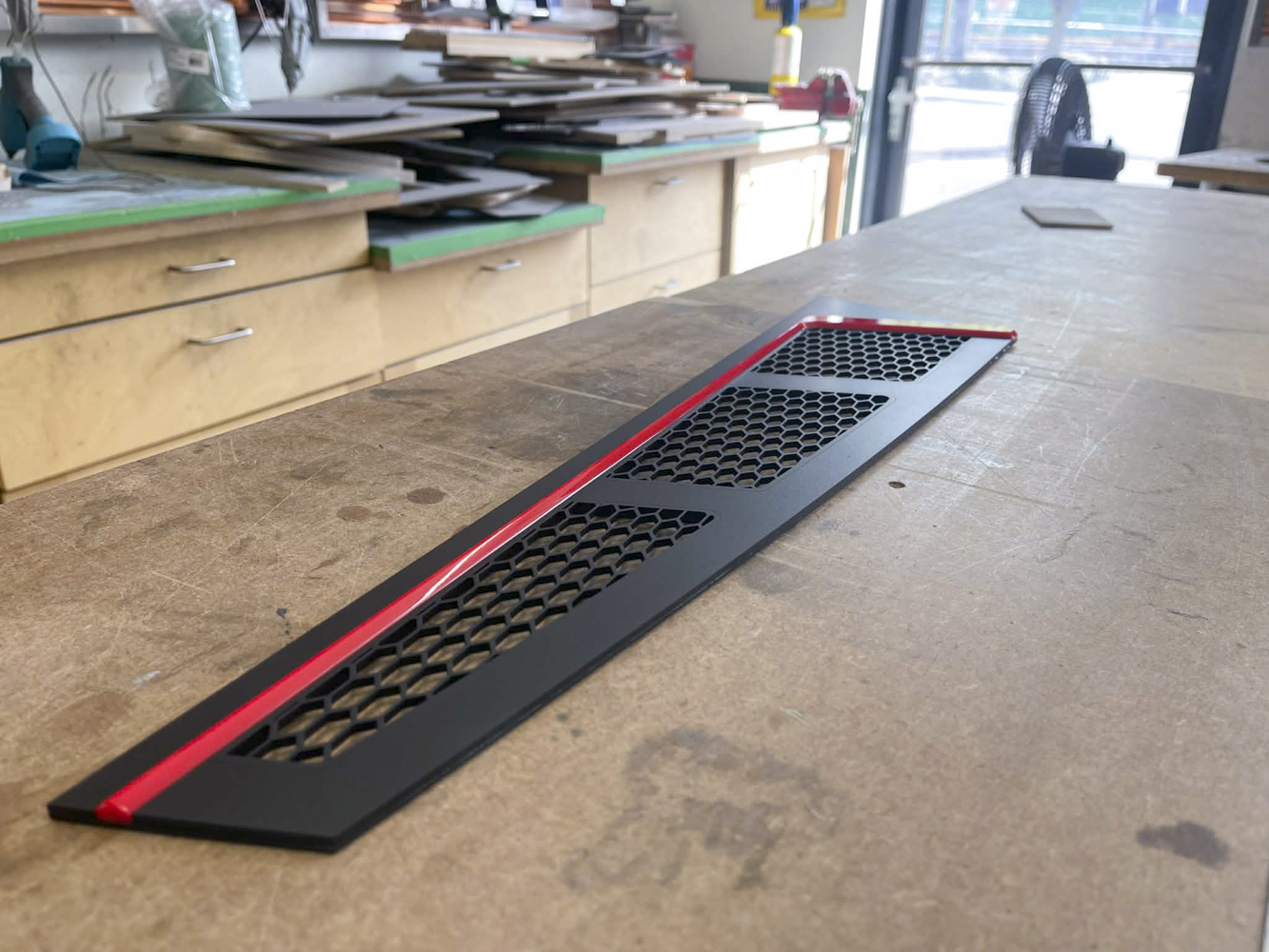
Musicar Northwest values new technologies and tools to help assist in large projects. 3D printing, Carlson said, “has been a game-changer.” Designing everything in a digital space allows for pre-planning for any problems that might come up during the installation, he added. “[It helps ensure] everything will align and fit correctly, and it’s also a time-saver. Once I design a part and start printing it, the print takes a while, but I can go and work on another area of the car and be able to do two things at once.”
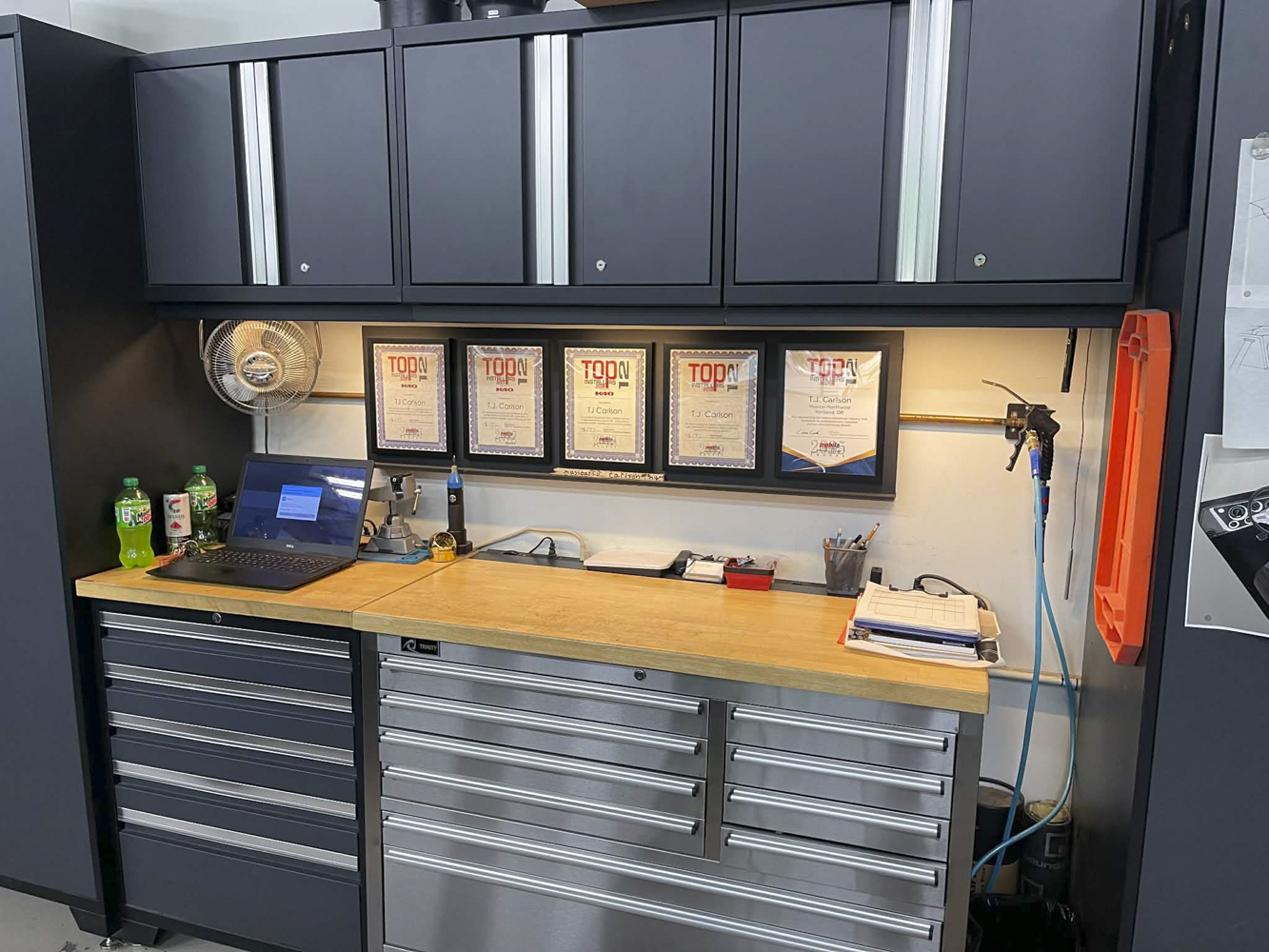
The shop, he said, is relatively small. The fabrication space includes a table saw and three router tables, along with a drill press, dust collection and a small paint booth. The lasers, Carlson said, reside a secondary bay. “We’ll take things from there into the fab shop to process whatever parts we’re building.”
He noted that Miller leads by example and gives his team the space to not only express their own creativity, but to make purchasing decisions that help to expedite a project. “Whether it’s plastic or aluminum or hardware, connectors or fuse holders, we can order whatever we need. That’s really nice because if I’m jumping into a fab project and I realize we don’t have enough birch or we’re running low on a certain size aluminum, I can place an order without having to talk to him or waiting for him to do it. I can have it here within a day or two.”
Out of everything he does, Carlson most enjoys fabrication. “In fabrication, you’re not limited to any specific confines except the amount of space you have in the car. I can be creative, but I can also figure out the best way of going about something by problem-solving and thinking outside the box.” In the past, he added, “I thought I could build something analog faster than someone could design it using CAD software. There were certain things I wouldn’t do in CAD because I could get the result quicker by hand. But the more you open yourself up and learn new techniques, the more you can use when you really need it.”
When he worked at Car Toys, years ago, Carlson’s friend and coworker told him, “As soon as you think you know everything about a specific subject, you’re going to stop learning.” This, he noted, opened his eyes. “Even if you’re extremely knowledgeable, that doesn’t mean you
know everything. There’s still more to learn. Be open-minded. Show up to work with the mindset that you can learn from everyone and anyone,” he said, adding, “I’ve learned some cool techniques from people who’ve been doing this for half as long as I have.”
PUSHING THE BOUNDARIES
Everyone, he said, sees a problem and comes up with a different solution. “Especially when it comes to fabrication— there’s not always a right or a wrong way to do things.” Instead, he said, it comes down to the following question: What technique will help in reaching the desired result? “The more knowledge you have, the more techniques you’ve learned, the better-suited you are to quickly solve a problem and get the result in an efficient manner, without sacrificing build quality.”
Don’t be afraid of change, Carlson advised other technicians. “It will happen, especially working around electronics. The technology is always changing and OEM vehicles are always changing.” Be open to trying new things, he said. “Think outside the box to solve problems. This will help you succeed.”
During the process of pursuing the Installer of the Year award, Carlson said he often considered the way he works and asked himself, “Why do I do things this way? I hold myself to the highest possible standard. I always try to push boundaries and figure out better, faster, or more efficient ways of doing something without sacrificing quality, strength or durability. When it comes to what I’m fabricating, I want it to last as long as the car does.”
This means taking extra time to figure out the correct materials and using something durable, something that will withstand years of use without degrading. “Going through the awards process revived some of my passion,” he said. “It’s easy to do something you love every day and sometimes, we forget why we do what we do. Over time, you might focus on the negative a little bit more than the positive. Reflecting on some of these things and thinking about creativity, how I love working with my hands and listening to music—I can’t picture myself doing anything else.”
MUSICAR PORSCHE DIVISION HELPS BOOST BUSINESS NATIONWIDE
“We also have the Musicar Porsche division of the business that’s primarily focused on providing upgrade solutions for Porsche vehicles, specifically 911 and Cayman,” Carlson said. This arm of the business builds plug-and-play audio upgrade kits with speakers in 3D printed adapters that bolt into stock locations. “They have factory connectors pre-wired to the speaker, so it plugs into the factory wiring. Same with the amplifier,” he added. “It’s a DSP-equipped amplifier that’s pre-tuned to whatever tier system we’re selling to them, so it plugs into OEM am wiring. If you’re savvy, you could install it yourself. If you want someone professional to do it, we will recommend a shop in their area.”
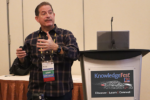
Through this endeavor, Musicar has worked with a number of shops around the country. At events like KnowledgeFest and MasterTech Expo, they meet retailers and partner up by asking if they can send Porsche clients their way. “Most people are excited to get their hands on the kits we put together. They can get the car in and out of their shop faster and still make a good profit. It benefits both businesses.”
Musicar, he said, has even shipped some of its kits to other parts of the world, including Europe and Australia. “They find us online and they say, ‘I’ve got that car, I want that kit,’ and they reach out via email. We can prepare it and send it out to them.”