Rising Up
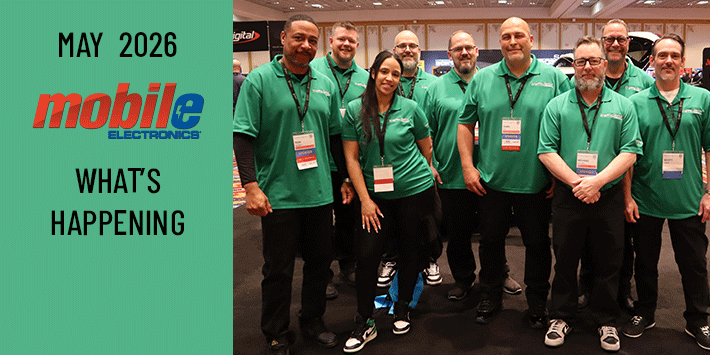
At KnowledgeFest Las Vegas, 2025 Retailer of the Year Traffic Jams Motorsports shared lessons learned in growing the business.
Words by Rosa Sophia
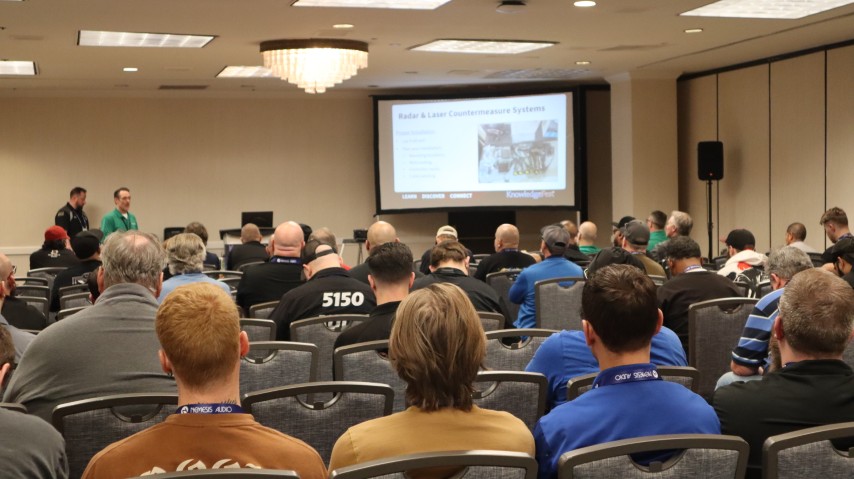
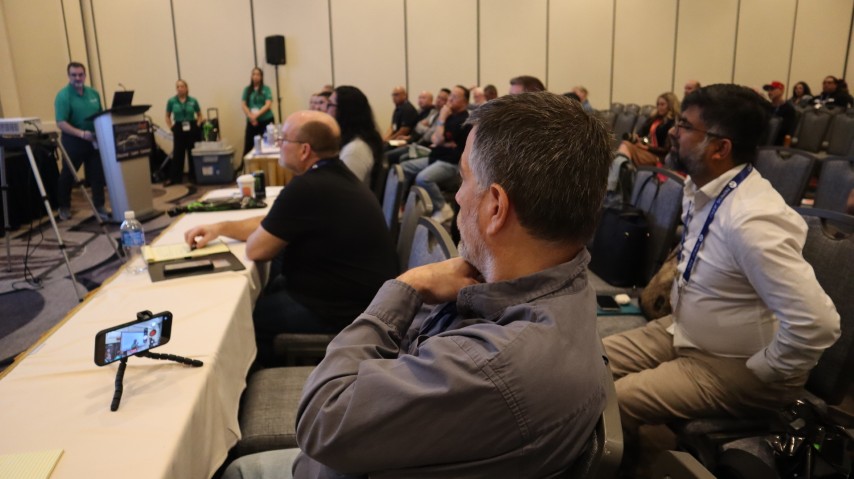
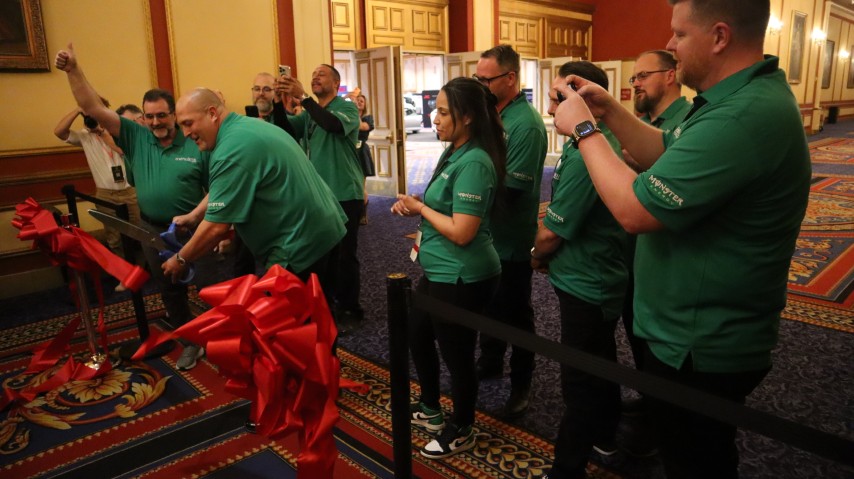
When it came time to open the show floor at KnowledgeFest Las Vegas this past February, Mobile Electronics Association President Chris Cook invited Yamil Widy of Buford, Ga.-based Traffic Jams Motorsports to cut the ribbon. Widy and his team were invited to share their perspectives as a fast-growing business during a panel discussion at the show. In 2025, the store was named Retailer of the Year, and Cook recalled Widy’s acceptance speech.
“You thanked some key people for lifting you up,” he said during the panel. “That’s what KnowledgeFest is all about—lifting others up. In 2018, your store went to Long Beach [for its first KnowledgeFest].” The conversation continued into what Cook referred to as improvement strategies “that Traffic Jams is doing every day. No one else will make this happen for you. You have to make things happen for yourself.”
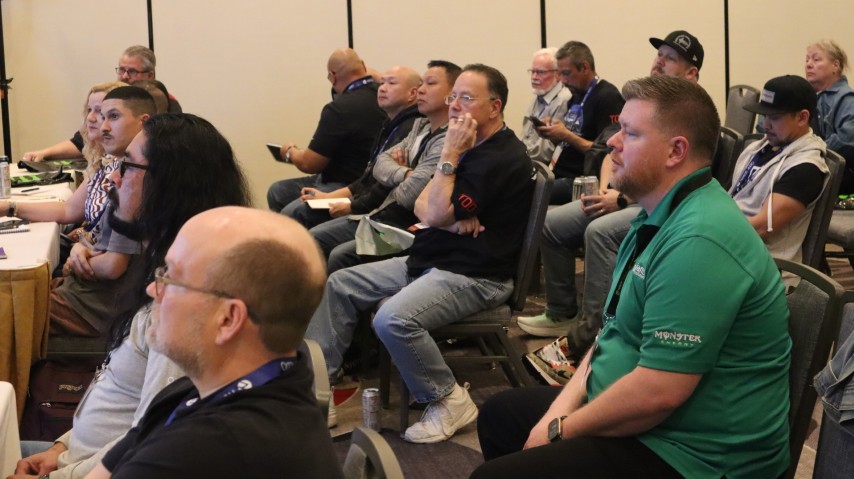
At the show, it’s hard to miss Widy and his team in their bright green uniform shirts. This alone, the team said, was a gamechanger to ensure everyone recognizes and remembers them. As owner, Widy has also learned to rely on his managers to help him make decisions. “These guys see the big picture. We all run this together. Without us, Traffic Jams doesn’t work. Things have changed dramatically for us in the last three years, now that we have more people making decisions on our management team.”
Often, when people come in, they comment right away on how nice the place looks Manager Ron Venable said, “We get that a lot. These things evolved. Each time we came to KnowledgeFest, we took something new back to the store. If you learn, you become better and better. Once you’ve engaged with the customer, they’re already happy.”
Setting the Stage for a Sale
Traffic Jams Motorsports began in a 2,000-square-foot facility, Widy said. Today, it’s grown to about 30,000. Cook commented on how clean and organized the store looks. A store, he said, doesn’t need to be pretty but it should be functional. “The customer needs to know what you do before they even walk in the door. You’re setting the stage for the conversation,” he said, leading into a discussion about reviews and how important it is for a business to respond well to them—especially the bad ones.
“Some people don’t care about reviews,” Widy said. “If you get a bad review, it’s a teaching moment. You can look back at your business and say, ‘How did we fail this customer?’ Then you can retrain your staff in specific situations or change regulations in your shop. You also don’t want to have a hundred five-star reviews because it looks fake. How you respond to reviews is very important.”
The Traffic Jams team responds to every review, he added. “You need to be communicating with those customers. Other customers are watching your responses, especially how you deal with bad reviews.”

The store has also begun recording video reviews in which a customer shares their experience and perspective. One review, shared during the discussion at KnowledgeFest, has been viewed over 15,000 times. “These are powerful,” Widy said.
As part of the customer experience at the shop, Traffic Jams continually rotates display cars in the showroom. “We just finished a project we’d been working on for about a year, and that’s highlighted in our showroom right now.” Widy said this offers an opportunity to the customer to experience a demonstration and ask questions.
Another aspect of ensuring positive first impressions is cleanliness, which the team takes very seriously. When planning the facility’s remodel, Widy said he visited high-end dealerships for inspiration. “Everything is so clean, nice and organized. I don’t believe in clutter. In the past, we had a crazy amount of displays and sometimes you’d lose your customer because they’re too busy playing with the displays. It was too easy for a sales guy to say, ‘Hey, that one has double-DIN radios,’ without even getting up. Now, we keep it as minimal as possible so we have more interaction with the customer.”
In 2018, at KnowledgeFest Long Beach, Widy said his “eyes were opened” to the reality of things. “We weren’t as good as we thought we were. We attended classes and realized we were doing so many things wrong. We were losing revenue. We’ve always been blessed to have our bays full, but it felt like we were just spinning our wheels. We barely had enough to cover our monthly expenses. So, we decided to go out and see what we could learn instead of thinking we knew everything. It was a very humbling experience.” Making changes can be overwhelming, and Widy warned that things don’t happen overnight.
Building Value
Cross-training allows team members to assist where needed, and improves communication, he added. “We make sure every customer gets to meet the person who’s working on their vehicle. When you allow that connection, it takes it to a whole different level. You’ve got to train your tech to be able to sell, too, because that’s a key tool in your shop.” He also shared details about the shop’s structure and the team’s daily habits, which help keep everything running smoothly. Venable said they now offer shop tours to every customer—something they didn’t do until about five or six years ago. “The biggest tool you have [for selling] is your team. You can’t build value without individual effort together.” Clients are “wowed” by the shop tour, he said.
During a shop tour, staff are trained to greet the customer and introduce themselves, Widy said. “They don’t stop working, but they introduce themselves. I might go to David and say, ‘Hey, what’s going on in this car?’ And he’ll give a quick rundown, and the customer is happy to hear that. Nine times out of ten, when we’re finished the tour, they’re ready to leave their keys. And we have to say, ‘We have a schedule. We’re two or three or four weeks out. We make sure we get a deposit. If they’re willing to give you their keys, they’re willing to open their wallet right then and there. If you start doing shop tours, you’ll close a majority of your sales.”
During the discussion on vendors, Cook asked, “How would you advise handling vendors to make it profitable for you as a retailer?”
“The most important vendor in your shop is you,” Widy said. “Vendors are very important and we have to have that relationship. Vendors need us, and it has to be right [for the retailer]. Once you find that vendor, cultivate the relationship. Make sure your vendor is helping you grow your business.” Most of all, he added, it’s okay to say no. “As a matter of fact, I recommend for you to say no. If they come to you presenting a deal, ask yourself, ‘Why is it a deal? Is it worth it?’”
Maintaining Structure
When it comes to communicating with customers, salespeople need to be properly trained, Widy said. Cook noted that Dale Carnegie offers a standard course that teaches people to communicate more professionally. “It will change their life and career, and would be beneficial to you [as the retailer],” Cook said, adding that evening classes won’t interfere with the workday. “You can also get someone involved in Toastmasters, which is very inexpensive and helps people to open up and learn to feel comfortable.”
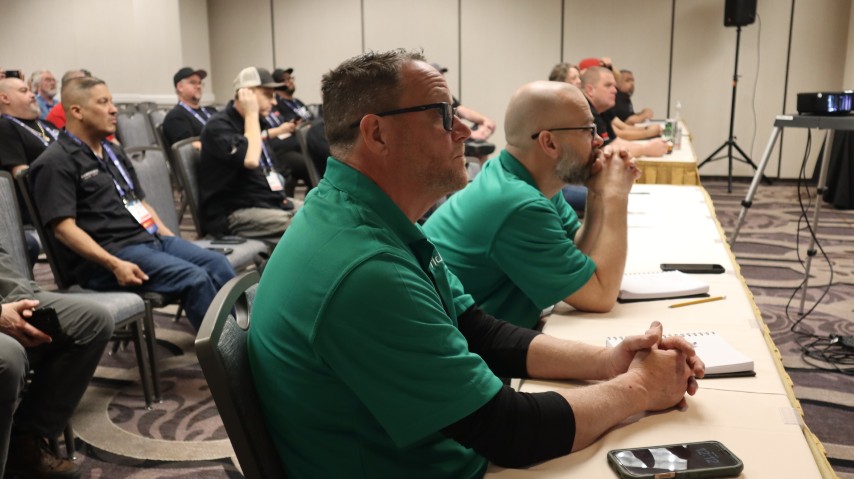
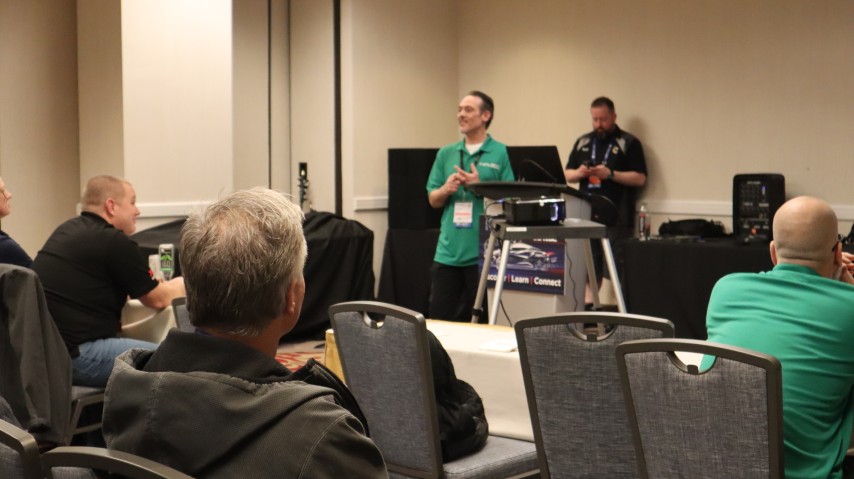
Traffic Jams also believes in building community connections, both inside and outside the industry. “When we first came to KnowledgeFest, we were outsiders,” Widy recalled. “You need to build relationships. There are people out there who are willing to help, but if you don’t ask the questions, they can’t help you.”
This mindset also extends to looking beyond one’s own market for support and partnership, he added. “Look outside your market. There are other avenues of revenue that you wouldn’t think about.”
A good structure is essential to any business’s daily operations, said Widy and his team. Staff arrive at 8:30 in the morning. At 8:45, everyone meets in the front for the daily morning meeting. The meetings, they said, are crucial to communication. “Don’t communicate, and you’ll see how quickly your profit will go out the window,” Widy said. “We go over our schedule for the day. Usually, we have between 40 and 50 cars on our premises that are being worked on. The meeting allows us to set the expectations for everyone in the building, including sales and techs. Set the tone for the day.”
Traffic Jams never “burns the midnight oil,” he added. “One of the things that will kill a shop is having these one, two or three o’clock morning work sessions. People will be tired, they won’t be able to focus and they won’t be 100 percent.”
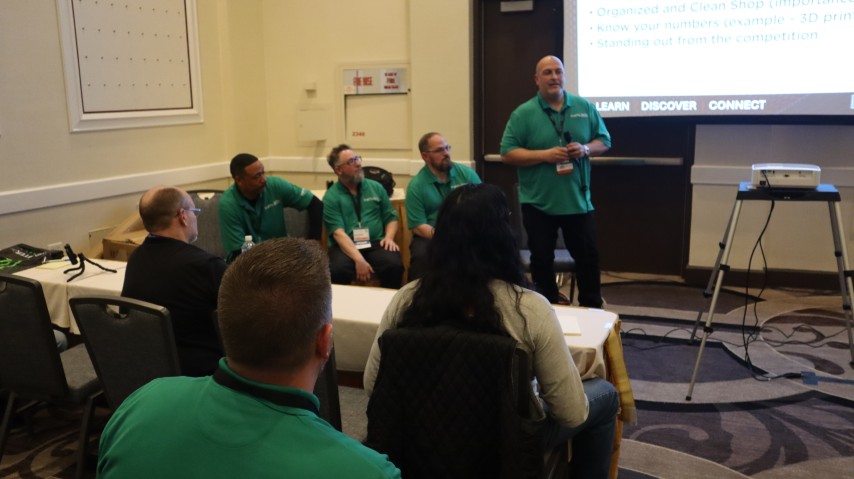
Classroom Q & A
Attendee: You said you use about $40 worth of paint protection for each vehicle. Is that a cost that’s included somewhere on the invoice?
Widy: You should be charging shop supply. We use paint protection, seat covers—everything’s protected. Customers want to know their cars are being taken care of. If you ever had to repair a paint job, you know that $40 is nothing compared to what a paint job costs. These are little things. These are materials that you’re using to protect your customer’s investment, so you should be charging a good shop supply. We charge 10 percent on normal shop supplies. We also have premium supplies, and that’s a whole different thing. When Ben [Freeman] says, ‘I need a hundred dollars’ worth of magnets for this job,’ that’s not shop supply, that’s a premium supply that gets billed separately. But yes, make sure you’re billing on this. We’re fortunate enough that our 10 percent adds up to thousands of dollars each year, and that’s why we’re able to afford to buy all the stuff we need to protect these vehicles.
Attendee: Do you have a good relationship with other shops in your area?
Widy: One of our competitors, SK Customs, is here in the class right now. We play well with everyone, because at the end of the day, it’s a small community. Don’t make enemies with your competitors because that doesn’t help the industry at all. Learn how to work with each other.
Attendee: When it comes to disciplinary action, do you stay strict when it comes to following the rules?
Widy: Our employee handbook is always evolving. In the last last two weeks, myself and Vanessa have had several revisions in a week. Things are going to change. We started small and we’re getting bigger, but stick to your guns. Do what your employee handbook says. Make sure that everyone is clear on any revisions. Don’t just change it and say nothing. During our hiring process, an employee has to sign paperwork saying they received and read the handbook. [Editor’s Note: MEA members in need of assistance can log in and review resources to download a handbook template to start with.]
Attendee: How do you compensate employees to attend these shows?
Widy: Every one of these guys is being paid to be here. This is a normal payday for them. The shop is incurring a huge cost to be here. The only thing they have to pay for is their flight. The company takes care of accommodations and meals. Right now, we have half our team here, and the other half back at home, running the business every day. You’ll see our team in different classes and trainings, and they have to present the material they learn to the rest of the team when we get back.
Attendee: When you bring in new products and new categories [like paint protection, wheels and tires, etc.] do you hire an expert [to work in that department]? How do you put your trust in someone? Did you take the time to learn all that yourself?
Widy: We’re always hiring. But when we add new categories, yes, we add an employee to each category. We have wheel and tire guys, 12-volt guys, vinyl wrap guys. We have an expert in every category we sell who train other guys in the shop. The expert can be a manager or a technician. We cross-train everyone.