


David Chamberlain’s mission is to make the car audio industry better—one tech at a time.
Words by Jamie Sorcher
In his current role as a product specialist at VOXX, one of five on the tech support team, David Chamberlain has a daily groove—educating installers and consumers, mentoring those who might need a boost, and maintaining a level of professionalism that has marked his successful career so far. With just Best Buy and VOXX on his resume, Chamberlain has benefitted from working alongside those who were generous with their time and expertise. This gave him a foundation that’s made his 12-volt journey both positive and rewarding.
Born and raised in the Chicago suburb of Aurora, he grew up practically in the backyard of the Richfield, Minn.-based Best Buy. Right out of high school, the summer after he graduated, many of his friends worked for Best Buy and invited him to join them. “I was contemplating college, but wanted to make some money and work. I was tinkering with my own cars and thought selling car audio would be a cool thing to do.” Within a year, he said, the company recommended he shift to installation. He stayed in the bay for close to 14 years. When the chance came to move to the corporate level, he felt ready to make the leap.


Adopt the Best Methods From Those Around You
Through Best Buy, Chamberlain participated in grand openings around the country. He moved to the Fort Lauderdale and Boca Raton area for a few years, he said. “Then, Best Buy expanded again and they offered to move be back to Chicago to open even more stores.” After that, he headed to the corporate offices south of Minneapolis for a technical support position.
His first supervisor, Andy Wahl, who hired him at Best Buy, served as a valuable mentor right from the start. “I was a new sales guy just out of high school, but along with teaching me the basics, Andy advised me to take the best from everyone around me. It’s not like you’re stealing a person’s way of doing something—instead, you’re molding what you do after the best of what you see around you. If you like how a particular sales guy describes a Pioneer radio feature, then use those words, but with your own twist when you explain it to customers. If you like how someone pitches an extended warranty, if they have buzz words that seem to land well, then use those.”
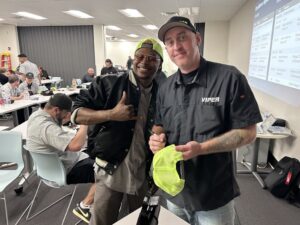

Not only did Chamberlain find this an effective method with the sales team, but he also found it useful when he moved to the install a bay. “If I liked how a guy ran wires in a certain car, then I started doing it that way. If I liked the way someone disassembled a dash, and it was faster and better than others I’d seen, then I started doing in that way. I picked the best techniques of everyone around me, and that’s the kind of installer I was.”


Somewhere along the way, Chamberlain said he noticed a transitional shift: Instead of adopting techniques from other installers, they started learning from him. “Someone would say, ‘Oh, I’ve never seen it done like that. Where did you get that?’ And I would say, ‘my buddy Mikey showed me this five years ago, and I really liked how he did it, so this is my technique now.’” Then, he added, the next installer would adopt it, and before long, “You’re passing something down from one installer to the next, and ultimately through generations.”
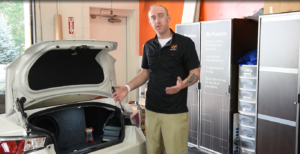

Later on, when Wahl worked as an assistant manager and general manager of a Best Buy store, Chamberlain followed him on certain occasions. “When Andy grand opened a store, he would call me and ask if I wanted to join him. I did because I liked working with him. When he moved around, I moved around.” In the early part of his career, Chamberlain worked for Wahl numerous times. “We had a great working relationship.”

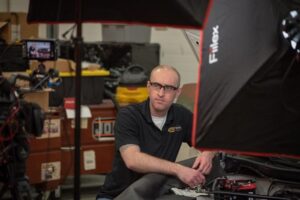
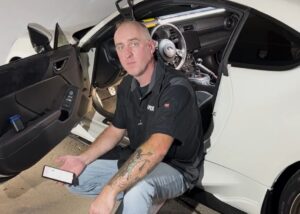
Provide Both Support and Solutions
After almost 14 years of doing installations, Chamberlain ended up in the role of technical support person at Best Buy—called a Secret Weapon. He said “you’re the end-all, be-all, fix-it guy” for everyone. The Best Buy tech support team, he added, handled everything in the car world. “There were eight of us who had to be proficient in radio trouble shooting, amplifiers, remote starts, dash cams and everything else. You’re not just an expert in one area. You have to be an expert in the entire car universe.”

The company, he said, sought someone who could handle technical support, but could also be proactive and develop resources relating to known problems in the industry. “Maybe installers hadn’t seen an issue yet, so let’s create a technical document to put the word out beforehand.” Then, he said, they’d already have the solution. “That’s something I was passionate about, and I think it helped me land the job.”
Chamberlain interviewed for the job with Doug Tessman. “He was a solid resource as my first manager at Secret Weapon.” Tessman, he said, helped him with corporate lingo, told him who to contact for certain issues and where he could find information.
Learn to Meet People Where They Are
Not everyone wants to move up the ladder or aspires to have a corporate job, Chamberlain said. “My buddy Mikey Liss is someone I worked with early on in my career. He isn’t interested in anything other than what he’s doing now—installing. That’s what he wants to do. He’s been offered promotions for 30 years, but he just enjoys going to work, putting products in the cars and going home.”
Chamberlain learned a lot from Liss, he said. One of the things he picked up is the understanding that there’s nothing wrong with doing the same job for 30 years if it’s what you love. “It’s important to recognize that not everyone is interested in a promotion or changing jobs. Mikey is a wealth of knowledge because he has been doing this for so long and he’s patient with people. Early on in my career as an installer, when he taught me, there were never any expectations.” Liss didn’t question why he didn’t know something, he added. “Patience was one of his top attributes along with his ability to talk with people on a level they could understand.”
All of that has been incredibly helpful to Chamberlain now in his role at VOXX. “I am not only supporting installers, but my team is level two support for consumer issues. Now, I might be talking on the phone with someone who doesn’t know cars very well, so I will try to figure out a metaphor or simile to help a person understand what I’m trying to convey.” This, he added, is one of Liss’s traits—the ability to figure out a person’s knowledge level and speak to that without getting to technical.
One should also avoid “dumbing things down,” he said. “People can get irritated with that or might feel disrespected. You need to find out how to get your point across without going over their head, and [to avoid] going to too low a level” because if this happens, the problem won’t be solved.
Double-Down and Don’t Give Up
Chamberlain said the goal for many installers is to own their shop and be their own boss. He noted he’s had friends who’ve gone on to do this. However, this wasn’t a goal for him. “My goal was to work for a manufacturer or a vendor, and so I came over to VOXX. As a technical support and product specialist, I’m mentoring in some way every day.” Last summer, he traveled the country visiting Best Buy locations and holding training sessions on VOXX Viper, Avital and Directed product lines.


Through his work, he’s become acquainted with many technicians on the phone. “They would ask me how I got my job and they’d want to know where I was in my career,” he said, adding that when he shared his story, some would express interest in a similar path. Chamberlain would offer his time. “When you don’t have a car to work on, set up a time with me and we’ll talk about these things. Let’s make the time.”
He recalled a couple of techs who put in the work. “In fact, when I left Secret Weapon, the guy who got my position, Chris Gerlin, was someone who wanted my job.” Gerlin stayed in touch and made time to speak with Chamberlain. “I told him the steps he’d need to take to get my job once I left. He followed through, so I felt like I was a successful mentor because he did get the job and he achieved his goal.”
When it comes to mentorship, he added, the real successes happen when both people stick with it. It’s not a one-off conversation: “Tell me what I need to do to be better. The mentor and the mentee must continue communicating and there needs to be follow-up. Someone has to be the one push it, to keep to a schedule and to hold the other person accountable.”
Not all of his mentoring resulted in success. One person, he said, asked for help and Chamberlain offered it. “I reached out to see if he wanted to continue talking, but he told me he wasn’t interested in moving ahead. He applied for a job he didn’t get and he was understandably let down. That moment, though, can be the most critical,” he said, adding, “That’s when you need to double-down and not give up.”