Strategy & Tactics – Profit-First Buying
How should a retailer decide what to stock? Kimberly Trainer shares the inventory strategy she employs at Car-Tunes, Inc.
Words by Rosa Sophia
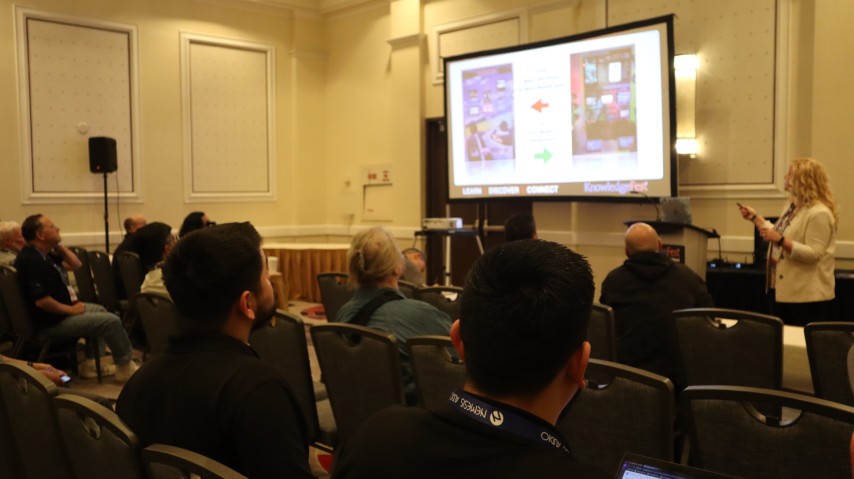
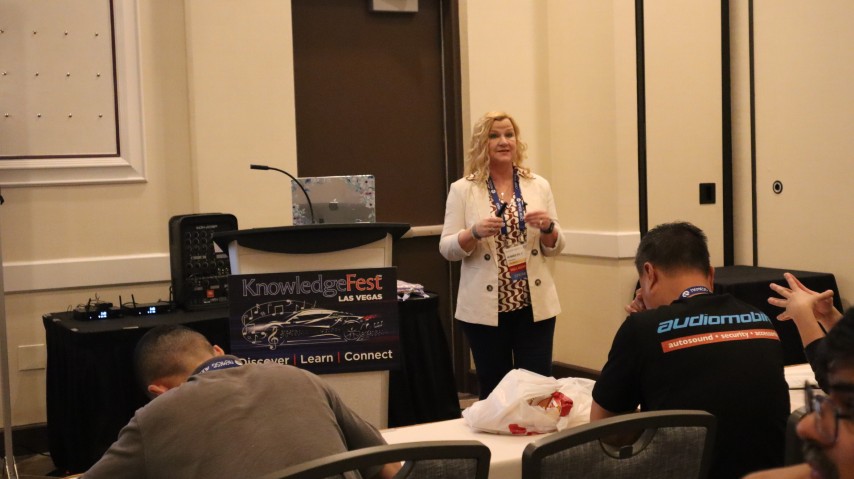
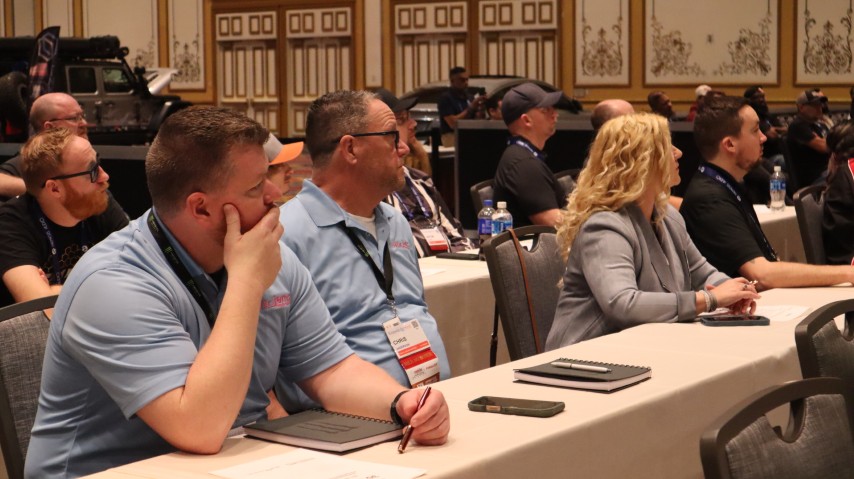
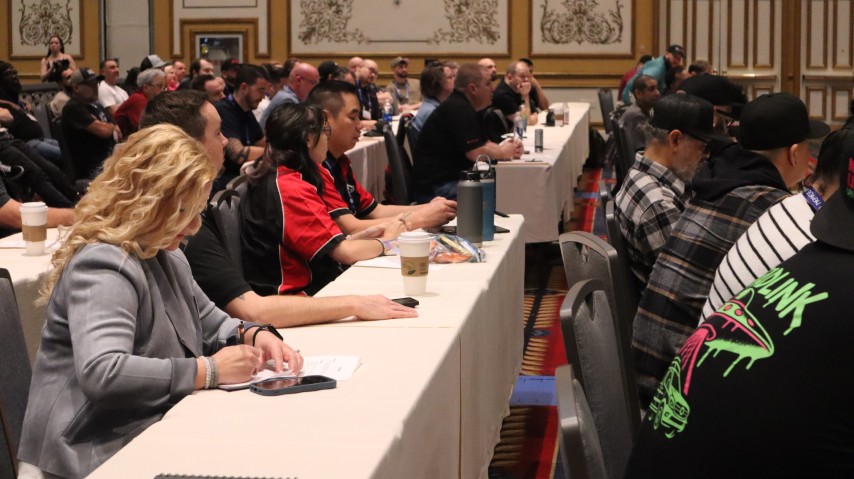
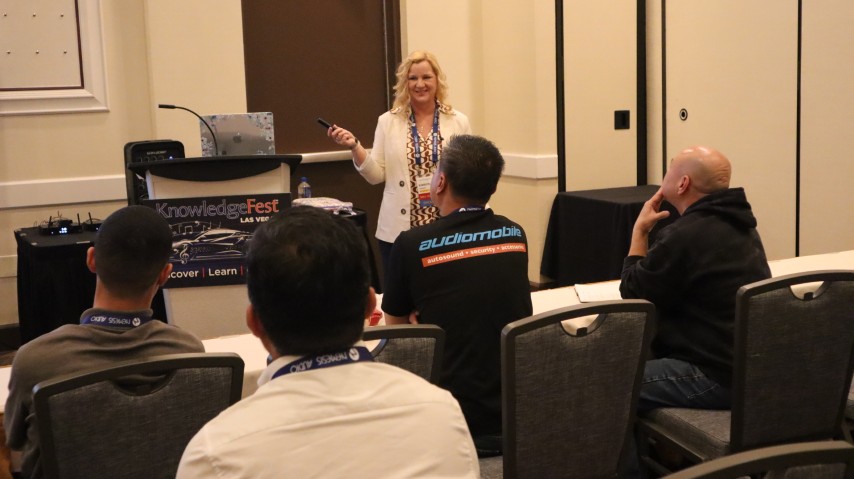
Through careful inventory planning, a business can reach its target audience and increase its profits, according to Car-Tunes, Inc. owner Kimberly Trainer, who taught a class on the subject at KnowledgeFest Las Vegas. “The separation between good and great businesses is the preparation that people are willing to put in to be the absolute best they can be,” she said. “The order in which you do things matters. You want clients to look at you as the expert in your field.” This begins, she said, with planning.
When it comes to inventory, Trainer stressed that everything should make sense and be related in some way. For example, Car-Tunes may not sell wheels and tires, but they do sell musical instruments. The shop made this choice after discovering that many of its clients were musicians. “I started making these connections, cultivating that client, and now we have an entire instrument room. It’s the fastest-growing category we’ve ever added to our business.”

She warned retailers to be careful and intentional. Trying to do just about everything at once could mean a business is spreading itself too thin: “I think it’s important to simplify and get that inventory to a manageable level. The same thing goes with your product offerings. You have to really focus on what you’re good at and promote that. If you jump in and out of categories, it’s going to diminish your claim as an expert. This week, you might tell customers, ‘This is the best thing,’ and next week, ‘We don’t do that anymore. There are too many problems with it.’ Maybe you really did have a problem with it, but you need to find a smooth transition, like replacing a product with a newer model.”
Be consistent, she said. If a retailer isn’t consistent, customers will say, “‘Whose side are you on?’ You’ll just confuse your clients.”
Plan Store Inventory for Successful Sales
Well-planned inventory leads to increased sales, Trainer noted. “It starts with product knowledge. If you’re an owner, sales professional or an installer, you can’t do your job to its highest potential if you don’t know your products.” When it comes to understanding what inventory should be in the stock room, Trainer suggested learning from vendor reps or other respected industry professionals. “Ask other people how they go about it and you’ll get real answers.”
In the showroom at Car-Tunes, Inc., displays present “good, better and best” options, which she noted really simplifies everything for both clients and staff. A store should also be actively seeking new products, otherwise, its current inventory will become outdated quickly. Trainer noted that it’s important to be discerning and not simply buy whatever a manufacturer’s rep wants to sell.
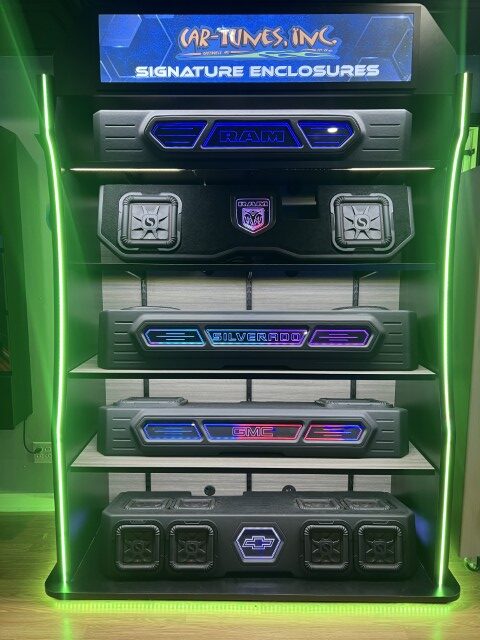
Reps, she said, are there to help. However, a rep isn’t just selling product to one store: “He wants to sell the product to everyone, right? But that product might not fit into what you have in your shop or the other brands you sell. Reps are the good guys, but you can’t just buy whatever is a good deal.” That good deal, she added, might still be sitting in the stockroom five years later. Part of pre-planning inventory is making sure there’s space for it. “If I randomly buy a bunch of enclosures and I don’t have a plan on how I’ll sell them, that won’t work.”
Meet the Client Where They Are
Technology becomes outdated quickly, and keeping these things in the showroom doesn’t create a good experience for the customer: “It’s not a good look and it’ll probably keep them from looking further.” Trainer also reminded the audience at KnowledgeFest not to buy what the customer is seeing on TikTok. She’s noticed a trend, she said, where customers will call the store asking about a product they’ve discovered online.
“One question we’ve had recently is, ‘Do you have a kill switch?’” Often, the customer is lacking information and doesn’t really know what they’re looking for, she added.
“The easiest way to overcome it, in the most profitable way, is to offer an alternative solution for a product that will actually solve their problem.”
When it comes to a customer requesting a “kill switch,” Trainer recommends the TURY FAST MAX. “We wanted to find something that will be a valid solution. We tell them, ‘Yes, we do sell a kill switch, and you can control it through an app on your phone.’ As soon as you say that, they’re interested. Everyone wants a gadget on their phone.”
Next, she said, “We tell them there are other features in addition to that, like a feature that will help you save fuel in your car. A feature that will help beef up your horsepower. And a feature that will keep a valet from hot-rodding your car. There’s extra value built into that ‘kill switch’ they wanted in the beginning.”
From there, other options can be added, such as a controller for inside the vehicle, or additional protection against theft. Trainer noted that while this sounds like sales strategy, “it’s truly all about inventory. Now, you know what to stock.”
At another point, people began coming into Car-Tunes saying, “I need a zero-gauge amp kit.” Trainer said she recognized they didn’t really know what it meant. “So, I thought, ‘How can we work this to our advantage?’ Whatever they’re asking for, find a product you have that will solve their problem. That’s part of choosing your inventory. You want to give them something that will make their lives easier—something that will solve that problem that people on TikTok have told them about.”
In deciding what inventory to stock, she said a retailer should ask themselves, “Will this product be sellable? Because it doesn’t matter if you have really, really great inventory if you can’t sell it.”
Understand the Needs of the Local Market
Due to being located in a warmer climate in Greenville, Miss., Trainer said the team at Car-Tunes had to find a different approach to selling remote starts. “The guys up north are killing it. A few years ago, I decided we had to figure out a different angle. What would appeal to our market? We went at it from a security and convenience standpoint. Now, we offer a remote start and security package. When you’re picking your inventory, consider, ‘What angle can I use?’ We all know manufacturers have cool technology, but how will we turn that into dollars?”
One way of getting a better understanding of the local market, she said, is to attend local events. “Look at how people are customizing their vehicles for ideas for your own customers. If you’re in an area where there are a lot of biker clubs, for example, go and check them out. See what kind of stuff they’re putting on their bikes. If they’re within your area, you should be selling those products. It depends on where you live when it comes to the kinds of vehicles you see in your shop.”
One of the fun aspects of working in the industry, Trainer added, is that “we often don’t know what’s coming through the door. We see different things all the time, and that’s something we really enjoy about what we do.”
Certain things, though, sell better than others. “These are important things to think about. If you’re marketing to your customer, it’s kind of like [that saying about] dressing for the job you want. You want to offer the products for the client you want.”
First, Do the Research
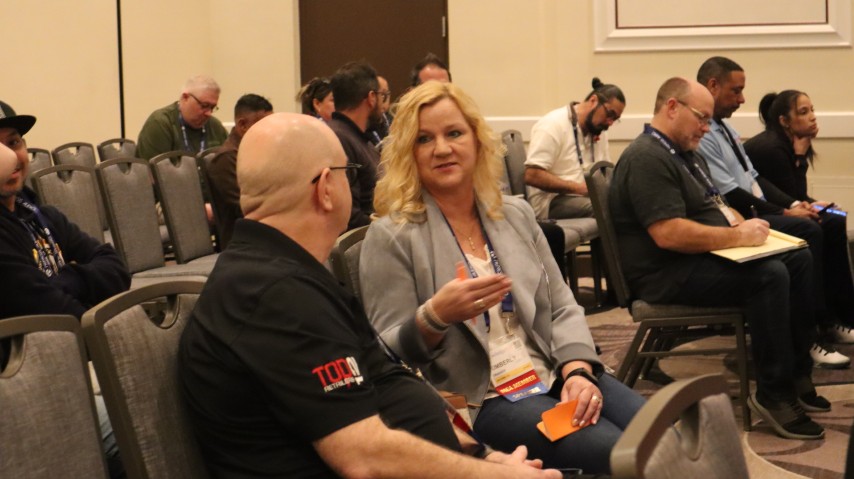
When considering adding a new category or new inventory, Trainer said it’s important to do the proper research first. At Car-Tunes, she and her son, Dalton, conducted research on wheels and tires to see if it might be a good idea to add the category to the business.
After learning how many local shops already handled this, as well as the cost involved, Trainer chose not to pursue it. “I’m glad I did my homework,” she said, adding that a new product or category also requires the right people with the right skillsets to do the installation work.
“When we take on a new product, I like to let the employees install it in their own vehicles first. This will walk them through any problems they might encounter. Most of the time, I won’t charge them for the product. If they go through this and love it in their own vehicle, we’ll be able to sell a lot of them.”
This, she noted, provides a good return on investment. “They’re telling every person who comes into the store how cool this thing is. If you’re not sure, you can practice on your employees’ vehicles in your shop before you dive into it with customers.”
Additionally, if a retailer is uncertain about a particular category, Trainer suggested speaking with their local reps about it, as they might be able to provide something to try out.
“They know the potential. Once we get in there and install it properly, we’re probably going to want to sell it,” she explained, adding, “Don’t invest without knowing the real cost involved in tools and training. And don’t compare yourself to another shop that sells a ton of something—because that’s a big pitfall in every industry, not just ours.”
Well-Designed Displays Lessen Confusion and Increase Sales
Recently, after a live install at an event, Trainer decided to acquire a manufacturer’s Jeep kits to sell at Car-Tunes, but when the product arrived, the box was as big as an entire table.
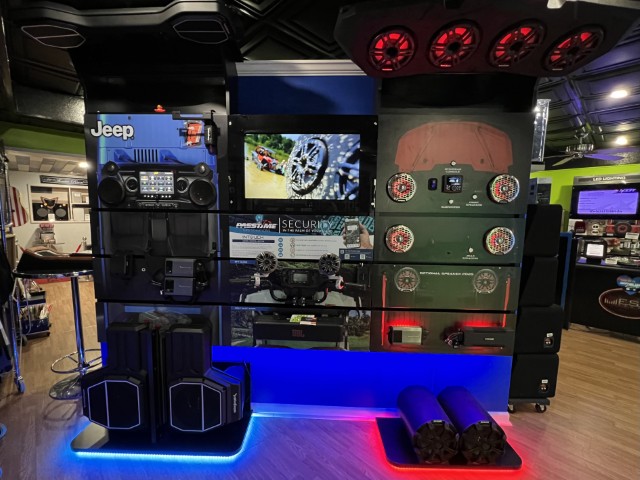
“I couldn’t even fit it in my stock room. This kit that sells for a little over $5,000 sat there for six months. I called up Jody Culbertson at 5 Axis Innovations and said, ‘I cannot sell this. What can I do?’” Culbertson, she said, was able to help by bringing a creative new display into the Car-Tunes showroom.
It’s essential to consider product placement when choosing inventory, Trainer said. “If you don’t have somewhere to display it, how do you plan to sell it?” Trainer has also taught on showroom design and organization at KnowledgeFest, together with Culbertson, where she talks about strategizing displays to ensure clients are engaged and aware of all the categories a store offers. “Position things in the good, better and best category, so you can save time with your client and avoid overwhelming your staff.”
At some point, the old-style sound room became “too much going on at once,” she added. “You don’t want your customer to be more confused than when they got there. When we shifted to a slimmer, more effective process, we spent less time with the customer and it was very easy for them to know the good, better or best products.”
However, she said, salespeople at Car-Tunes always start by showing the best products first. “This one has all the features. If you want to spend less money, you lose those features. We started talking about taking things away, and then our sales process began moving along quicker. Customers were very happy because they felt confident that they’d picked the right thing to solve their problem.”
To help with showroom design and product placement, Trainer suggested taking notes or creating a drawing. No matter how it’s handled, “if you have a chart for your displays that shows what products go in them, and what inventory you’ve purchased to put there, then everyone on the sales team knows. It makes everything very organized, planned and easy to execute.”
Don’t just put product in a glass case and expect to sell it: “If you do that, someone can just go online and see the same thing. You have to excite them. If you don’t, you’re going to lose them.”