Expanding Support for the Spanish-Speaking Community
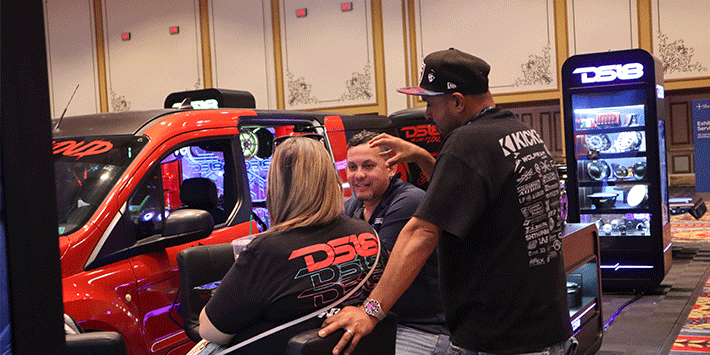
At KnowledgeFest Las Vegas, Rob Ferro of DS18 and Fernando Lopez of Five Star Car Audio discussed the current needs of the industry’s Spanish-speaking professionals.
Words by Rosa Sophia
Some technicians in the Latin or Spanish-speaking community may be too embarrassed to approach another installer, a retailer, or even ask questions, said Rob Ferro of DS18. In today’s world, a certain level of fear or hesitancy may stop them. “I’m always in the field,” Ferro added when sharing his impression. When it comes to DS18’s role in education, he noted, “Our roots are Latin. For us, it’s a privilege [to teach]. The first time we held a workshop in Spanish, we had 15 guests. Today, we had 33. We also promoted our Zoom class, so we had 119 people on Zoom from all over the country.”
Additionally, distributors were in attendance from Puerto Rico, the Dominican Republic, Columbia, Venezuela, Costa Rica and Mexico. “We also had customers from Canada, and installers who live in Paris. We had people from all over tuning in.” Via Instagram Live, there were 1,200 people. On TikTok, about 3,000. “That was just the Spanish community,” he said. The need is there.

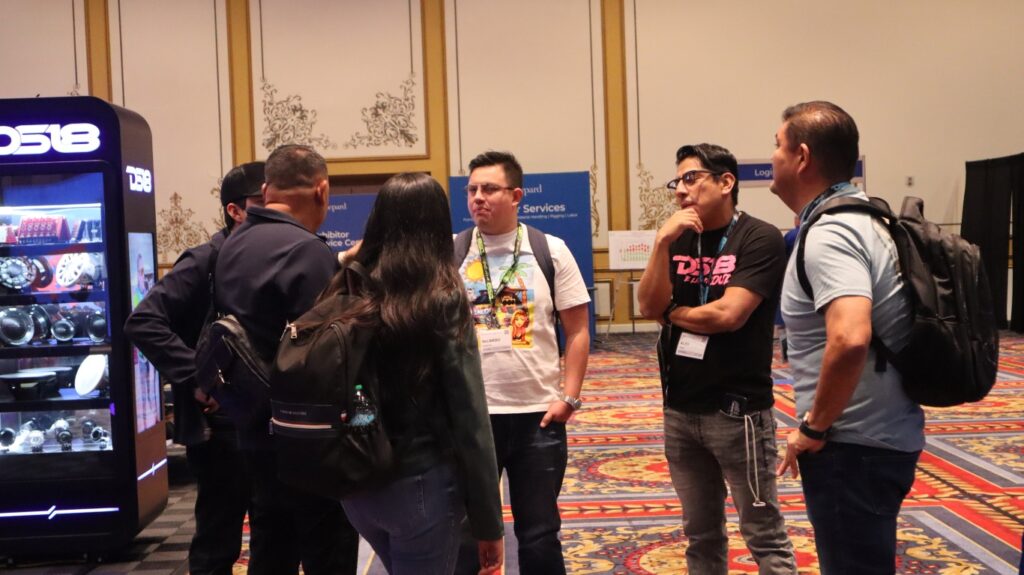
Creating a Meaningful Exchange
Since the start of these classes at KnowledgeFest, they’ve become more popular. Ferro said he was asked to teach again at KnowledgeFest. DS18, responding to feedback, has continued to incorporate more Spanish content. The company also has social media pages dedicated to its Spanish-speaking audience. “We have a TikTok in Spanish and an Instagram in Spanish.” The company will be uploading more content soon, including videos on DSP.
Right now, he added, Spanish speaking people within the industry may feel they’re being viewed differently due to current events. “It didn’t used to be like that. Honestly, we’re just in a different time right now. We want to make it better for everyone. It’s an honor for us to give back to the industry.”
Fernando Lopez, based at Five Star Car Audio in Clearwater, Fla., received the Trusted Tech Award at this year’s Industry Awards ceremony. He agreed that the language barrier can be a difficult thing for some industry professionals. Another issue is a fear of asking questions. However, he said, “A lot of people are like that. Even when you go into a regular training and the speaker says, ‘Do you have any questions?’ No one raises their hand. That’s because they think [they have] a stupid question, but for us, it’s never a stupid question. It’s just a question.”
He noted that it’s important to remember that by asking a question—no matter how silly it may seem to us—we might be helping someone else in the class. Lopez said that during a JL Audio training, he asked a question, and some people seemed glad he’d asked. “But they don’t want to ask. They think, ‘Maybe this is stupid.’”
He praised the continued efforts of the industry to include classes in Spanish. “Attend any class you can,” he said. “I get it. Sometimes the language barrier is a problem.”
Ferro urged technicians not to be afraid or ashamed. “Be proud of where you come from. There’s an advantage here if you have two languages—some know some English, some know more Spanish. Push forward. We’re glad to be a part of this industry and to be able to provide this Spanish workshop.”
The classes in Spanish help to make the community more comfortable, Ferro said, adding, “I feel we want to transmit that level of comfort for the community. Being Latin myself helps me to understand what’s going on. Being at DS18, myself and my whole team are willing to go the extra mile to build our industry and support those in the Latin community.”
It helps to increase comfort level when people can have a meaningful exchange in their first language, Lopez said. “It’s a lot of hard work when you have two different languages. Sometimes I forget how to say some things in Spanish because I get so used to saying it in English,” he admitted. “When someone comes and asks me about something [I think], ‘Hang on, how do you say that?’”
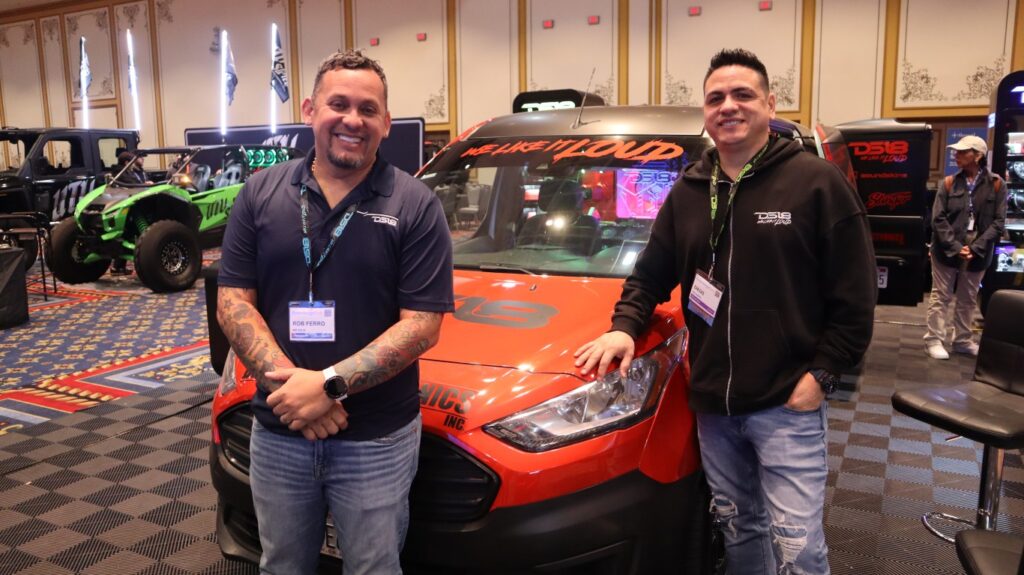
DS18 continues to offer training in Spanish. In 2025, the company began printing instruction manuals in both Spanish and English. At KnowledgeFest Las Vegas, Rob Ferro and Diego Navarro taught classes and spoke with attendees on the show floor.
“Be proud of where you come from. There’s an advantage here if you have two languages—some know some English, some know more Spanish. Push forward. We’re glad to be a part of this industry and to be able to provide this Spanish workshop.” – Rob Ferro, DS18
Technical Instruction, Educating on DSP a Main Focus
It’s important, Ferro said, to choose the right subject for a training course. For DS18, educating on DSPs was a natural choice. “Not everyone understands how it works.” When teaching seminars, Ferro said he calls it ‘Tech Talk.’ “The triggering topic is always DSP.” He approached colleague Diego Navarro and suggested offering more education on the subject. “They just want to understand how it works.” Especially, he added, since DSP manuals don’t come in Spanish.
In 2025, DS18 began publishing its manuals in both Spanish and English. The crew, including Navarro and Ferro, supervises the editing of the manuals to ensure everything is correct. For example, “You can’t just say ‘speaker’ in Spanish. There are three different ways to say it. So, we’ve chosen a universal Spanish word for ‘speaker,’ a Spanish word for ‘port’—we’ve done it more scientifically so people understand.”
According to Lopez, DSP remains scary for a lot of people. Much of this, though, could be related to how it’s presented in the training rooms: “It’s how you hear about it. You have to do this, or you have to do that. Let’s slow down. Let’s think about the basic things in the DSP. Crossovers, EQ, time alignment. Slow down.” Keep learning and keep practicing, he added. “You’re going to get better.”
Just mentioning “all pass filters,” he said, can cause a negative reaction. “We have to understand the problem to get the solution. Sometimes, Lopez himself doesn’t have an answer. He turns to his colleague, Dean Beyett, when he has a question, noting that he’s learned a lot from him over the years—as well as from many others who approach him with questions, leading to a mutual learning experience.
A lot of people, he said, don’t have a good reference for quality sound. “We have a miscommunication about what’s good sound, good performance, or even just good installation.” The goal, then, is to bring everyone to the same level of understanding. If everyone produces quality work, he said, “at the end of the day, the customers will benefit. It helps the industry. If someone gets a bad installation, they’re not going to go somewhere else. They already had a bad experience. They’ll say, ‘I’d rather just keep it how it is.’ When you offer good customer service and quality installation, that brings the industry a step forward.”
Lopez recalled a conversation with a fellow tech who said he gives the customer an option of either cutting the harness of the factory amplifier, or using a T-harness. “I asked him, ‘Why did you give them that option?’ It shouldn’t be an option. The T-harness is the proper way. He said it was about the customer’s budget. But you have to use the T-harness. Why? Because it’s the right way to do it.”
For example, if the customer decides to buy a different car in the future, the process is much simpler. Simply by unplugging the harness, a technician can easily return the vehicle to OEM. “At Five Star, we try to utilize the factory locations, and we are always transparent with customers. We’re going to use T-harnesses. From an integration standpoint, there’s only one way to do it. This is why companies like NAV-TV, Metra and PAC exist—to give us the best possible way to do the installation.” Educating on things like this is really important, Lopez added.
There’s a lacking in industry education in the Spanish community, he added, “But you have to find the right people to teach those classes.” He admitted he’s nervous in front of a crowd, but he becomes more comfortable when he teaches in Spanish because it’s his first language. When he’s able to connect to students in the training rooms, Lopez said they become more comfortable asking questions.
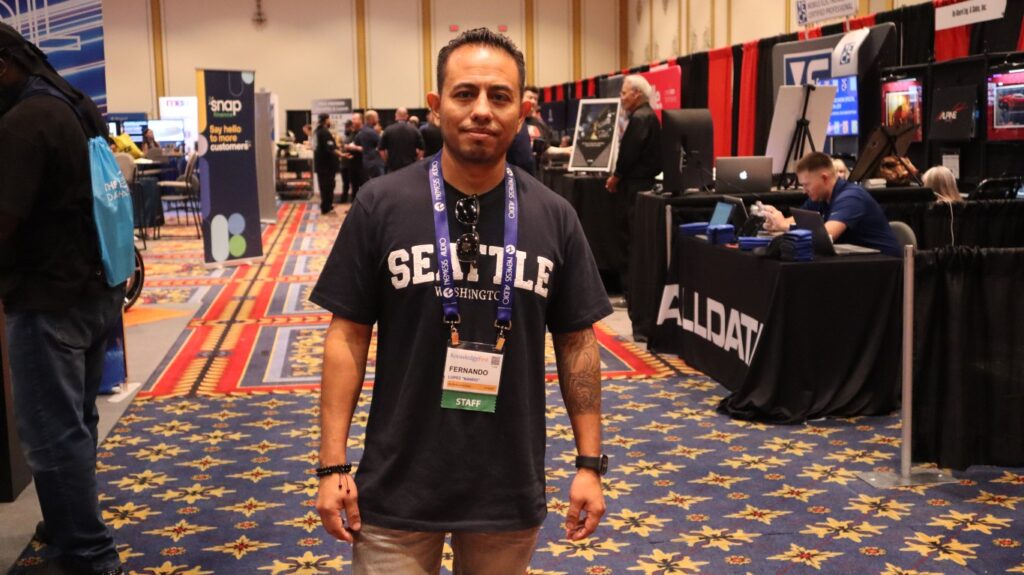
Fernando Lopez of Clearwater, Fla.-based Five Star Car Audio is the recipient of this year’s Trusted Tech Award. He noted that technicians in the Spanish community may feel hesitant about asking questions or approaching anyone for help.
Attend Trainings, Keep Practicing: Asistir a Entrenamientos, sigue Practicando
According to Ferro, the way people enjoy sound differs all over the world. “I have a team in United Kingdom. Marty is my team captain of DS18 in the UK, and he’s an SPL judge.” The main focus there, he said, is EQ. “They like parametric EQs. Marty has done a lot of crazy builds and he goes to shows.”
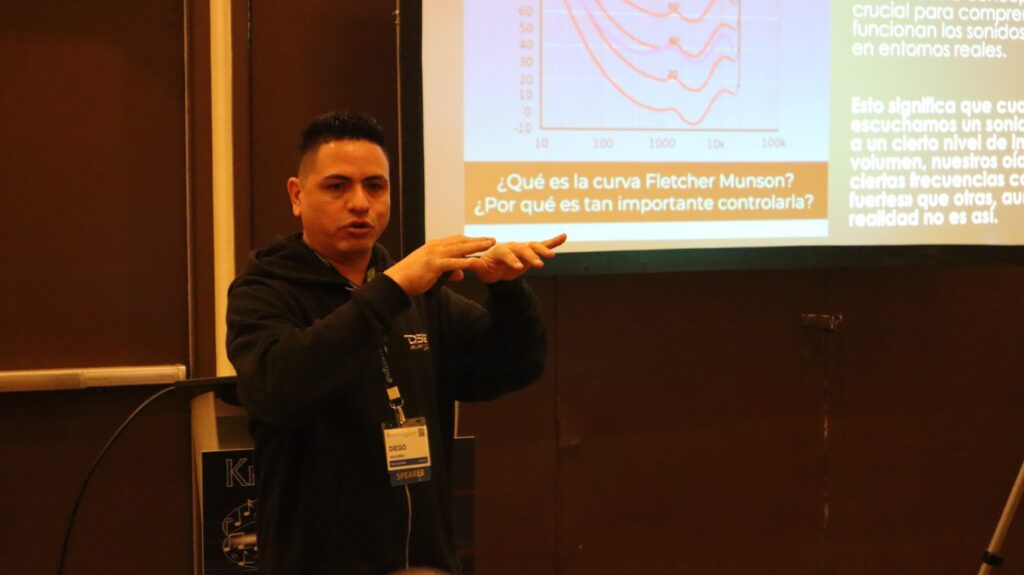
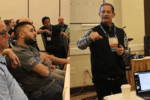
Diego Navarro teaches a DS18 training course at KnowledgeFest Las Vegas.
In Saudi Arabia, he said, DS18 sells a lot of Jeep equipment, as off-roading is popular there. “There’s a mix in Columbia. They like it loud, but not too loud. They use small vehicles with big trunk set-ups. In Venezuela, they use a lot of Toyota 4Runners and Land Cruisers. In Panama, DSP is a big deal.” Some vehicles there, he noted, have four DSPs per build. “People have asked if there’s a way we can make an app to pair up all four DSPs, and no software can handle that. Because of that, we’re designing a new DSP 16-channel—16 in, 16 out. Instead of pairing four DSPs, you’re doing everything using one.” This is where customer suggestions become a design idea for the company, he said. “Every country has a different way they enjoy car audio.”
Lopez feels that the industry is struggling, and more education is key. “Since 2018, we’ve been teaching classes about social media. People are still struggling in social media.” The issue, though, often comes down to a lack of practice and following through on exercises, he said. “People think they need a big camera to [create content]. You don’t. Master your phone, because 90 percent of the time, you can do everything with it.
His best piece of advice to any technician is to attend classes and trainings: “The language barrier depends on the person. You can become the best of the best [at something]. If you don’t practice, you are never going to get it. You have to put in the effort and the time. It took me years to get where I am now.”
Practice, he said, “Practice. Don’t think you can’t do this because you don’t understand it yet. Whatever it is—radios, installation, personal things, whatever—just do it. Get out of your comfort zone.” He noted that he didn’t know anything about working with a camera until he met Beyett. “It’s up to us if we actually want to do something. It’s just one of those things. You get better if you practice,” he said, adding, “If you don’t, you’re never going to cross that line.”
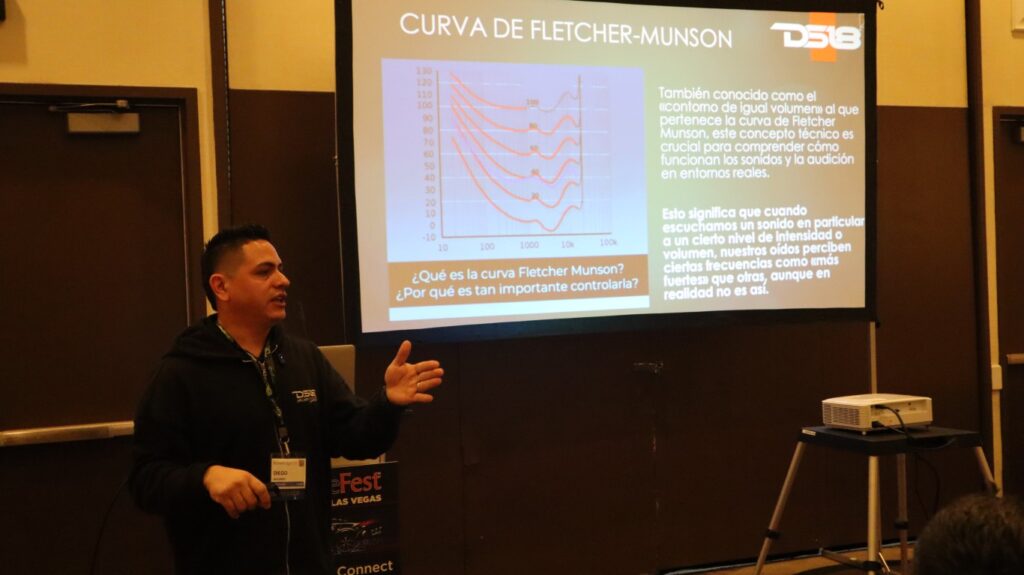
Diego Navarro teaches a DS18 training course at KnowledgeFest Las Vegas.