Strategy and Tactics – Building Trust

Content marketing has the power to forge connections and build trust between a business and its clients. At KnowledgeFest Las Vegas, Laura Moore offered strategies to get started.
Words by Rosa Sophia
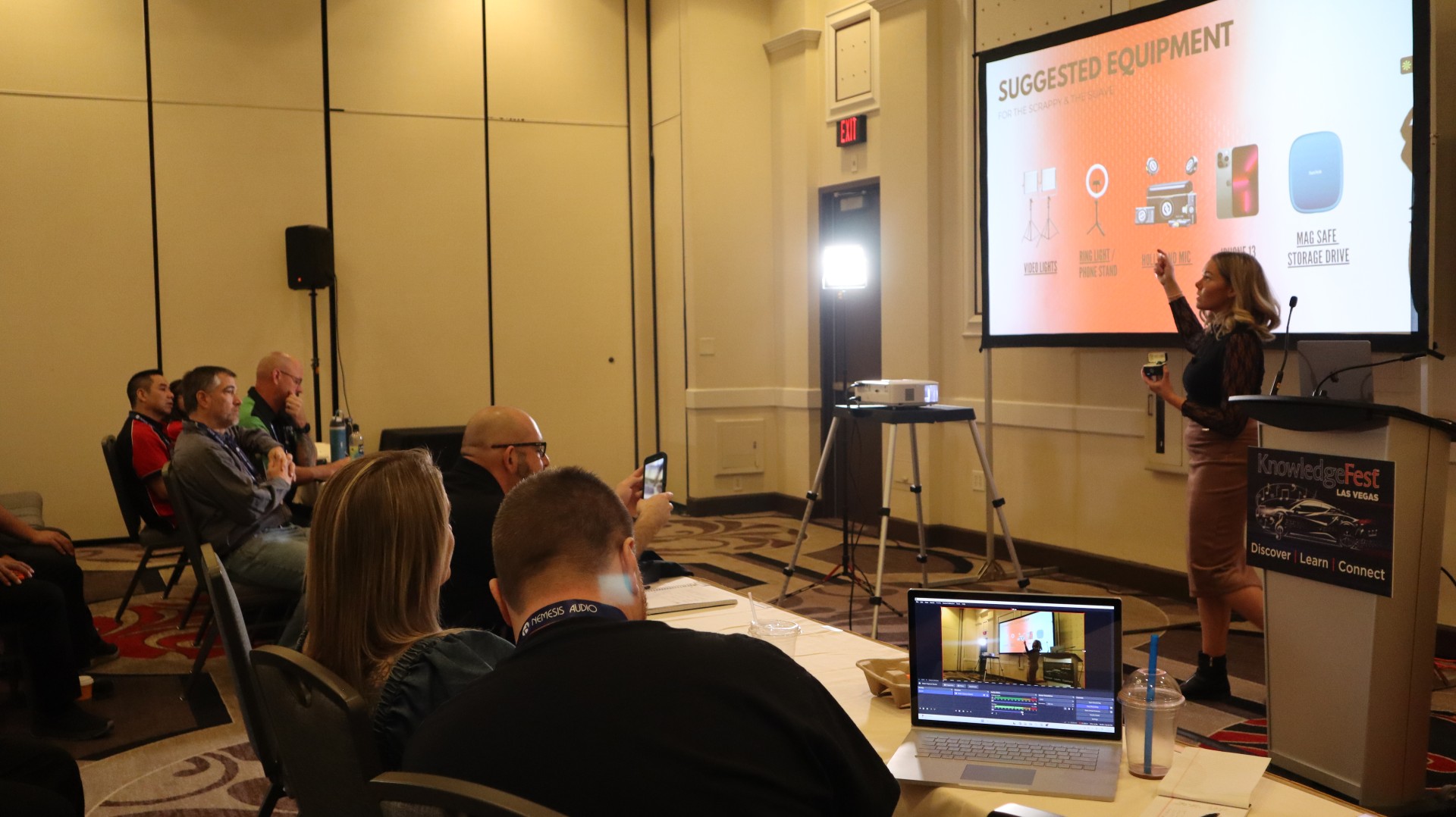
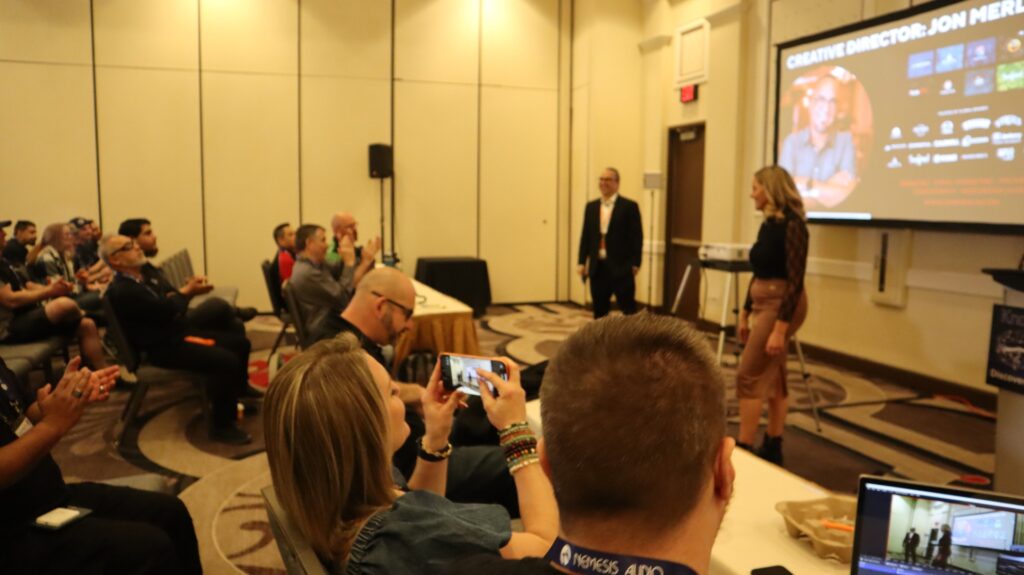
What makes a customer choose one business over another? Laura Moore of Find the Foxx invited attendees at KnowledgeFest Las Vegas to consider this question during her class, “Capture to Convert: A Hands-On Workshop for Creating Content that Sells.” Creative director Jon Merlin joined her during the interactive presentation, in which Moore offered tips on content marketing using only a cell phone and a few affordable tools. She suggested acquiring a phone stand and light, video lights, additional storage and a Hollyland microphone. “What is the culture like inside your shop?” she asked. “You might say, ‘If you come into my shop, we’re going to make you feel at home.’ We’re going to be respectful, educational and have integrity. Start capturing that in your content and make people want to come in. This is how marketing works.”
It begins, she said, with raising awareness. When the customer is interested in what a business is doing, they begin to consider spending money there. “Then, you really snag them, and they’re loyal to you.” Moore spoke of sustainable growth—bringing clients in simply by demonstrating a business’s offerings and values via its online platform.


#1: Know Your Strengths and Weaknesses
She encouraged retailers to consider their strengths and weaknesses as they work to draw clients into their stores. Examples of strengths include “high-trust, high-skill work”—a business that knows its niche and has a local reputation. A weakness might be labor-related, Moore said, noting the difficulty in finding reliable, skilled labor.
She also referenced possible disconnect between the front and back of the store: “A salesperson doesn’t necessarily know what goes on in the back.” A person who is in charge of sales strategy might not be aware enough about the store’s revenue. “The data shows that sales perform better when salespeople have a sense of profit and they’re given a bonus based on profit,” Moore said, adding that the owner of a business has a responsibility to pay their employees well. “Figure out the business model so that you attract excellent salespeople who will be with you for a long time.”
#2: Offer Honest and Informative Content
During the class, Moore invited attendees to share their own content marketing approaches. An audience member spoke about his experience with YouTube, and how customers have enjoyed seeing their vehicles featured on the store’s channel. The attendee said staff noticed an increase in potential clients coming into the shop based on a friend’s car being featured on the shop’s YouTube channel.
Moore said people need to be able to rely on businesses they can trust, especially considering the increased use of AI on social media platforms. Honest and informative content will “bring them to your brand, instead of the others you’re competing against. If you do a good job and you can show the process, people will come to your channel or any platform where you share content.”
#3: Engage and Build SEO
If a business’s clientele is largely on Facebook, a retail owner might participate in forums or groups, as well. “You become a thought leader and an educator.” Mobile Electronics magazine wishes to note an example: The 12V Sales Pros group on Facebook seeks to educate on sales strategies within the industry and connect likeminded individuals. “Talk to people. Build your reputation,” Moore added.
When images are uploaded to a website, Moore said it’s important to write metadata for photographs. SEO is essential. This gets a business noticed on search engines. Facebook and Instagram is now readable, she added, which means that Google is able to mine the content. “It’s not really reading hashtags anymore,” she said. “Some tagging allows the algorithm to favor you, but I’m not interested in a popularity contest. I’m interested in making sure people can find you. The content you write on captions [helps people to find you].”
Additionally, the way people engage in messaging is readable now, too, according to Moore. She also encouraged attendees to set up a Google Biz profile. “This is where reviews come in. SEO is reading your reviews.” This means it’s important to make sure the business is responding to reviews, too. “Go to the negative ones if you have any. Hopefully, you don’t. If you do, just tend to them. Nurture them. It’s reading that, and it will say that you’re showing a pattern of customer care on Google reviews. Give them a reason to stick with you because you’re actually nurturing while you’re engaging.”
#4: Craft a Repository of Images and Video
Moore suggested taking 15 minutes to photograph or film something on a Monday morning, or a time that’s convenient for a retail owner, salesperson or other staff member. “Record something. Put it on YouTube or Facebook. It’s not about perfection. You have content and it’ll leverage you. This is about saying, ‘I’m real.’ That’s what your customers and your audience are looking for,” she explained. “You just need to exist. After running data and an analysis and doing market research, this is what I’ve observed.” She advised retailers keep a collection of content and images.
“People respond to this and they will trust you,” she said. She also suggested taking time on the channel to discuss customers’ objections and how the staff handles them. This is an opportunity to connect with clients, educate them and inform them before the objection even occurs. “Trust is also a way to honor your colleagues. Do you speak well of other shops or other people who are trustworthy? If you say, ‘I want good work to be done, whether it’s me or someone else,’ that’s a good sales pitch.”
Other topics for potential content, she said, include tuning, before and after an installation or even clean wiring. “Film it and have people talk about it. This helps people to trust you.”


#5: Use Photography, Reels and Shorts to Get Noticed
While high-quality photography has its place, Moore noted that the focus of the presentation was about simply trying to get in front of people. “Your phone setting should be high-quality, though. On iPhone, if you open the camera, the settings are at the very top. You want 4K at 30 FPS, which is Frames Per Second. If you are shooting movement, you’d want 60 FSP, which means 60 frames per second for higher quality and less blur.”
Algorithms, she said, prefer shorter videos. “There are several software platforms. You can put [your video] in the software and it will create five vertical magic clips that are under 60 seconds. Now you have five short videos and you put them on YouTube and it’s done in ten minutes. Three minutes is pushing attention, but you have to think about your target audience. Be casual. It performs well and it’s powerful.”
To keep from running out of storage, Moore advised cleaning up the cell phone and syncing it to cloud storage. This can be used to store albums and videos without taking up space on the phone itself. When it comes to the set-up, Moore noted that an easy-to-set-up tripod and cheap light stands—which she said cost about $20 apiece—will greatly improve results. “Start recording what you’re doing so you have content,” she said, adding, “You want people to see you and know that you’re trustworthy.”