Strategy & Tactics – Who’s Winning
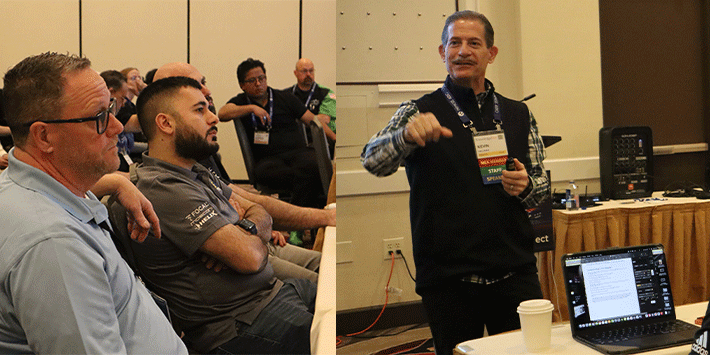
At KnowledgeFest Las Vegas, Kevin Hallinan challenged attendees to think differently about sales by staging roleplays and remembering that when the client wins, so does the business.
Words by Rosa Sophia
According to Kevin Hallinan of WINNING, Inc., role playing continues to be an essential way of strengthening team strategy and working on weaknesses. “You’ve got to insist that your team roleplays,” he said. “Most owners are losing deals when they should be winning. It’s not the product pricing or the market conditions. It’s because a lot of us are winging it. We don’t know exactly what we’re doing. When we wing it, or we allow others to wing it, that’s not a proven methodology.”
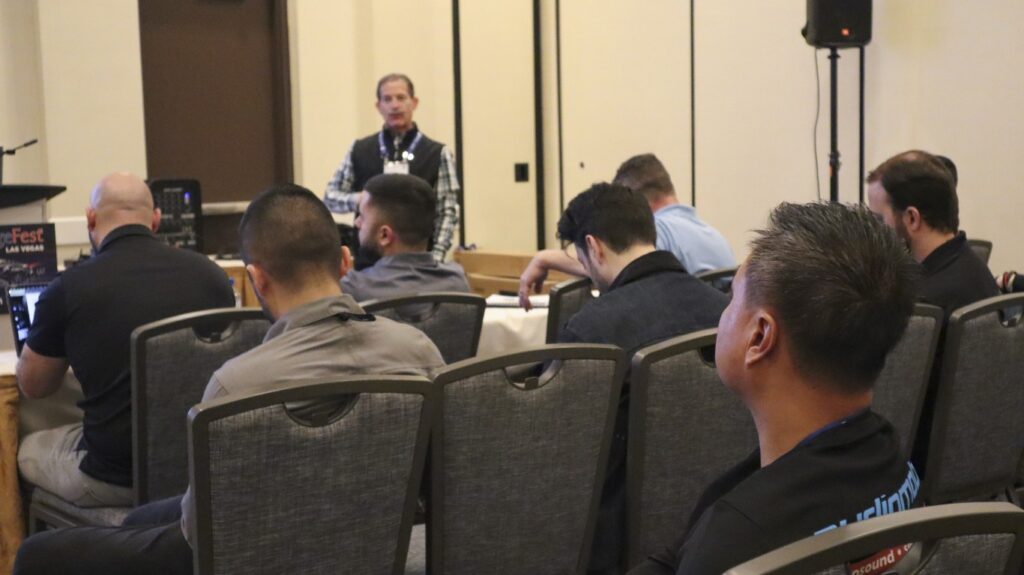
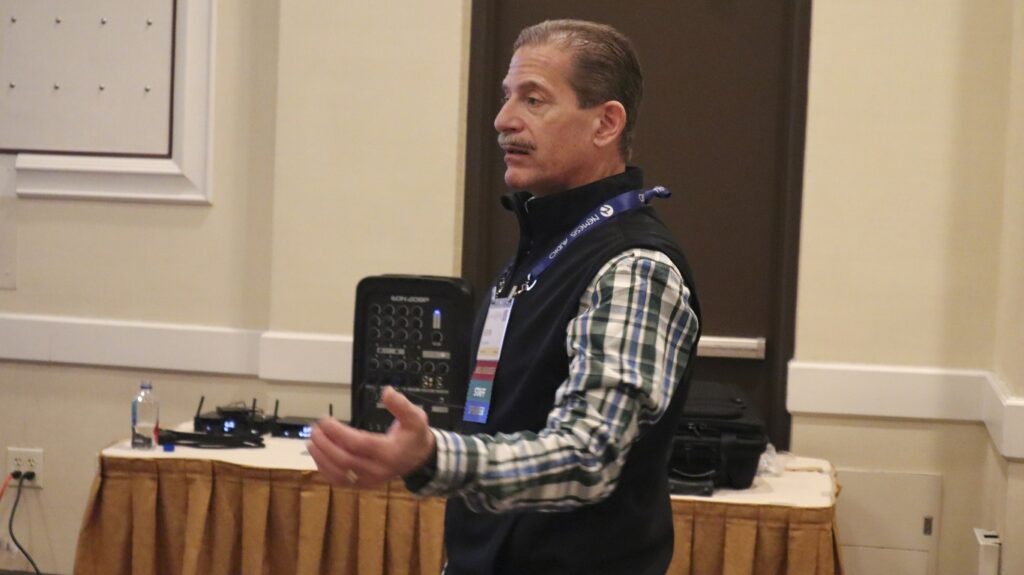
Hallinan’s presentation at KnowledgeFest Las Vegas, “Amateurs Wing it, Pros Rehearse,” included a variety of roleplaying scenarios designed to get salespeople thinking about how they interact with customers and handle objections in-store. He reminded attendees that everyone has their own style—so, while he shared his own ideas, each person would need to tweak the suggestions as needed.
“We all talk too much. We lose customers by talking too much. We want to be quiet on purpose sometimes. We want to ask really good questions. So, maybe [what you’re saying is], ‘I get stuck when I should ask a question.’ What’s an uncomfortable question you might have to ask, or should ask more often?”
Facing Difficult Moments in the Sales Conversation
Citing sports teams, Hallinan said everything is practice, adding, “They practice all the time. That’s what professionals do. If you’re a professional, how much are you investing in yourself to stay current and stay sharp? If you want to get good at anything—whether it’s tennis, chess, pickleball or sales—you’ve got to practice. Expect to get uncomfortable.” During the beginning of the interactive session, he invited sales professionals to share their hardest moments with their peers.
One attendee noted difficulty “trying to get [an interaction] toward that end goal [with the customer] without seeming pushy. One of the things I struggle with sometimes is dead air. I’ll try to finish sentences for people and I have to stop myself and [tell myself], ‘Let it go. Just breathe.’”
Hallinan pointed out that silence can be a very powerful tool. “You just wait and they will speak. You just have to wait long enough,” he said. “We all talk too much. We lose customers by talking too much. We want to be quiet on purpose sometimes. We want to ask really good questions. So, maybe [what you’re saying is], ‘I get stuck when I should ask a question.’ What’s an uncomfortable question you might have to ask, or should ask more often?”
Sometimes, he added, uncomfortable questions might be related to other decision makers in the family, such as a spouse. “You can ask questions like, ‘What do you think you might be willing to invest?’ Never ask what they think something costs, or what they’re willing to pay. We don’t want people to pay. We want them to invest.” Furthermore, he said, “It’s not us against them. When we win, they win.”
Roleplaying Allows for Preparation and Practice
Sales professionals in attendance agreed upon the importance of being true to one’s humanity by engaging the customer so they feel valued. “Be empathetic, be genuine and be yourself,” Hallinan said. “Take interest. That’s different than small talk. Use your own style and practice until it’s natural. You can ask the most uncomfortable question six or eight times, and then it’s nowhere near as uncomfortable.”

He shared how he opens conversations and reveals a client’s pain points. Everyone, he said, has a frustration or a “pain” they want to deal with. In mobile electronics, it may relate to car audio, window tint, backup cameras or security systems, to name a few categories. “Every buying decision is emotional, and we back up that decision intellectually. Car audio isn’t always rational. We handle objections, talk about money and gain commitment.” Learning to talk less and ask more questions, he said, is key. “We don’t learn fast enough from our mistakes,” which is why it’s important to roleplay in order to “prepare and practice.”
Owners and managers don’t take time away from their businesses to sit down with a strategist, according to Hallinan, who said, “Most of us spend too much time in our own businesses. I know leaders of companies who say, ‘We don’t have time for sales training.’ They don’t usually end up becoming a client because they’re very shortsighted. When was the last time you took 20 to 30 minutes roleplaying outside of an event like this—in your regular workday? I hope you do this, but most people don’t.”
He suggested taking time before the store opens twice a month to do roleplaying exercises. “We know there are areas we aren’t as strong in. Some of you mentioned the money conversation. If you practice these scenarios, you get better at it. The deals you don’t get, do you know why? And do you take a few minutes, think it through and jot down [what you need to work on]?”
Taking a Closer Look at the Opening Conversation
The opening conversation takes skill and psychology, Hallinan said, “to mirror and match body language, tonality, pace, words and communicating style. There’s a lot you can do to lower the guard. You can see people’s shoulders come down as they become more comfortable with you.” When it comes to the mirror and match, he said, “Don’t be more excited than this person. Don’t be too fast. If they’re a slow talker, take it down a notch. We want to create comfort. We want to help the buyer buy.”
A buyer will often want to learn without making any decisions, he said, adding, “That’s their system. Our system should be asking lots of questions and engaging them.”
During in-class roleplay exercises, everyone formed groups of three to experiment with the opening sales conversation. In each group, participants took turns being the salesperson, the prospect and an objective observer who shared feedback after the roleplay. Hallinan said that after greeting a person, it’s important to give them a little bit of space. “You keep an eye on them so when they look ready, you can see if they need help.” Then, check and see if they have time for the conversation.
“You don’t know if they’ll say all of a sudden, ‘I have to run, I have to go pick up the kids,’ or, ‘I have to get back to work.’ Then a simple, ‘What brings you in today?’ Listen. ‘Why don’t you ask me some questions? And we’ll see if it makes sense to do business today. Are you okay with that?’ This is the art of answering a question with a question. We don’t want to be evasive. The person who is in control of the conversation is the one who’s asking the questions.”
After the first roleplay experiment, participants shared their comments and observations. One attendee said he wasn’t comfortable with the phrase, “We’ll see if it makes sense to do business today,” adding, “There has to be a more organic way of doing it.”
Hallinan acknowledged the phrase doesn’t work for everyone, and reminded participants to utilize their own style.
After the first roleplay session, an attendee noted that his business’s fully-booked calendar often becomes a selling point. During the customer intake process, he said, the client will get a glimpse of the shop’s calendar, and they’re impressed by it.
—————————–
Asking Questions to Uncover a Client’s Pain Point
In his presentation, Kevin Hallinan shared the following questions which salespeople might consider using during the opening conversation with a potential walk-in client. By continuing to ask questions, Hallinan said, the sales professional can control the conversation.
“Why do you think it’s been happening?”
“How long has that been a problem?”
“What have you done to try to solve it?”
“And that worked?”
“How has that affected you?”
“How do you feel about it?”
“Have you given up trying to fix it?”
Understanding the Pain Point and Facing Objections
When speaking with a client who’s interested in car audio, Hallinan suggested complimenting the factory system—if the situation fits—and saying, “That’s a good stock system. What’s going on?” This, he explained, is called a negative reverse. “They’ll start to double down and get really talkative about what they don’t like. Let them talk.”
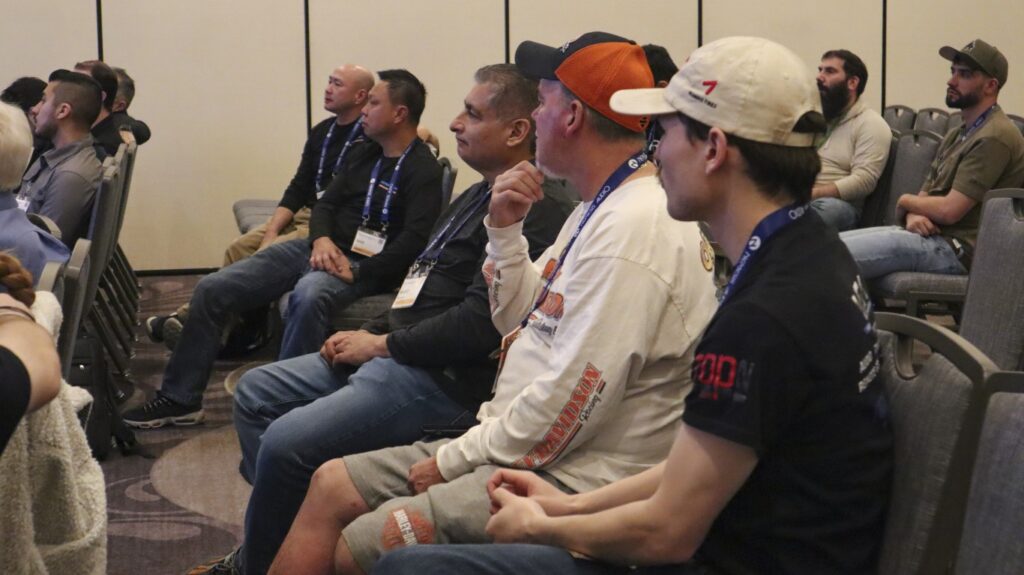
Attendees remained in groups of three for another roleplay, this time focusing on the client’s pain point. After the roleplay, an audience member said, “You’re identifying the problem as much as possible. For an amplifier situation or something similar, you can open a door to other avenues like sound treatment.”
Someone else suggested asking the client if they have to turn their volume up when they’re driving due to road noise. “Everyone will say yes unless they have a really nice car. [Then you might say], ‘Imagine if you didn’t have to do that. You’re already investing this much. For a little extra money, [you can eliminate that road noise].”
“It’s not us against them. When we win, they win.”
When working to uncover problems, Hallinan noted that a statement becomes more powerful when it’s transformed into a question, for example, “‘Do you ever notice when…?’ Real pain is personal, compelling and emotional. They want to fix it now. So when they’re riding down the road, how does it affect them? They don’t like the noise. Everything they’ve tried hasn’t worked. You soften your tone a little bit and ask, ‘How do you feel about that?’ They’re going to give you an emotional answer.”
During the conversation, the salesperson might ask the customer if they’re thinking about selling the vehicle. Hallinan said this leads to “helping the buyer buy” because the client tends to double down on what they want. If the buyer recognizes how much skill and patience the job takes, he added that the salesperson won’t have to sell as hard.
Every salesperson will face objections: “If you don’t get objections, that’s a problem. Why? Because they’re not going to buy.” If the visitor to the store isn’t engaged and doesn’t have any questions, they won’t become a buyer, he added. “When do we normally hear objections? Toward the end. That’s a bad place because it’s hard to fix then. If you wait until the end for a price objection, it’s hard to resolve that.”
This means it’s best to bring up objections before the client does, he added. “For example, ‘Why not sell the car?’ If he’s going to sell the car already, you’re not giving him the idea. But you’re taking away the option. He’ll say, ‘No, I’m committed to keeping the car.’ That’s settled. So, then you might say, ‘I would’ve thought you’d only be willing to spend three or four grand, but we’re up to six. Just out of curiosity, why are you willing to spend more?’ Now, they’re convincing you that they’re going to spend it.”
Hallinan also warned against discounting. “Never discount,” he said. “You’ll devalue yourself. Let your competitor discount. You know the expression, ‘You get what you pay for.’ It’s usually true.” This, he said, is the race to the bottom. “Then, no one makes any money. If that customer wants the cheapest job, they’re not your customer.”