Making the Commitment
Presenters at KnowledgeFest offer the same advice: With a strong team, anything is possible.
Words by Rosa Sophia
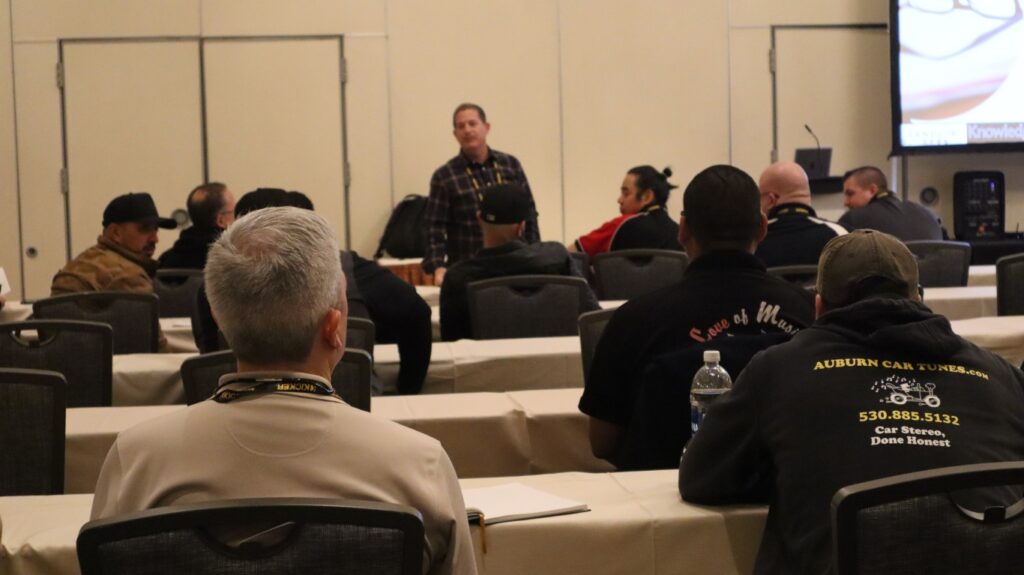
We’ve often heard how important it is to share information in order to strengthen the industry. Within the pages of this publication, technicians and salespeople alike have said there are no secrets—just different methods of application. This is evident during industry trainings and in the classrooms at KnowledgeFest, where presenters offer similar perspectives that nonetheless vary depending on location and demographics.
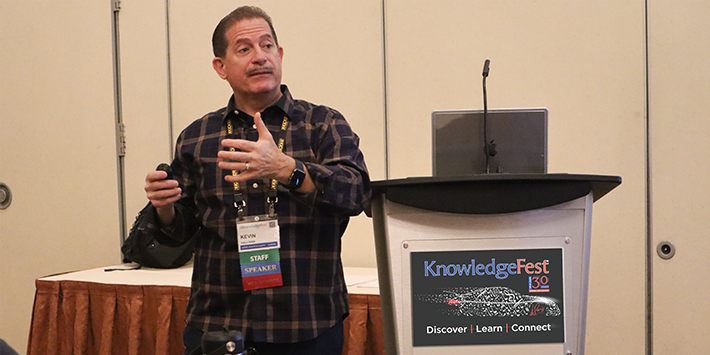
Kevin Hallinan of WINNING, Inc. encouraged industry professionals to stretch their minds and “start thinking bigger.” Salespeople, he said, should shift their mindsets and “believe you’re worth it.” When it comes to understanding one’s own belief system, he warned against complacency. “We need to create empowering beliefs.” This, he added, “impacts your actions and gives you results that tends to support the belief.”
Strengthening the Team With Good Communication
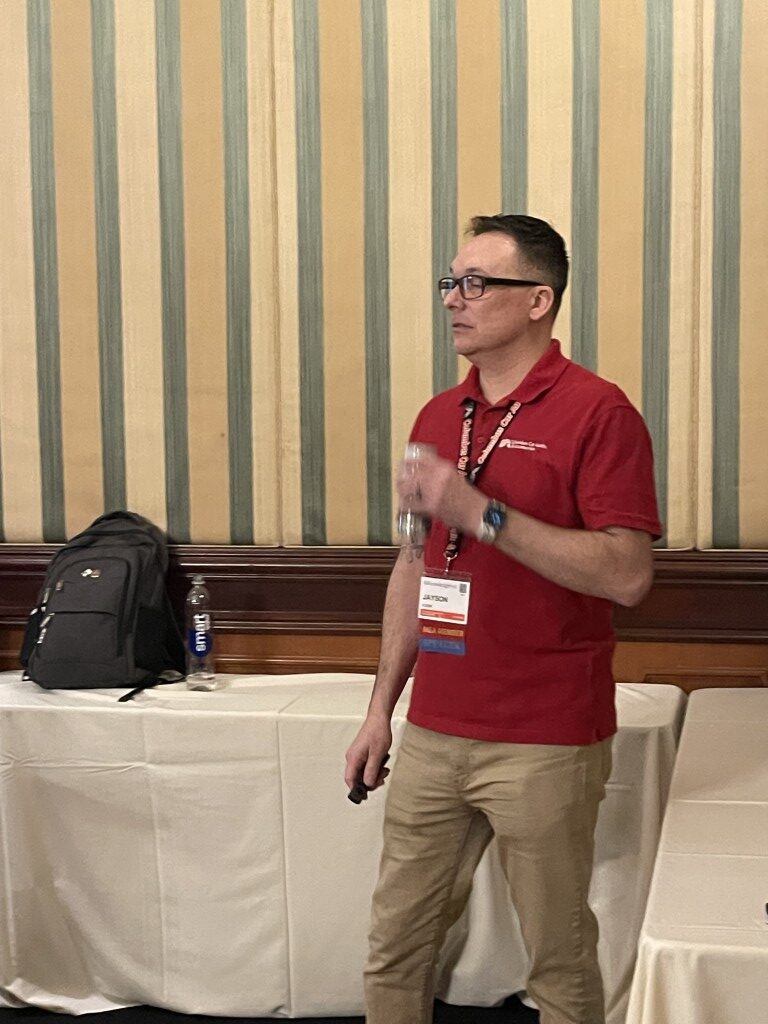
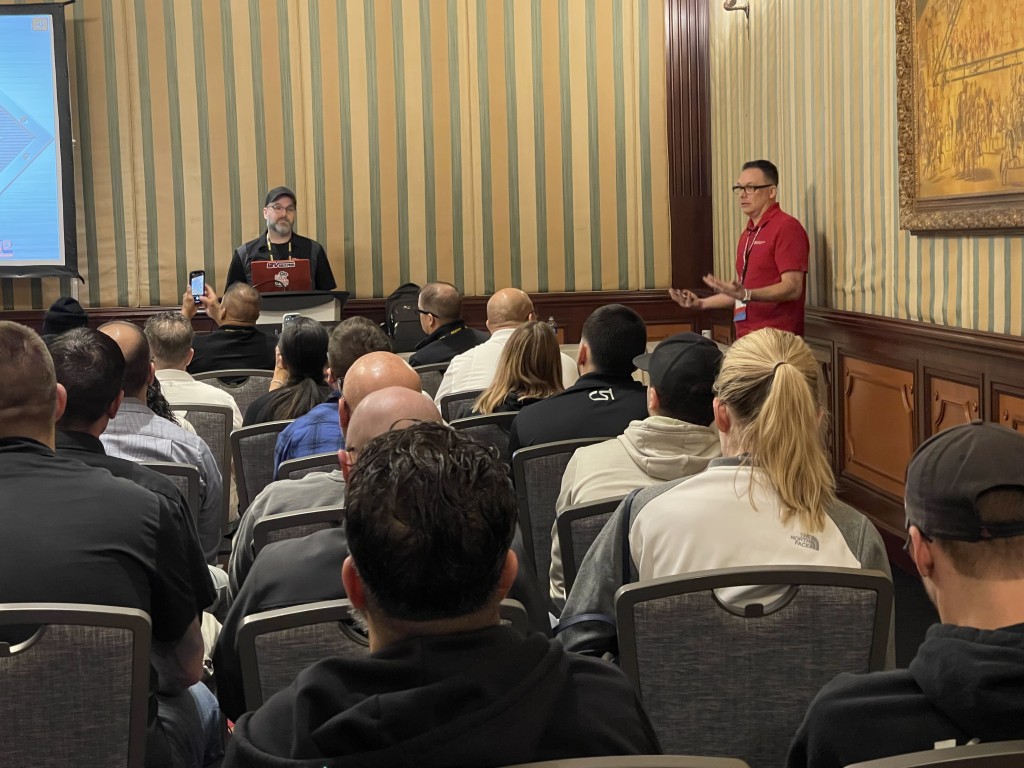
At KnowledgeFest, industry pros Jayson Cook and Dan Wilson have spoken about improving communication between salespeople and technicians, thereby building a better, stronger team. Cook was named Sales Pro of the Year in 2019, and Wilson was among the Top 5 Technicians for the same year, as well as a Top 12 Installer in 2024. Both men have worked together for a long time, and through these experiences, learned a lot about how to overcome difficulties in communication.
During a previous presentation, they touched on communication with clients and communication between salespeople and technicians. Communication within a store can be challenging when a team has multiple people working together who all have different personalities and communication styles, they said.
“This can create tension,” Wilson noted. “Especially when you’re in a shop where everyone’s on commission. If you’re working in the back and you feel like there are failures up front, you might think, ‘Man, this is affecting my pockets.’”

Cook encouraged industry professionals to consider what communication looks like in their own stores, and how they might improve upon it. “You have to know how to balance each other’s strengths and weaknesses.” A larger staff might have more difficulty maintaining strong communication, simply because there are more people involved. Cross-training is also a valuable aspect of fostering mutual understanding.
Cook said it’s important for salespeople to recognize when they don’t know enough about a particular car. “Know when to reach out to the tech for help,” he said. “But make sure you’ve done everything you can up until that point so you aren’t just leaning on someone else to do the work.”
Many salespeople don’t have the technical ability, he added. In some situations, a salesperson might not be doing their part to better understand what goes on in the back of the store. “Cross-training is important to increase understanding,” he said. “[The salesperson might ask] ‘Why do we do it this way? Explain it to me.’ If I can explain that to a customer, it helps. We’re all on the same team. We have a common goal.”
During the KnowledgeFest presentation, Jeremy “Taco” Patterson, a 2025 Top 5 Sales Pro, shared how a technician at his store is brought into the conversation to take measurements and give the salesperson an idea of what’s needed. While the salesperson “sells the dream,” he said, the technician lets them know what’s possible and what’s not possible. “That’s something I’ve had to learn, and that helped me establish where those boundaries are,” Patterson told workshop leaders.
A side-discussion took place as audience members and instructors discussed the importance of complimenting the staff—letting team members know their work is appreciated. “Praise goes far,” Cook agreed. “For me, though, I work better when someone tells me about something I should work on. Now, I have a game plan and I can use that. Some people prefer to hear the compliment first.”
Each owner and manager should understand what their team members need as individuals, he added, suggesting the audience consider the following question: “What kind of feedback will help them grow personally?”
Personal Growth Leads to Professional Growth
The growth of a business and a team is often dependent on personal beliefs, according to Hallinan, who often speaks about mindset during his training classes. “We are what we believe we are.” He challenges industry professionals to look more deeply at their own level of self-confidence. “You can’t control some things. If you don’t see yourself as worthy, it changes your approach.”
A salesperson will stay complacent if their “why” isn’t big enough, Hallinan said, adding that not everyone is motivated by money. “Maybe it’s what they can do with that money that motivates them,” he said. “If we don’t have a strong desire—a reason to grow—we aren’t going to.”
A person will say they’re highly committed, he added, “but then I ask them about some things they should be doing, and they aren’t doing that. You’re highly committed, but how many networking events are you attending? ‘I went to one. It wasn’t good.’ There’s no such thing as a bad networking event—only a bad networker.”
Responsibility, he said, is the opposite of making excuses. “Highly successful people commit to things that others don’t or won’t. We then make excuses, but we don’t know we’re making excuses. For example, ‘I can’t change that much in my market.’ When was the last time you changed your labor rate? If you can’t remember, it’s time. We make excuses as to why we can’t do that. Most of the ‘reasons’ tend to be excuses and they’re tied to a mindset, not a reality. How much do you believe you’re going to succeed? My outlook in 1998 was horrible. Today, it’s remarkably different. Life happens, and a lot of that stuff weighs us down and negatively impacts our outlook.”
If a salesperson isn’t comfortable talking about money, Hallinan said the customer will recognize this discomfort. “When it comes to talking about money, most of us feel like there’s a line we feel like we shouldn’t cross,” he said. “In selling, the first one to talk money loses.” Hallinan noted that when it comes to selling techniques, he might suggest asking the customer what they feel they’d be willing to invest, or asking them about the problem or pain that brought them into the store.
“Stop selling head units and start selling experiences. Start solving people’s sound problems, safety problems, paint chipping problems. If they’re concerned about safety, they’re going to buy cameras. If they have a really nice vehicle and they don’t want it to get chipped, what are you going to sell them? Paint protection. Sell to their pain.” A good starting point might be, “Why don’t you ask me some questions and let me do the same? And then we can see if it makes sense to do business today.”
Hallinan said most people will say they aren’t ready to make a decision. “But what decision did I ask them to make? Just to sit down and talk and have a conversation and see if it makes sense. That’s called an upfront contract. You’ll lower their guard and you’ll sound confident.”
Find their problem. What’s brought them in? “Ask what they’re willing to invest,” he said, adding, “and yes, you can guide them a bit before you present the final proposal.”
It’s Never Too Late to Improve One’s Mindset
A frequent presenter at KnowledgeFest, Kevin Hallinan of WINNING, Inc., shared an important lesson—one which transcends retail, applying to both personal and professional life. “All we can do is manage the next minute,” he said. “We can’t change what happens, but we can change we do in that minute.”
Hallinan digs into the psychology behind sales, reminding listeners of a client’s pains, “the personal, compelling emotional reason to do business.” He urged salespeople not to sell from their own wallets, and to let the client share this pain with them. “Work on getting this person to tell you his emotional line. This will—or won’t—cause change. You might say, ‘I love car audio. I could spend all day here.’ But it’s not for you, it’s for the client. Let’s figure out what’s important to them, not what’s important to you.”
When it comes to changing one’s mindset, Hallinan said a common mindset is believing “I can’t charge more in this economy.” The salesperson then succumbs to offering a discount, resulting in a sale. Through this chain of cause and effect, he added, the salesperson will convince themselves they were right about being unable to charge more. Instead of giving in to this, he encouraged industry professionals to develop better belief systems and to cultivate a sense of abundance. To learn more about this topic, Hallinan recommended Life Without Crutches: Finding the motivation, strength and balance to stand on your own by Jon Kowanetz.