Steady Persistence
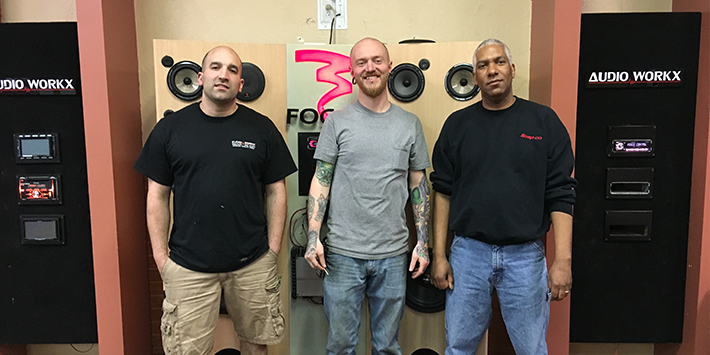
Michael Betts—one of this year’s Top 5 Vendor Support Techs—says it’s best to know your strengths and focus on honing them.
Words by Jamie Sorcher
Before Michael Betts could talk, he was into cars. “My mother told me that when I was a toddler, if there was a car scene on TV, like a high-speed chase, I would stop, look at it, and oohh and ahhh,” he said. “When it was over, I would go back to playing. I always had an affinity for cars.”
Things began to take shape when Betts graduated from high school. His parents relocated from Pittsburgh, Pennsylvania to Orlando, Florida, where he spent the summer of 1989 as a lock porter at a car dealership. “I moved cars around and washed them after they were serviced.” One day, he said, a coworker who owned a Mazda mini-truck—complete with subwoofers in the bed—asked him for help.
“He was going to a show that weekend. I told him I didn’t know anything about car stereo stuff, but he told me not to worry about it. He asked if I wanted to go.” This was his first time being exposed to the world of car audio, he added.
Today, Betts is a technical support specialist and national trainer with Firstech, LLC. His career was launched because he schooled himself, believed in himself and connected with people who cared enough to give him encouragement and guidance.
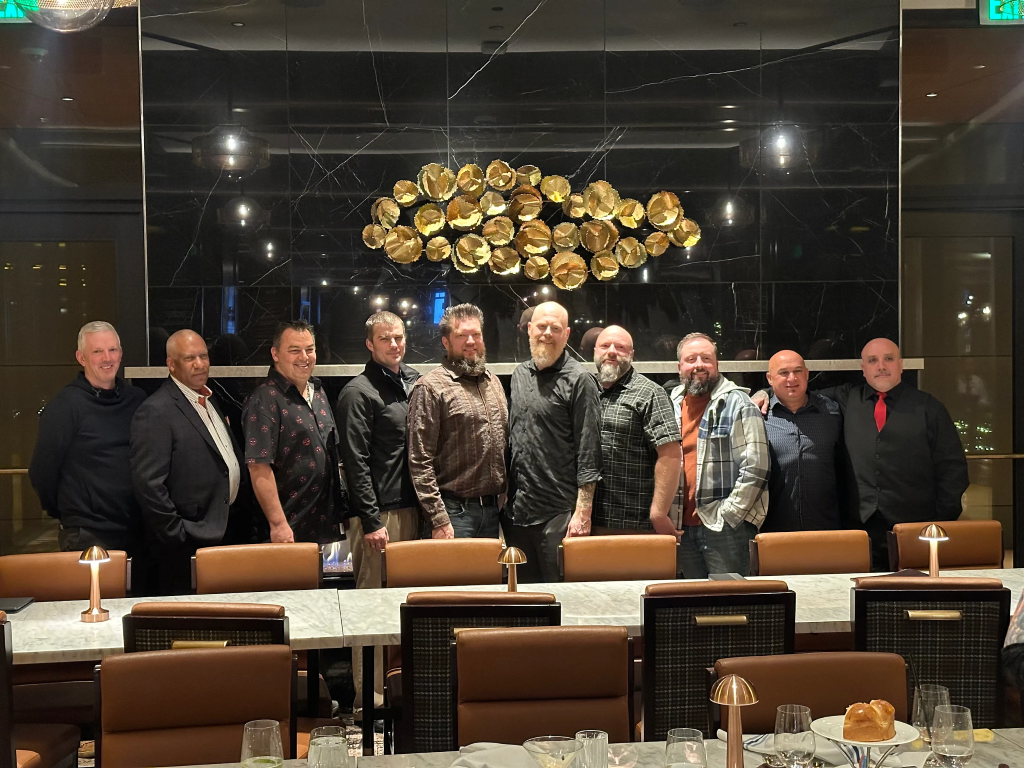
The Firstech team celebrating Christmas together.
Know Your Strengths, Then Focus and Excel
After that summer in Orlando, Betts moved back to Pennsylvania and attended the University of Pittsburgh for a semester. “I started buying Car Audio and Electronics magazine,” he said. “It was one of the publications available. At the time, it was the forefront of information.”

When a friend from high school approached him about putting a stereo in his car, it took Betts a bit by surprise. “I had never installed a stereo before, never put in a radio, never did anything. I was intrigued by the chance to help him, but I was upfront that I didn’t really know what I was doing.”
Still, word was getting around. People knew he was into cars, so friends checked in if they needed something. “All I had to go on was what I had been reading in car magazines,” he said, and yet he ended up building a subwoofer enclosure in his apartment. “If that apartment is still there, I’m sure there’s still glue in the bedroom carpet. I was building it for an old Cutlass Supreme. It was a box for two 10-inch Rockford Fosgate Punch 10s.”
Because there was no Internet, “If you wanted to learn something, you had to either read magazines or go to a shop,” he said. “Those car stereo magazines all had directories in the back. You could call the phone number or send a letter to get more information, and the companies would send you something back.” Betts requested information and received catalogs from a couple of manufacturers, he added.
The first shop he visited was small, he recalled—as if they’d just got started. They had some components he needed and the prices were good. He started working there, at Keeping it Clean Car Stereo, in Plum, Pa., in 1993. The store manager, Kenny Giba, gave Betts the job. His first teacher, he said, was installation manager Mike O’Donnell. Betts was assigned to the install bay, and his first week or two involved tasks like emptying trash, cleaning floors and getting boxes together. “By the third or fourth week, I was pulling parts. I thought I was going to come in and hit everything hard, but if you can’t manage taking out the trash or cleaning the floor, then you’re not going to be able to handle working on someone’s car. I didn’t think about it like that at that time.”
Betts appreciated O’Donnell’s laidback management style. “He was more of a friend than a manager, but he had authority. If you did something wrong, he would take a moment—maybe laugh about what you did—but then he would explain what happened, why it happened,” and offer instructions to ensure it wouldn’t happen again. Betts is grateful for his strong start, and especially for the guidance he received from mentors.
He noted that he didn’t just “arrive” where he is now. “Things were broken, mistakes were made and equipment was damaged to learn the skills and how not to do something,” he said, adding that when he first started, he kept “putting screw holes in subs” during installation. In a two-week period, “I did that to four or five subwoofers. At the time, this was a big deal because subs had to go back to the manufacturer. A lot of times, they wouldn’t take them because it wasn’t a defect.”
In what he calls the most pivotal point in his career, Betts said he and O’Donnell were installing speakers in a limousine. “I didn’t realize until years later, but it was the day Mike was supposed to fire me.” Instead, the two sat in the limo and O’Donnell told him, “You know, building boxes, fabrication and making panels, that’s not you—and that’s okay.” This, Betts said, made sense to him. “He told me I showed potential with security, wiring and product knowledge, and he advised me to stick with that.”
From then on, he took more of an interest in security. “Two years later, I won first place in the Superbowl Sound for Security. It was a double-points IASCA event held in August in Pittsburgh at Three River Stadium where the Pirates and Steelers played. It drew competitors all over the country.”
This became the catalyst for Betts to continue with the security category. “We became the go-to shop for security,” he said. “Awareness for security started to kick in because more people had car stereos, and more people were having their cars broken into. There was a definite need.”
He also benefitted from shop owner Kenny Giba’s advice. “He said this to me early on, and it’s advice I share today during training sessions: You can never predict what vehicle will come into your bay, but you can predict what equipment you’re going to sell. Just make sure the equipment will give them what they’re looking for and that it’s in the price range they’re working with.”
He also recalled that Giba made him read every owner’s manual for every product they had in the shop—a practice he continues to this day. “And now, many products don’t even come with actual manuals, just QR codes.”
Michael Betts, left, with Kyle Kaulis, owner of Erie, Pa.-based Real Audio.
Tech Support, the Ultimate in Mentoring
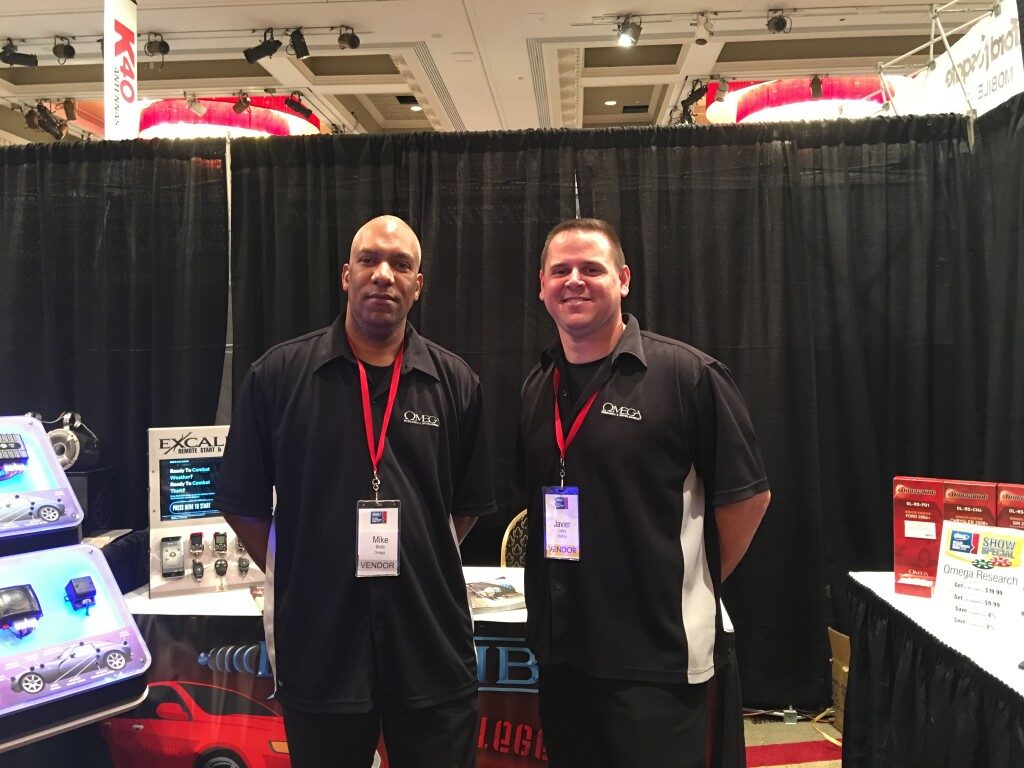
While Betts learned quite a bit from his mentors, his current position is the ultimate opportunity to guide and give back. After transitioning to a few other shops including Audio Worx, where he worked for eight years, Betts took the leap into tech support at Omega Research and Development in 2015. Ironically, he said, the first alarm system he ever installed in 1994 was an Omega.
While still working at a car stereo shop, Betts had called Omega’s head of product development, Mike Thompson, with questions about products. “We spoke for about 45 minutes. He told me he appreciated the feedback and asked if we could keep in touch and talk twice a year—once before season to discuss goals and then after the season. We did that for the next few years.”
When Omega looked to fill a tech support position, Betts was interested, but couldn’t relocate to Atlanta. He sent in his resume anyway. After two months, Thompson texted to ask if he was still interested. The job shifted to a remote position and Betts was hired.
Taking after mentor Mike O’Donnell, his approach is laidback and calm. “I don’t argue,” he said. “I don’t get upset. I worked in the bay for years, so I know the frustrations that come along with it. The first thing I do is listen to everything. I let the person I’m on the phone with explain. I find out exactly what’s going on. Then, I consider all of it before I respond.” Then, he said, he’ll ask what tests they’ve performed, when the problem started and how long it’s been going on.
“Techs get frustrated when things don’t work,” he said, adding there’s a lot of stress involved because customers are waiting for their vehicles. “When I’m on the phone, I need to assess the problem, correct it and move on to the next call.”
Crucially, though, he said he never rushes anyone through the process. “Some calls take two minutes, and some take 40 minutes to an hour. As long as the problem is rectified, it doesn’t matter how long it takes.”
Increase Efficiency by Shifting Your Perspective
While at Omega, Betts leaned on colleague Jason Ewing for advice. He said he’d become frustrated during his first month on the job. “I knew what the problem was, and I knew how to fix it, but I didn’t know how to articulate it.” Ewing, he said, had helped push for him to get the job, “and I told him my dilemma.”
Ewing’s advice became a turning point. According to Betts, Ewing told him he was asking the right questions—“but he told me to change how I asked” those questions. “For example, Jason said to me, ‘If you’re talking to someone on the phone, instead of asking if the orange wire is connected to a yellow or a green wire, just phrase it differently. Ask, what is the orange wire from the remote start connected to?’”
This simple tweak, he said, made a difference. “I started asking questions differently and almost overnight my calls got more efficient,” he said. And this rapport with Ewing is one of the reasons Betts ended up at Firstech. “Jason was already working for them and I had a good relationship with Josh Woodie, and Wade Beebe, his boss,” having met them both at different trade shows.
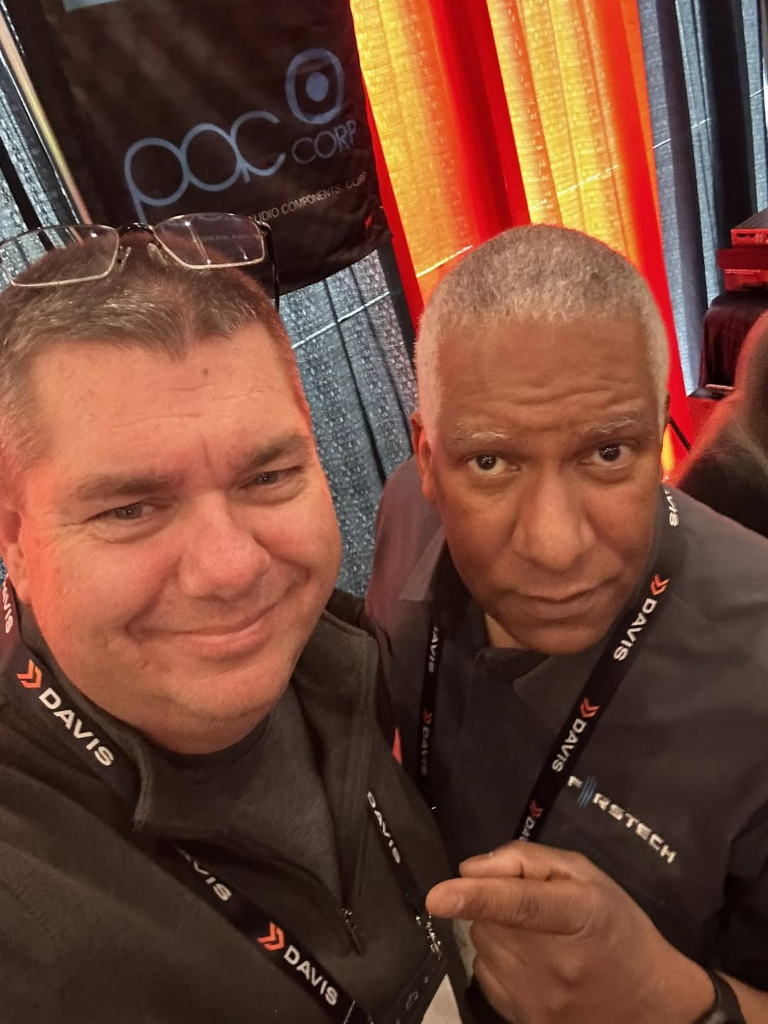
Betts with Jason Billups of JB Associates 12V at the 2026 Davis Distribution Show.
“FIND YOUR STRENGTHS AND FOCUS ON THAT.”
This, he said, is the value of networking and going to industry events. “It was February of 2023 and I was at KnowledgeFest. I was up for Support Tech of the Year. I was talking to Firstech, and they said they weren’t looking for any techs, but told me to send in a resume.” If something came up, he said, they promised to call.
Months passed. Betts spoke with Ewing, and then more time went by. “Then Wade called me on a Friday and we spoke for about an hour about everything—family, the industry, business. He was trying to get a feel for me, and I was trying to get a feel for him. I wasn’t actively seeking anything. This opportunity presented itself.”
Then, in December, he was offered a job. Betts chose to hold off starting until January because he didn’t want to put Omega in a tough spot during a busy time. “I don’t believe in burning bridges,” he said. “I’ve been blessed throughout my career to work for quality shops and quality owners.”
When it comes to offering advice to anyone new to the industry, Betts found himself recalling the same thing he’d been told early in his career: Find your strengths and focus on that. “Figure out the one or two things you’re good at and roll with it. Make it your goal to become exceptional in those areas. Go to some form of training—KnowledgeFest, MasterTech or Mobile Solutions. It’s not limited to those. There are lots of educational videos on YouTube that shops do weekly,” he said, adding, “Find what you’re good at and then work to excel at it.”